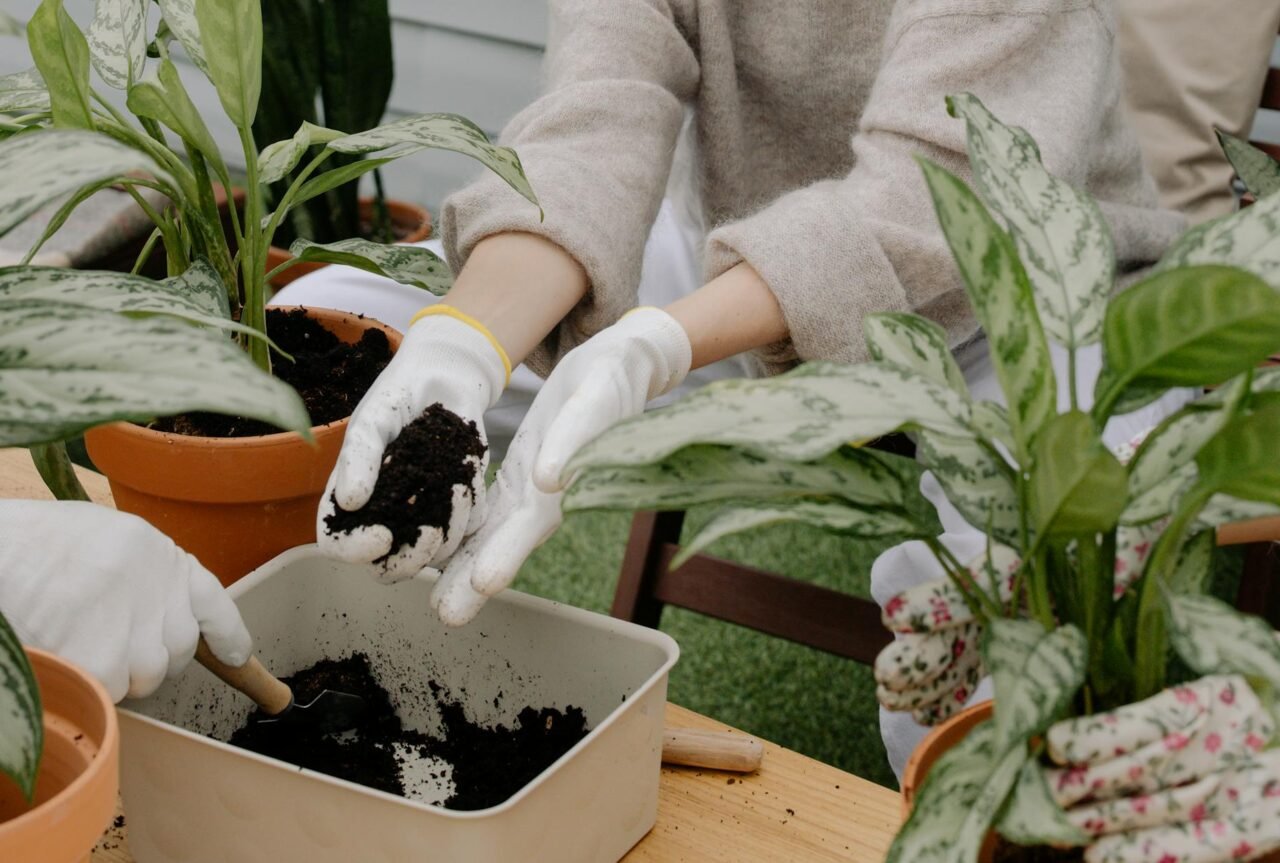
Houseplants quietly change over weeks and months: a pot that once fit can become a crowded cage. Look for visible roots, odd watering behaviour, or a slowdown in growth—these are practical signals that it’s time to repot your plants.
A fresh mix and the right container restore oxygen, nutrients, and drainage; done poorly, you trade one problem for another, so decisions matter.
Why does repotting restore health, and what actually changes?
Roots supply water, nutrients, and stability. Over time, media compacts, nutrients wash away, and roots can form a dense mat that blocks water and air. Repotting loosens that constraint: it refreshes pore space for oxygen, resets nutrient availability, and gives roots room to expand. The honest trade-off is temporary stress—if you choose the wrong pot size or heavy mix, you can tip the balance toward rot or drought.
Decision factors to weigh: plant size and growth rate, your watering rhythm, pot material, and whether the plant prefers slightly snug conditions. For example, a fast-growing pothos will bounce back quickly after a modest size increase, while a fiddle-leaf fig may sulk if moved into a pot that is too large or cold.
Clear signs it’s time to repot your plant
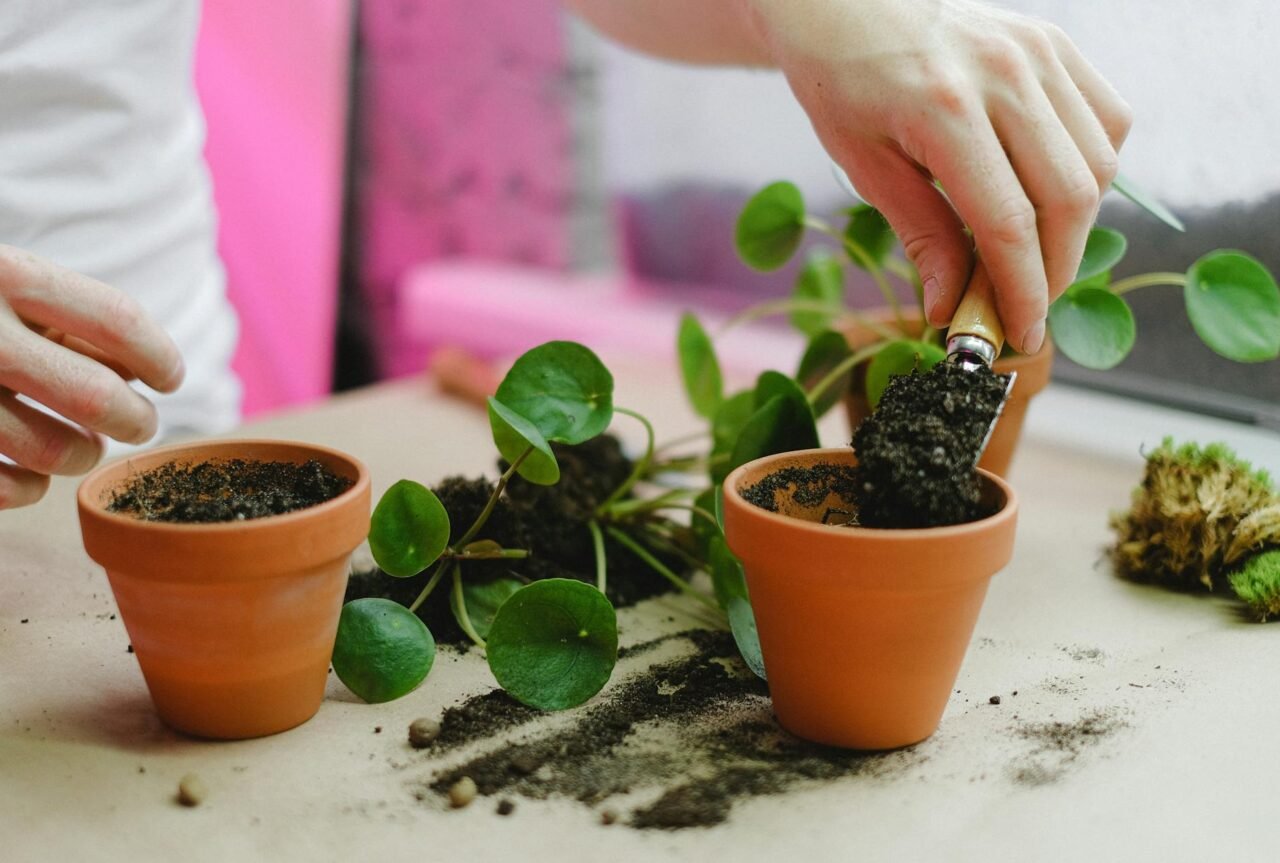
Don’t wait for collapse. Any one of these signs often means the root system needs more volume or healthier soil.
Roots visible at drainage holes or circling the soil surface
- Roots poking from drainage holes or forming a tight ring on top are a plain signal that the pot is rootbound. If the rootball holds together in a firm cylinder when removed, the plant needs more space.
- If roughly 30–50% of the rootball is dense roots with little loose soil, move up one pot size. Skip a larger jump—oversized pots retain too much moisture and stress roots.
Water soaks through instantly or sits on the surface for ages
Both very fast and very slow percolation indicate failing media. Fast flow suggests the mix has broken down into coarse channels and can’t hold moisture; slow drainage signals compaction or a thick root mat blocking flow.
Test watering time: in a 15–20 cm pot, water should penetrate slowly if it exits in under 10–20 seconds or takes longer than a minute to disappear from the surface, inspect the rootball.
Stunted growth, yellow leaves, or wilting despite watering
Chronic yellowing or slow new growth can mean nutrient depletion or restricted roots. If regular feeding barely nudges recovery, the limiting factor is often soil or root volume rather than fertiliser. Plants that were once vigorous but now look tired are worth checking for root crowding.
When to repot: seasonal timing and frost constraints
Timing matters because repotting disrupts roots. Most houseplants do best when repotted during active growth, generally spring through early summer, because roots re-establish faster with increasing light and warmth. Succulents and cacti prefer spring repotting when they’re coming out of cool dormancy.
For outdoor containers, avoid repotting when frost is a threat. A newly disturbed root system in cold soil can suffer damage; if frost is possible, wait until after the last expected frost or keep repotted plants in a protected, warmed space for 7–14 days.
What people miss: Some species, like ficus and rubber trees, tolerate being slightly rootbound and can be repotted less often.
Choosing the pot, soil, and the new home
Pick the right pot size, material, and drainage
Increase pot volume modestly—typically 2–5 cm (1–2 inches) wider for small to medium plants, or one nominal size up for larger containers. Skip jumping more than one size. Pot material affects moisture: plastic retains water and is lightweight; terracotta breathes and dries faster. You’ll feel at home with terracotta if you water frequently and want faster drying; pick plastic if you tend to forget waterings and need retention.
- Always use pots with drainage holes. If you want an attractive cachepot, keep the plant in a draining nursery pot inside it.
- For more on drainage solutions and improving pore space: see Drainage in Plant Pots: Why It Matters and How to Improve It?
Match potting mix to plant needs
Look for mixes with appropriate particle size, organic matter for nutrients, and inert aggregates for drainage. Decision points:
- General houseplants: A balanced mix with coco coir or peat, composted bark, and perlite gives aeration and steady moisture.
- Succulents and cacti: fast-draining substrate with coarse sand, pumice, or perlite and less organic matter.
- Vegetables in containers: richer mixes with higher organic content and a slow-release fertiliser support fast growth; see The Best Containers for Vegetable Gardening in Small Spaces for container-specific tips.
If reusing an old mix, replace one-third to all of it, depending on how degraded it is. Avoid straight garden soil unless it’s been amended and sterilised—garden soil compacts and invites pests.
Step-by-step repotting with aftercare
Follow a sequence that reduces shock and helps roots reconnect to fresh media.
- Choose the day: pick a cool, bright window of 30–60 minutes when you can work uninterrupted. For sensitive plants, early morning is preferable; avoid strong midday sun.
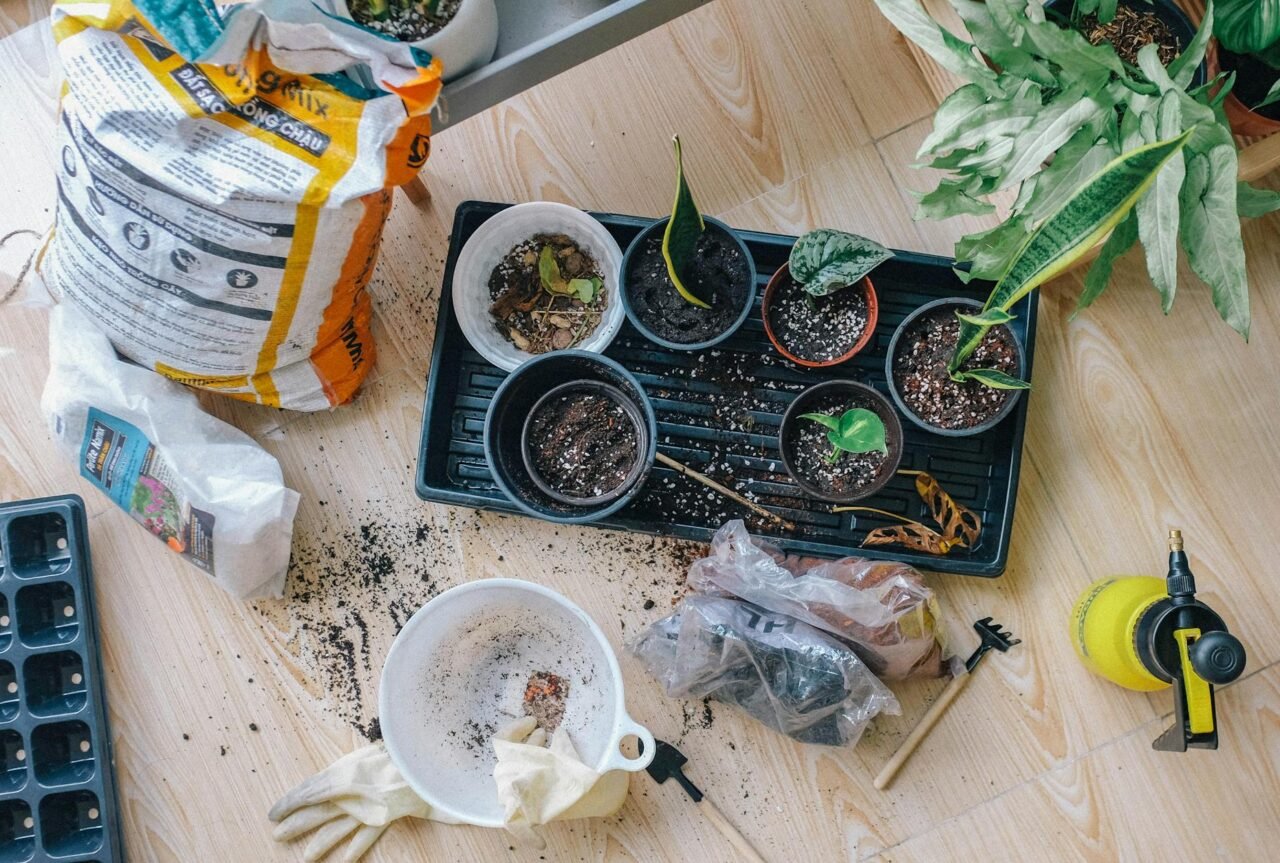
- Prepare: fresh potting mix, a clean new pot, pruning shears, gloves, and a bucket for old soil. Sanitize tools between plants to reduce disease spread.
- Remove: tip the pot and coax the plant out. If stuck, run a knife around the rim to loosen the rootball. Tease out circling roots with fingers; for severe circling, score or selectively prune 10–20% of healthy roots to encourage branching.
- Replant: place a thin layer of fresh mix, set the plant so the original soil line sits 1–2 cm below the rim, fill around the sides, and firm gently without packing. Water thoroughly until drainage flows freely to settle the mix.
Aftercare: watering, light, and feeding
Keep repotted plants in bright, indirect light and avoid fertilising for 2–4 weeks to prevent root burn while the root system recovers. Water based on pot size and mix—small pots dry faster. A practical rule: wait until the top 10–25 mm of mix feels dry for most houseplants before watering again.
One small, lived-in observation: a newly repotted philodendron often perks up with a week of bright, indirect light and stable warmth; the leaves can still look dull for a few days as roots settle.
Pest and disease prevention after repotting, plus spacing guidance
Fresh soil reduces pests but also exposes hidden problems. If you encounter slimy roots or a foul odour, trim affected tissue with sterile tools and consider a targeted fungicide only if cutting doesn’t resolve the issue.
For fungus gnats, let the soil dry more between waterings and use sticky traps; persistent infestations respond to beneficial nematodes or a properly diluted hydrogen peroxide soil drench following product guidance.
Airflow matters: leave 5–15 cm between pots, depending on plant size, so foliage doesn’t touch, and crowns get ventilation. Crowding elevates humidity and fungal risks; spacing is a simple fix many people skip.
Common mistakes and how to avoid them
Jumping more than one pot size up—causes a slow-drying mix and root rot. Stick to modest increases.
- Using garden soil or heavy mixes—these compact and suffocate roots. Use purpose-made potting mixes instead.
- Repotting during dormancy or extreme heat—plants need active growth to recover quickly; schedule repotting for spring–early summer when possible.
- Over-pruning roots—trim selectively: keep most root mass intact to support top growth.
- Blocking drainage with decorative liners—always allow free drainage or use a nursery pot inside a non-draining decorative container.
Scenario: deciding to repot a crowded philodendron
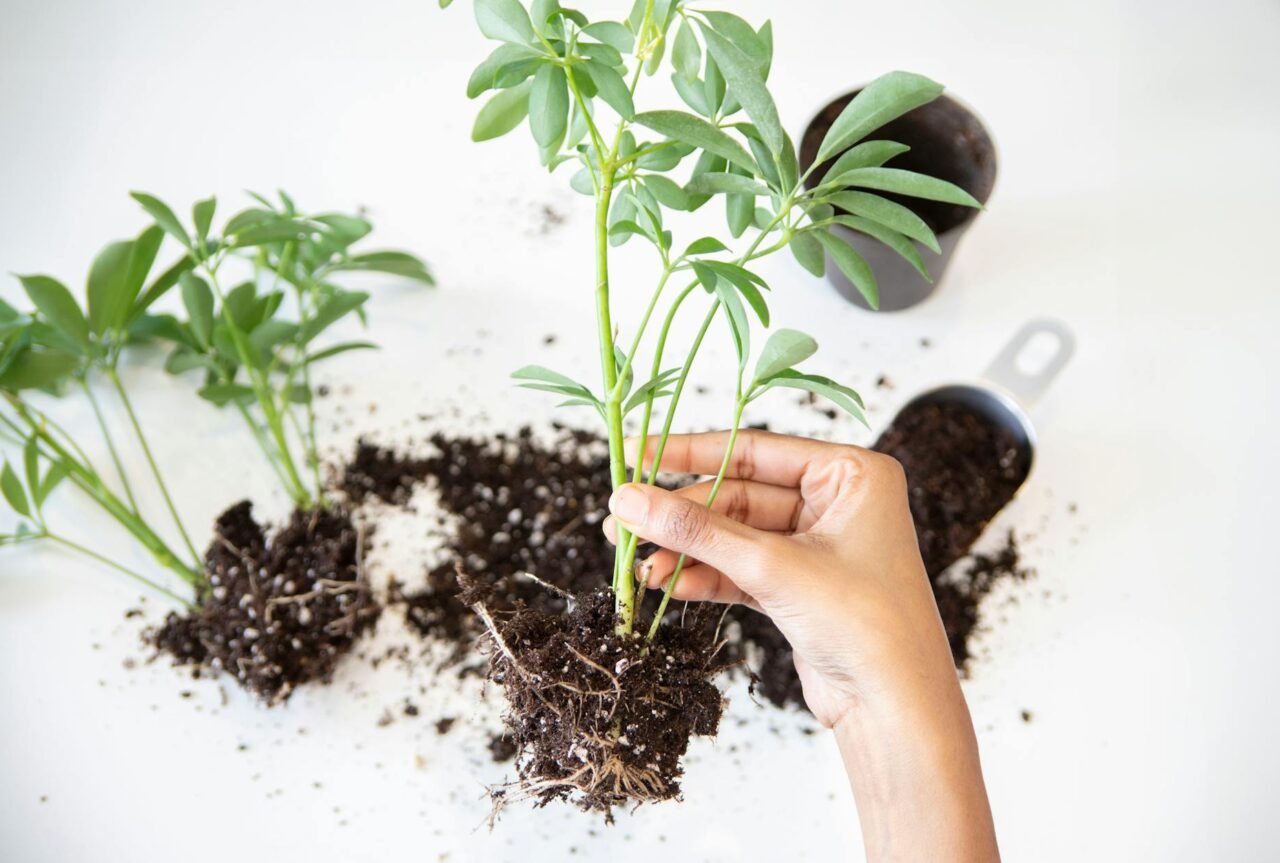
- Context: a 15 cm terracotta pot with a medium philodendron showing yellow lower leaves and roots at the drainage hole.
- Decision: move to a 20 cm plastic pot because the owner waters less often and prefers slower drying. Action: loosen the rootbound mass, replace one-third of the old mix with an airy fresh mix, set the plant at the same depth, and water well.
- Outcome: new leaf tips started to appear within 3–4 weeks—a practical example of matching pot material and size to watering habits and plant signals.
Practical tips people overlook
Mark the soil line on the pot before removing the plant so you can restore the original depth—planting too deep or too shallow harms roots.
- Place the pot on a kitchen scale before and after watering for a few cycles to learn moisture loss rates—this removes guesswork about watering intervals.
- When repotting trailing plants, consider dividing and potting offsets rather than forcing one large container—this creates healthy new plants while reducing shock.
Plant-specific timing and frequency
Fast growers (philodendrons, pothos) often benefit from repotting every 12–18 months. Slow growers—orchids, many cacti, and slow succulents—can go several years between repots. Root-sensitive species (epiphytic orchids) need media that match their habits (bark, sphagnum) and are repotted only when the medium breaks down. The trade-off: more frequent repotting gives room for growth but increases handling stress; weigh growth rate against tolerance for root disturbance.
Small scannable timeline
| Timeline | Task | Why it matters |
|---|---|---|
| Day0 | Repot and water thoroughly | Settles mix and removes air pockets |
| Week1–2 | Keep in bright, indirect light; avoid fertiliser | Allows roots to re-establish before the nutrient push |
| Week3–4 | Resume light feeding and regular watering checks | Supports renewed shoot growth without burning roots |
FAQ
How often should I repot houseplants?
Check signs rather than a strict schedule. Fast growers often need repotting every 12–18 months; slow growers may only need it every 2–4 years. If a plant shows visible roots, poor drainage, or stunted growth, repot sooner, even if the calendar says otherwise.
Can I reuse old potting mix?
Reusing mix is possible when it remains airy and pest-free, but it often lacks structure and nutrients. For a routine repot, replace at least one-third with fresh mix; replace all if the mix smells foul, is compacted, or shows pest activity.
Should I prune roots when repotting?
Light root pruning helps with circling roots and damaged tissue—remove no more than 10–20% of healthy root mass. Loosening the rootball is often enough; aggressive pruning reduces the plant’s ability to support top growth and slows recovery.
Is it okay to repot in winter?
Winter repotting increases risk because most plants are in low-growth mode and regenerate roots slowly. Only repot if necessary—severe root rot, pests, or a pot failure—and provide extra light and consistent indoor warmth if you proceed.
How do I avoid fungus gnats after repotting?
Let the top layer of soil dry between waterings, use sticky traps to catch adults, and avoid overwatering. If gnats persist, treat with beneficial nematodes or a hydrogen peroxide soil drench according to product instructions; replacing the top 1–2 cm of mix can also remove larvae.