Good tools make garden chores faster, less tiring, and more precise. A sharp hand trowel can turn planting a row of carrots into a 10-15 minute job; a dull one turns it into a sore-wrist chore and ragged seedlings.
This guide is for beginning gardeners, weekend plot-tenders, and anyone weighing whether to upgrade to a heavier, more expensive kit. It explains what counts as basic tools, when advanced or professional-grade gear pays off, and how sunlight, soil, watering, and seasonal timing change the decision.
Start here: what do “basic” and “advanced” mean?
“Basic” tools are reliable, budget-minded hand and ground implements suited to beds up to roughly 500 sq ft and light soil work. These include a trowel, a hand fork, pruning shears, a garden shovel, and a leaf rake. “Advanced” tools include power equipment (tillers, hedge trimmers, blowers), professional-grade forged tools, and specialty implements for large plots, heavy clay, or commercial use.
Technical terms: forged steel means a bar of steel was heated and shaped for strength; bypass pruners cut like scissors and are best for live stems, while an anvil pruner crushes dry wood.
Budget essentials that do most of the work
Buy the best basic versions you can afford for the tools you will use most. A single well-made spade or fork saves time and replacement expense compared with a shed full of cheap tools.
Hand tools and their practical uses
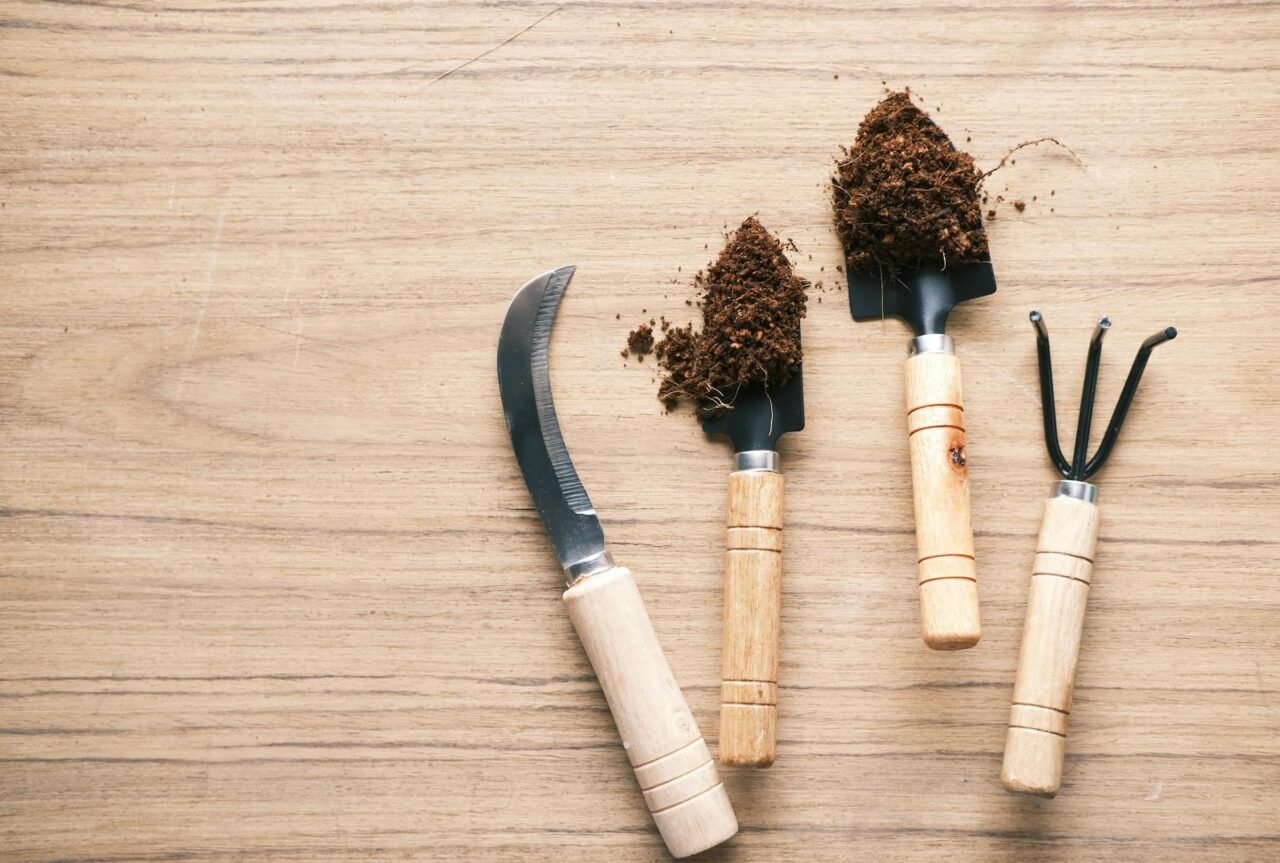
- Trowel – For planting, transplanting, and scooping fertilizer. Look for a 6-8 inch stainless or rust-resistant blade and a comfortable handle. A solid riveted tang resists wobble.
- Hand fork (three-prong) – Breaks surface crusts, aerates small areas, and helps remove weeds without uprooting nearby plants. Forged tines resist bending better than stamped metal.
- Pruning shears (bypass type) – Clean cuts on live stems up to 3/4 inch diameter. Choose a model with a sap groove and replaceable blade; lubricate pivots and sharpen periodically.
- Hori-hori knife – A narrow, sharp, multi-use knife that slices roots, measures depth, and trims transplants sharply in tight beds.
Small operational note: keep a dedicated container for sharpening supplies and a cloth to wipe sap and dirt off blades after use. A few minutes of care after each session prevents rust and sticky pivots.
Ground tools that get the heavy digging done
- Garden shovel – Rounded-point for digging and edging; square-edged for moving compost. Basic carbon-steel blades with a rust-resistant finish are acceptable if dried before storage.
- Garden fork – For turning compost and loosening compacted clay. A forged fork lasts far longer than pressed or stamped ones.
- Rakes – Leaf/landscape rakes for debris; metal garden rakes for leveling soil. Choose a handle length that lets you stand upright to reduce back strain.
Decision factor: choose basic versions if you garden on a small scale, have mostly loamy soil, and expect light seasonal digging. Spend more on one well-made ground tool rather than several cheap ones that fail mid-season.
When upgrading makes sense
Upgrade tools when garden size, soil toughness, plant types, or physical comfort make the extra cost pay off. Advanced tools reduce hours of manual labor, cut physical strain, and often last longer with proper maintenance.
Power tools and specialty equipment to consider
- Tillers and cultivators – Rear-tine tillers handle heavy clay and larger beds; front-tine or electric cultivators suit raised beds and light renovation. For initial bed establishment in compacted soil, a rear-tine unit or rental with 6-8 hp capability is commonly recommended.
- Hedge trimmers – Cordless battery models are quiet and low-maintenance for routine trimming; gas models still dominate for long runtimes and heavier hedges. Blade length of 18-24 inches balances reach and control.
- Leaf blowers and backpack vacuums – Useful on lawns and hardscape; compare CFM and MPH ratings when choosing a model. Cordless units typically run 30-60 minutes per charge on moderate settings.
- String trimmers and chainsaws – For edging and cutting woody growth beyond pruners’ capacity. Look for anti-vibration features and easy-start mechanisms for frequent use.
Practical upgrade rule: if maintenance exceeds 4-6 hours per week or planted area tops about 1,000 sq ft, power tools often justify their cost in saved time and less physical strain.
Materials, ergonomics, and long-term value
Higher-grade tools use stainless or forged carbon steel, hardwood or fiberglass handles, and ergonomically shaped grips. These choices reduce breakage, rust, and joint strain. Tools with replaceable parts and clear warranty terms are easier and cheaper to keep in service for years.
Operational nuance: test handle balance and grip in person when possible; a heavy head with a short handle can feel clumsy. If you plan repetitive digging or pruning sessions of 20-40 minutes, look for shock-absorbing grips and longer handles to protect your lower back and wrists.
Match tools to sunlight, soil, watering habits, and spacing
Tool selection changes with the garden’s microclimate and management routine. Below are practical, context-driven recommendations tied to sunlight, soil texture, watering methods, and planting density.
Sunlight and plant type
- High: sun vegetable beds with frequent planting and harvesting: prioritize a sturdy trowel, hoe, and comfortable pruners for repeated use.
- Shade-loving perennial borders requiring tidy-up work: choose slim-handled shears, a hori-hori, and a hand rake for precise work around dense root zones.
Soil texture and appropriate tools
- Sandy soils: easier to dig; basic shovels and forks are usually sufficient.
- Heavy clay or compacted ground: start with a forged garden fork or mattock; add a rear-tine tiller for initial bed renovation. For persistent compaction, a core aerator or subsoiler rental may be more efficient than repeated hand digging.
Watering routine and tool implications
- Drip-irrigated beds: less hand-watering means you can invest in hose-end tools, a kink-resistant hose, and a timer rather than a high-capacity sprayer.
- Overhead watering: expect higher weed germination and surface crusting; a sharp hoe for surface cultivation speeds light weeding without disturbing plant roots.
Spacing, access, and tool size
- Tightly spaced raised beds: narrow-handled tools and a hori-hori knife improve precision and reduce accidental root damage.
- Large mixed borders or lawns: long-handled rakes, edgers, and larger power tools become practical time-savers.
Seasonal timing and frost constraints
Season dictates both tool choice and when to use it. Plan pruning, bed prep, and equipment maintenance around plant phenology and expected frosts.
- Pruning windows: many flowering shrubs are best cut right after bloom, while most late-winter pruning is reserved for dormant structural shaping. Use bypass pruners for live wood and a pruning saw for thicker branches.
- Bed preparation: finish primary digging and compost turning before the first hard frost to allow soil biology to stabilize; store delicate tools indoors to prevent frost damage to wooden handles.
- Frost-sensitive planting: keep small hand tools handy for quick protective tasks—row covers, cloches and mulch placement are easier with a trowel and small rake at hand.
Maintenance, cost-benefit thinking, and buying tips
Simple maintenance extends tool life far more than buying the top model. Clean soil off after each use, dry metal surfaces, oil blades and pivot points, and store tools hanging indoors.
Price ranges and what to expect
- Basic trowel or hand fork: USD 10-30. Higher-quality versions: USD 30-80.
- Pruning shears: USD 30-150 depending on brand, materials, and warranty.
- Tillers and professional power tools: USD 300-1,200+; battery hedge trimmers and blowers: USD 100-500.
Decision factor: for high-use items (pruners, spades, forks), prioritize quality and repairability. For one-off specialty jobs (stump grinding, deep core aeration), renting is often the cheaper route.
Care routine that actually prevents costly replacement
- After each use: knock loose soil off, rinse if needed, dry, and oil the metal. Wipe shears with a cloth and apply a light oil to the pivot.
- Seasonally: sharpen blades and shears, inspect handles for cracks, replace worn parts if available, and cycle batteries for power tools according to manufacturer instructions.
- Storage: hang tools off the floor in a dry shed; avoid leaning wooden-handled tools in soil where handles can rot.
Pest and disease prevention tied to tool hygiene
Tools can move pathogens and pests between plants. Clean and, when warranted, sanitize between beds—especially when dealing with blight-prone crops.
- Sanitizing options: a 10% household bleach solution (1 part bleach to 9 parts water) or 70% isopropyl alcohol applied briefly and wiped off. Rinse and oil metal afterward to prevent corrosion.
- Practical workflow: carry two cloths—one for dirt and one soaked with sanitizer—for quick transitions between crop types. Avoid using the same pruning shear consecutively on tomato and potato without sanitation; late blight spreads easily via contaminated tools.
- Debris control: keep fallen leaves and spent stems cleared from beds; many pests hide in leaf litter and can reinfest plants.
Realistic scenarios to guide purchases
Concrete examples help translate rules into action. Below are three realistic setups and a short shopping and upgrade plan for each.
| Garden type | Starter purchases | Upgrade later |
|---|---|---|
| Small balcony/containers (8-20 pots) | Sturdy trowel, hand fork, small bypass pruners, watering can, quality potting mix | Small cordless trimmer for heavy herb growth; compact moisture meter for watering precision |
| Backyard veg plot (300-500 sq ft), loam soil | Forged garden fork, rounded-point shovel, hoe,6-8 inch trowel, pruning shears | Electric tiller or rental rear-tine tiller for bed renovation; battery leaf blower for seasonal clean-up |
| 1,000+ sq ft mixed borders and lawn, compacted clay | Heavy-duty garden fork, reinforced shovel, long-handled edger, quality bypass pruners | Rear-tine tiller or rental, gas-powered mower/blower, professional pruning saw |
Common mistakes and small operational details that save time
Buying a full set of cheap tools: one good spade and a solid pair of shears outperform a large, low-quality kit. Invest in load-bearing and cutting tools first.
- Neglecting sharpness: dull blades tear stems, slow healing, and raise disease risk—sharpen shears every 2-3 months during heavy use.
- Choosing the wrong handle length: test reach in-store. Short-handled shovels force stooping on larger jobs; longer handles reduce back strain but can be unwieldy in tight beds.
- Using power tools without PPE: always wear eye and ear protection with blowers, trimmers, and tillers; thin nitrile gloves give dexterity for sowing, while thicker leather gloves protect during heavy cutting.
- Storing tools in damp corners or leaning in soil: hang tools indoors or under a covered box to prevent handle rot and rust.
Where to save and where to invest?
Save on decorative single-use items and low-durability plastic accessories. Invest in cutting tools (pruners, saws), load-bearing ground tools (fork, shovel), and any motorized equipment you will use weekly. Warranties and replaceable parts are good proxies for serviceable gear.
For a compact starter list, see Essential Gardening Tools Every Beginner Needs for a complementary checklist that aligns with the priorities above.
Two brief, concrete observations that feel lived-in
Morning dew makes the ground stick to shovel blades: wiping them with an oily rag before storing keeps soil from baking on and saves a long afternoon of scraping later.
- After a heavy rain, tines on a garden fork shear through compacted clay far better than a shovel—the fork pries and aerates without sealing the hole the way a wet spade can.
Practical buying checklist and first-season plan
Checklist before purchase: measure garden area, test handle length in person, read warranty and parts policy, and confirm blade material (stainless or forged).
- First-season plan example for a 300 sq ft vegetable plot: Week 1—prepare beds with a forged fork and shovel; Week 2—plant and mulch; Ongoing—weekly weeding and pruning with hand tools; Monthly—sharpen and oil tools; End of season—deep clean, service power tools, and store indoors.
- Rent for occasional heavy jobs such as stump grinding, deep aeration, or initial deep tilling to keep costs reasonable.
Final practical note
Match purchases to the tasks you actually perform. If you prune lightly and mostly tend containers, splurging on a rear-tine tiller is wasted money; if you manage multiple beds and heavy clay, a few well-chosen upgrades will pay back in less labor and fewer sore joints.
Use local user reviews and retailer specs when choosing models; look for forged or stainless-steel construction and clear warranty details as indicators of durability.
Read Next: How to Build a Starter Gardening Toolkit on a Budget