The distinction between flourishing container plants and those that gradually deteriorate often hinges on the conditions occurring below the surface. After ten years of cultivating vegetables on apartment balconies and perennials on patios, I’ve come to understand that potting mix is not merely dirt in a bag; it serves as the complete life-support system for your plants.
Many gardeners are inadvertently undermining their containers right from the start.
Why Garden Soil Fails in Containers?
First, let’s address the most prevalent misunderstanding. The deep, fertile earth from your garden bed? It’s quite unfortunate for containers.
During my initial year of gardening, I discovered this lesson through experience, as I filled half-barrels with what I believed to be ideal topsoil. In just a matter of weeks, it had transformed into concrete.
Soil in containers functions differently due to the absence of the natural ecosystem in which it developed. When placed in a pot, soil particles become densely packed, resulting in limited pore space for air. Roots are stifled.
The drainage of water is ineffective. The structure that functioned seamlessly underground transforms into a heavy, waterlogged tangle above ground.
The science is clear: soil is composed of tiny clay and silt particles that interlock like pieces of a puzzle. Earthworms, insects, and plant roots in the soil form channels that help sustain porosity.
In a container, the particles arrange themselves into the most compact formation achievable. What you end up with resembles pottery material more than a growing medium.
What Actually Goes Into Quality Potting Mix?
Understanding the ingredients gives you the confidence to evaluate any bag on the shelf or mix your own. Quality potting mixes balance three critical functions: water retention, drainage, and nutrient holding capacity.
Base Components That Matter
Sphagnum peat moss remains the standard base for most commercial mixes. It holds several times its weight in water, resists compaction, and has a lightweight structure that roots can easily penetrate.
The downside? It’s acidic (pH around 3.5 to 4.5), which is why you’ll see limestone added to most mixes. Peat is also a non-renewable resource harvested from sensitive bog ecosystems, which matters if sustainability influences your purchasing decisions.
Coir (coconut fiber) has emerged as a sustainable alternative to peat. It’s a byproduct of coconut processing, so it uses material that would otherwise go to waste. Coir actually holds water better than peat, but it contains virtually no nutrients and can have sodium issues if not properly processed. Good quality coir is buffered and rinsed; cheaper versions may leave your plants with leaf burn.
Composted bark shows up in mixes aimed at orchids or epiphytic plants, but it’s increasingly common in general potting mixes. Pine bark adds porosity and decomposes slowly, providing structure for years. The particles need to be properly composted—fresh bark consumes nitrogen as it breaks down, temporarily starving your plants.
The Drainage Components
Perlite is those small white Styrofoam-looking bits you’ve noticed in potting mixes. It’s actually volcanic glass expanded by heat until it pops like popcorn. Those white granules create air pockets in the mix and don’t break down over time. I’ve repotted plants after three years and found the perlite still perfectly functional.
Vermiculite looks similar but behaves differently. It’s also expanded by heat, but vermiculite absorbs water like a sponge rather than just creating air space. It’s excellent for moisture-loving plants and seed starting, but can hold too much water for succulents or Mediterranean herbs.
Pumice is the premium alternative to perlite—harder, doesn’t float to the surface when you water, and lasts indefinitely. It’s more expensive and heavier, which can actually benefit top-heavy plants by adding weight to the pot.
The Functional Additives
Limestone appears in almost every peat-based mix to adjust pH. Without it, peat’s acidity would lock up nutrients and prevent healthy growth. The amount and type of limestone affect how long the pH remains balanced.
Wetting agents are controversial but practical. Peat and coir become water-resistant when completely dry—have you ever tried to rehydrate a bag of potting mix that sat in the sun? Wetting agents help water penetrate evenly rather than running down the sides of the pot.
Quality mixes use plant-based, biodegradable agents. Cheap mixes sometimes use synthetic versions that don’t break down.
Fertilizer in the bag seems convenient, but creates complications. Many “feeds for months” mixes use coated slow-release fertilizers that release based on temperature.
In warm weather, they can release too quickly and burn roots. In cool weather, they barely release at all. I generally prefer unfertilized base mixes and control the nutrition myself.
Reading Bag Labels Like a Pro
Marketing departments know most gardeners grab whatever bag has pretty pictures. The real information is in the fine print, specifically, the guaranteed analysis and ingredient list.
Guaranteed analysis tells you what fertilizer has been added. Numbers like 0.10-0.05-0.05 indicate nitrogen, phosphorus, and potassium percentages. If you see any numbers above zero, you’re buying a mix with embedded fertilizer. That’s not necessarily bad, but it means you lose control over timing and release rates.
Ingredient order matters legally. Ingredients must be listed by weight in descending order. If the first ingredient is something vague like “compost materials” or “organic matter,” the manufacturer isn’t being transparent about what you’re actually buying.
ASTM standards aren’t something most gardeners look for, but the American Society for Testing and Materials has developed standards for potting mixes. Products that mention compliance with ASTM standards typically undergo more rigorous quality testing than unlabeled products.
Premium vs. Budget: The Real Difference
I’ve tested countless mixes side-by-side over the years, and the price difference often reflects real performance gaps—but not always in the ways you’d expect.
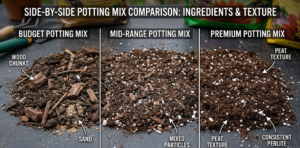
Budget mixes ($5-8 per cubic foot) typically use cheaper ingredients. Instead of sphagnum peat, they might use local sedge peat, which decomposes faster. Instead of perlite, they might use coarse sand, which adds weight without improving aeration. The pH adjustment may be inconsistent. You’ll often find sticks, bark chunks, and other undecomposed material. These mixes work for short-term annuals where you’ll dump the pot each year anyway.
Mid-range mixes ($10-15 per cubic foot) represent the sweet spot for most gardeners. Brands like FoxFarm, Black Gold, and Pro-Mix use quality ingredients with consistent particle sizes. The pH is properly adjusted. Wetting agents actually work. These mixes perform reliably for a full growing season with container vegetables, perennials, and even fussy plants.
Premium mixes ($18-25 per cubic foot) cater to specific niches. Bonsai mixes, orchid mixes, and cactus mixes fall into this category. You’re paying for specialized ingredients like Japanese akadama, New Zealand pine bark, or Italian pumice. These make sense when you’re growing plants that demand perfect drainage, but they’re overkill for most container gardening.
Matching Mix to Plant Type
One mix does not fit all plants. After watching countless gardeners struggle with plants that “should be easy,” I’ve learned to match the medium to the plant’s natural preferences.
Vegetables and Annuals
Fruiting vegetables like tomatoes, peppers, and eggplants need consistent moisture and steady nutrition. They perform best in mixes with good water retention and enough structure to support heavy root systems through a long season. Look for mixes containing peat or coir as the base, with perlite for drainage and compost or worm castings for nutrients.
Leafy greens and herbs are less demanding but have their quirks. Basil and cilantro hate drying out completely, while rosemary and thyme want sharper drainage.
For mixed herb containers, I use a standard vegetable mix and adjust watering habits rather than trying to customize the medium.
Perennials and Shrubs
Plants that will live in containers for multiple years need mixes that don’t break down completely by mid-summer. The bark component becomes more important here. Perennial mixes typically include more composted bark or wood products that maintain structure as peat decomposes.
The biggest challenge with long-term perennials is compaction. After a year or two, the original mix settles, and roots struggle. Top-dressing with fresh compost and gently aerating the surface with a fork helps, but eventually you’ll need to repot with a fresh mix.
Succulents and Cacti
The standard advice “use cactus mix” oversimplifies things. Commercial cactus mixes vary wildly in quality. Some are just regular potting mix with extra sand, which actually reduces drainage because sand fills the pores between larger particles.
Real succulent mixes contain at least 50-60% inorganic material. Pumice, perlite, coarse sand, or crushed granite create the fast drainage and rapid drying that succulents need. The organic portion (coir or peat) provides just enough moisture to sustain the plant between waterings.
I’ve had better luck amending standard mixes for succulents than relying on pre-made cactus mixes. Starting with a quality base and adding 40% perlite or pumice gives you more control than gambling on whatever the manufacturer decided to put in the bag.
Orchids and Epiphytes
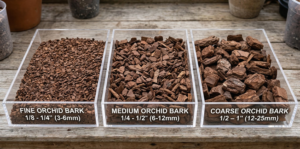
These plants don’t grow in soil at all—they grow on trees in nature. Their roots need air circulation more than they need moisture retention. Orchid mixes consist almost entirely of bark chunks, sometimes with perlite or charcoal added.
The particle size matters tremendously. Fine-grade bark works for small orchids with delicate root systems. Medium-grade suits most Phalaenopsis. Coarse-grade fits large Cattleyas and vandas. Using the wrong particle size can lead to root rot (too fine) or chronic underwatering (too coarse).
When to Add Amendments?
Sometimes the perfect mix comes from customizing a basic formula rather than buying something specialized. I keep several amendments on hand to adjust mixes for specific situations.
Perlite is my most-used amendment. Adding extra perlite to any mix improves drainage and aeration. It’s essential for heavy feeders prone to root rot and for containers in rainy climates. A 25% addition transforms a standard mix into something suitable for most Mediterranean herbs.
Worm castings provide gentle, slow-release nutrition and beneficial microbes. I mix them into vegetable containers at about 10-20% by volume. They also help buffer pH and improve water retention without creating soggy conditions.
Dolomitic lime raises pH and adds calcium and magnesium. If you’re mixing your own peat-based formulas, you’ll need about 1 tablespoon per gallon of mix. Pre-made mixes already have lime incorporated, so additional lime usually isn’t necessary.
Charcoal (horticultural grade, not barbecue charcoal) absorbs impurities and adds porosity. It’s particularly useful in containers that tend to develop odors or for plants that dislike wet feet. I add a handful to the bottom of deep containers and mix some throughout for long-term plantings.
The Watering Connection
Your choice of potting mix directly determines how you must water. This relationship works both ways—understanding your watering habits should influence which mix you buy.
Moisture-retentive mixes (high peat or coir content) let you water less frequently but make overwatering easier. They’re forgiving for busy gardeners who might miss a day or two. The trade-off is that they stay wet longer, which can rot roots if you tend to water on a schedule rather than checking actual moisture.
Fast-draining mixes (high perlite or bark content) require more frequent watering but forgive overwatering. Water runs through quickly, so roots never sit in moisture. These suits attentive gardeners who check pots daily and prefer watering often rather than worrying about root rot.
The climate where you garden should influence your choice. In humid, rainy areas, fast-draining mixes prevent waterlogged roots. In hot, dry climates, moisture-retentive mixes reduce watering frequency. I’ve killed more plants by using the wrong mix for my climate than by any other mistake.
Common Potting Mix Problems and Fixes
Even with a quality mix, issues can develop. Recognizing them early saves plants and frustration.
Fungus gnats appear when the potting mix stays constantly wet. They breed in decomposing organic matter and signal that you’re overwatering or that the mix is too moisture-retentive. Letting the surface dry between waterings usually controls them. In severe cases, replacing the top inch of mix with sand or perlite breaks the breeding cycle.
White mold on the surface looks alarming, but it usually indicates beneficial fungi breaking down organic matter. It’s harmless unless it forms a thick mat that prevents water penetration. Scrape it off and let the surface dry more between waterings.
Water running down the sides happens when peat or coir becomes completely dry and shrinks away from the pot wall. The mix becomes hydrophobic, and water follows the path of least resistance. Submerge the entire pot in a bucket of water for 30 minutes to rehydrate thoroughly, then add a wetting agent or a drop of mild dish soap to future waterings.
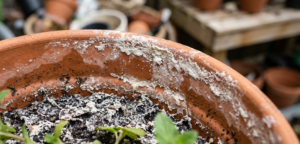
Salt buildup appears as white crust on pot rims and soil surfaces. It comes from fertilizers and tap water minerals. Excessive salt damages roots and causes leaf tip burn. Leach pots thoroughly several times per year by watering heavily until water runs freely from drainage holes. If buildup persists, consider switching to distilled or rainwater for sensitive plants.
Storing Leftover Mix
Potting mix does not enhance over time. A bag left open in the garage since last season has probably deteriorated considerably. Peat breaks down when it comes into contact with air and moisture. The components of fertilizer decompose.
Weed seeds might have sprouted and perished, resulting in organic material that can decompose.
To store a mix effectively, ensure it is kept in a sealed container in a cool, dry location. I utilize robust trash cans equipped with secure lids. When stored in this manner, the mix retains its usability for a period of 6-8 months. Investing in fresh options is advisable for significant plantings.
The Bottom Line on Potting Mix Value
High-quality potting mix may be pricier than inexpensive soil, yet it remains one of the most affordable components of container gardening. A $15 bag of premium mix sustains $50-100 worth of plants throughout an entire growing season.
Cutting corners on the mix to save $5 is a misguided approach; the plants you lose or the unsatisfactory harvest you settle for will end up costing you much more than the small amount you saved.
For the majority of gardeners, I suggest purchasing the highest quality mix that fits your budget for your essential containers, utilizing mid-range products for general planting, and saving budget mixes solely for temporary plantings or fillers.