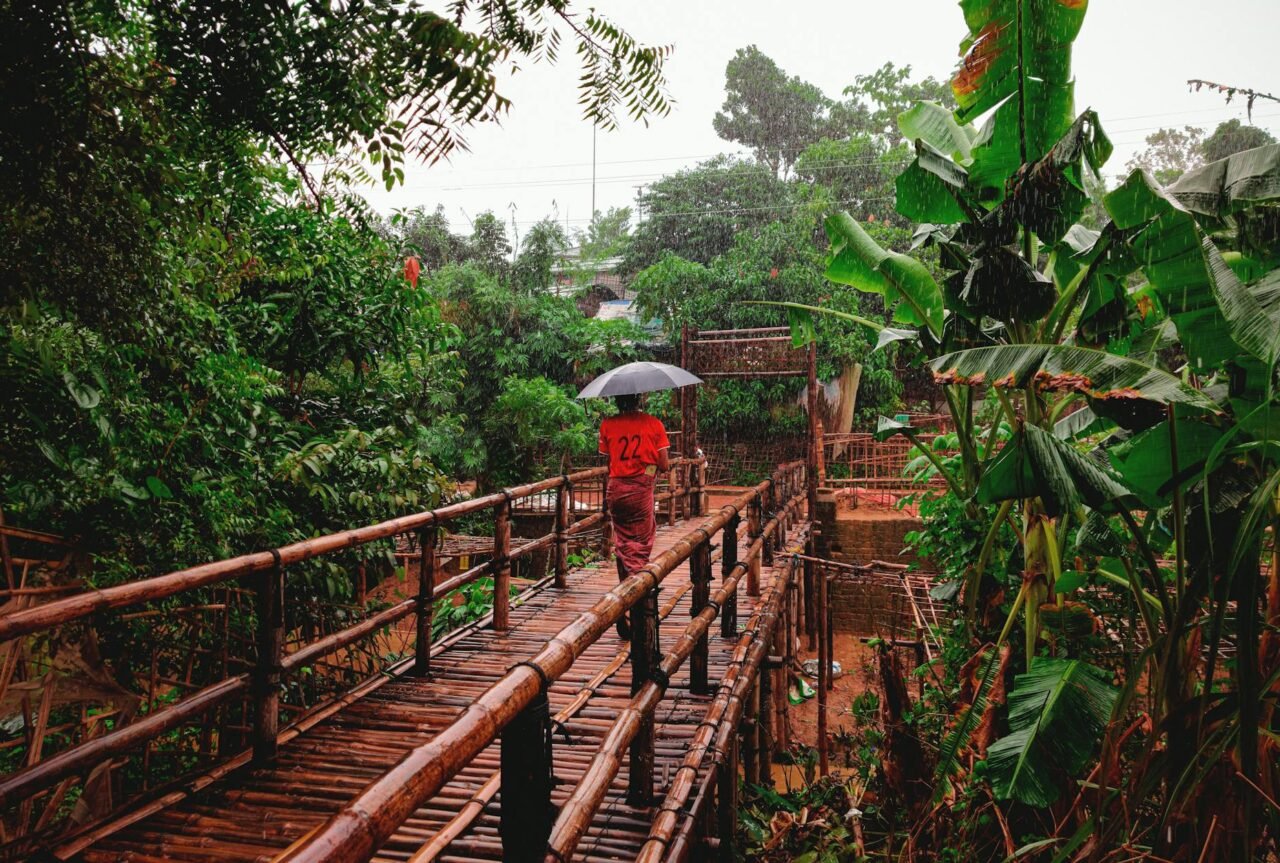
Strong winds and heavy rain test a garden’s structure and patience. Gusts shear leaves, snap stems, and topple pots; sustained downpours compact soil, wash away nutrients, and raise fungal risk. You’ll feel it most as the first stinging spray on leaves and that wet, earthy smell when beds flood—those are signals to act.
Short-term fixes stop immediate damage; long-term design prevents repeat emergencies. The honest trade-off is upfront effort—staking, drainage work, or planting a windbreak—for seasons of lower repair bills and healthier plants.
How to assess exposure, soil, and plant risk?
Map your site: note prevailing wind direction, where water pools after heavy rain, and which beds sit on slopes. Pay attention to soil type—clay sticks and holds water; sand sheds it fast. Match plant traits to the spot: large-leaved, top-heavy varieties and shallow-rooted specimens need different protection than deep-rooted shrubs.
- Decision factor: if a plant is both top-heavy and shallow-rooted, prioritize drainage and staking before cosmetic pruning.
- Sunlight, soil, and watering needs: full-sun perennials on a south-facing slope dry faster after storms; shade-tolerant plants in low spots tolerate less direct light but need better drainage to avoid root rot.
Which species are most at risk?
- Top-heavy or soft-wooded plants (some hydrangeas, young fruit trees, tall perennials) break or lean under gusts.
- Shallow-rooted or container: grown plants lift out of saturated soil during heavy rain.
- Dense: crowded plantings trap moisture and quickly develop fungal problems when drying is slow.
Quick protective moves when a storm is coming

When time is limited, prioritize what’s movable, what needs anchoring, and what should be covered briefly. Move pots first, secure vulnerable trees second, and cover seedlings last.
Move, cover, and weigh down potted plants
- Move pots to sheltered spots (against a wall: under eaves, inside a porch) if you have 10–15 minutes. Grouping pots reduces the surface area exposed to wind and splash.
- Use inverted pots, buckets, or cloches to cover seedlings; weigh covers with stones or sandbags so they don’t become airborne. Skip plastic covers for more than a few hours—trapped moisture breeds mildew.
- Choose heavier containers for exposed sites: heavy ceramic or terracotta resist tipping better than thin plastic.
Uncovered light pots can become projectiles in gusts above 20–25 mph. Tie or weight temporary covers, and don’t leave them unanchored.
Prune, stake, and guy strategically
Targeted pruning reduces the sail effect; remove dead wood and thin dense crowns to improve airflow. Staking and guying provide stability, but leave slight movement so trunks develop strength.
- Stakes: drive stakes outside the root ball and use flexible straps. For most small trees, one or two stakes are enough; taller nursery trees often need three-point guying.
- Check ties monthly—loosen or remove after one season if the tree is stable. Overstiff ties cause weak trunks.
- Potted plants: place pots in low trays partially filled with sand, or attach to heavy bases if permanent anchoring is needed.
Design changes that reduce future damage
Design the garden to work with wind and rain rather than against them. Layered shelter, right-plant-right-place choices, and soil systems that handle water are the main levers.
Semi-permeable windbreaks outperform solid walls
A multi-row shelterbelt reduces gust turbulence more effectively than an impermeable fence. Aim for a sequence of plant heights and spacing:
- Row 1 (windward): lower shrubs to intercept the first gusts.
- Row 2: denser mid-height hedging.
- Row3 (leeward): taller trees for long-term shelter.
Placement rule of thumb: a windbreak shields most effectively at around 5–10 times its height downwind. A 10-foot hedge helps 50–100 feet downwind. If space is tight, staggered beds and partial barriers channel airflow instead of creating turbulent eddies.
Plant selection: choose species suited to your hardiness zone and salt tolerance near coasts; native shrubs typically need less maintenance. Hedges take 3–10 years to become fully effective—plan for staged planting and interim protection.
Soil improvement, drainage, and mulching
Soil structure determines whether a plant stays anchored or floats away. Improve infiltration and root anchorage through amendments and grading.
- Drainage fixes: where water pools, install shallow swales or a French drain; slope the outlet at about1% (1 inch per 10 feet) so water moves away. For heavy clay, add coarse sand and plenty of organic matter to break up the soil; if unsure, get a local extension service soil test.
- Raised beds: lift soil 6–12 inches and mix in coarse organic matter and grit for faster drainage and healthier roots.
- Mulch: Apply 2–3 inches of coarse mulch to reduce surface crusting and splash dispersion of fungal spores, but keep mulch 1–2 inches away from stems to prevent rot.
Trade-off: adding organic matter improves clay soils but increases retention in sandy sites—adjust amounts accordingly to avoid waterlogged roots during prolonged rains.
Seasonal timing, frost constraints, and post-storm recovery

Actions change with the season: in late fall, stabilize pots and stake young trees; in late winter, prune for structure but avoid drastic cuts right before a wet, freezing spell. Frost and freeze–thaw cycles make exposed, freshly pruned wood vulnerable.
Inspecting and treating plants after a storm
- Inspection: within 24–48 hours, check for broken branches, leaning trunks, and waterlogged containers. Remove debris that harbors pests.
- Watering: Do not irrigate saturated soil. If beds remain soggy for 48–72 hours, consider shallow aeration or temporary drainage channels.
- Disease control: Prune away badly damaged tissue with clean tools and disinfect between cuts when disease is suspected. Cultural fixes—spacing and airflow—are the best long-term disease prevention.
- Replanting: delay transplanting until the soil is workable. If a plant is uprooted but roots are intact, replant promptly, firm soil around the rootball, and stake as needed.
Removing all lower leaves to reduce disease also reduces energy for recovery. Balance pruning for airflow with retaining enough foliage to sustain the plant.
Integrated pest and disease prevention
Heavy rain favors slugs, fungal pathogens, and sap-sucking insects that exploit weakened plants. Preventive measures are simple and effective.
- Spacing: Leave adequate room between plants—crowded beds stay wet longer and invite mildew and blight. Aim for recommended spacing on plant tags and increase it in shady, damp sites.
- Sanitation: clear fallen leaves and rotting debris quickly; store infected material away from garden compost to avoid spores returning.
- Biological controls: support predators like ground beetles and birds by keeping a varied habitat and avoiding broad-spectrum pesticides.
Applying fungicides can be useful after severe outbreaks, but rely first on improving airflow and soil conditions to stop recurring problems.
Practical scenario: a windy coastal raised bed

Context: a 15-foot raised bed sits 10 feet from a seaside fence with prevailing west winds. It contains 2–3-year fruit trees, summer perennials, and several herb pots.
Actions: install a two-row semi-permeable windbreak—3–4-foot salt-tolerant shrubs as the first row and columnar evergreens at 10–12 feet as the second—placed about 20 feet upwind.
Replace lightweight pots with heavier ceramic ones and anchor them in sand-filled trays. Improve drainage by mixing 20–30% compost and coarse sand into the bed and adding a gravel-filled French drain behind the bed sloped at about1% to an outlet.
Outcome: peak gusts were reduced near the bed, pots stayed put, and no trees were uprooted. Lower leaves showed mildew until lower-canopy pruning improved airflow the next season. That small pruning step resolved the lingering disease problem without chemical treatments.
Common Mistakes
Staking too rigidly—prevents trunk movement and produces weak future structure.
- Using impermeable covers for long periods—traps moisture and causes rot and mildew.
- Ignoring soil improvement—stabilizing stems without fixing waterlogged roots is a short-term fix.
- Planting windbreaks too close—hedges need space to protect the downwind area effectively.
- Overcrowding beds—reduces airflow and increases disease after rain.
FAQ
How long should temporary covers stay on after heavy rain?
Leave breathable covers (fleece or agrotextile) until wind and driving rain pass and foliage is mostly dry—typically 24–48 hours. Remove plastic covers as soon as the storm ends; trapped moisture under plastic promotes fungal growth within hours, especially in warm weather.
Will pruning before storms reduce breakage?
Yes—targeted pruning that reduces sail area and weight on weak branches lowers breakage risk. Avoid heavy pruning immediately before cold snaps; late winter or early spring structural pruning is safer for most species.
How deep should a French drain be for a bed that floods?
A typical French drain trench is 12–18 inches deep and 6–8 inches wide, with a perforated pipe sloped about1% to carry water away. For raised beds, lifting the planting surface 6–12 inches and adding coarse organic matter also improves drainage and root health.
Are windbreak fences better than hedges?
Semi-permeable hedges usually outperform solid fences because they reduce turbulence rather than creating eddies. If a solid fence is needed for privacy, soften airflow with staggered plantings, lattice panels, or shrubs on the windward side.
When should I remove stakes from new trees?
Check ties regularly and remove or loosen them after one growing season if the tree shows solid anchorage and expected trunk thickening. In high-wind areas, some support may be needed for 2–3 seasons—balance preventing failure now against promoting trunk strength later.
Read Next: How to Extend Your Growing Season Naturally
Read Next: Planning Next Season’s Garden the Smart Way