

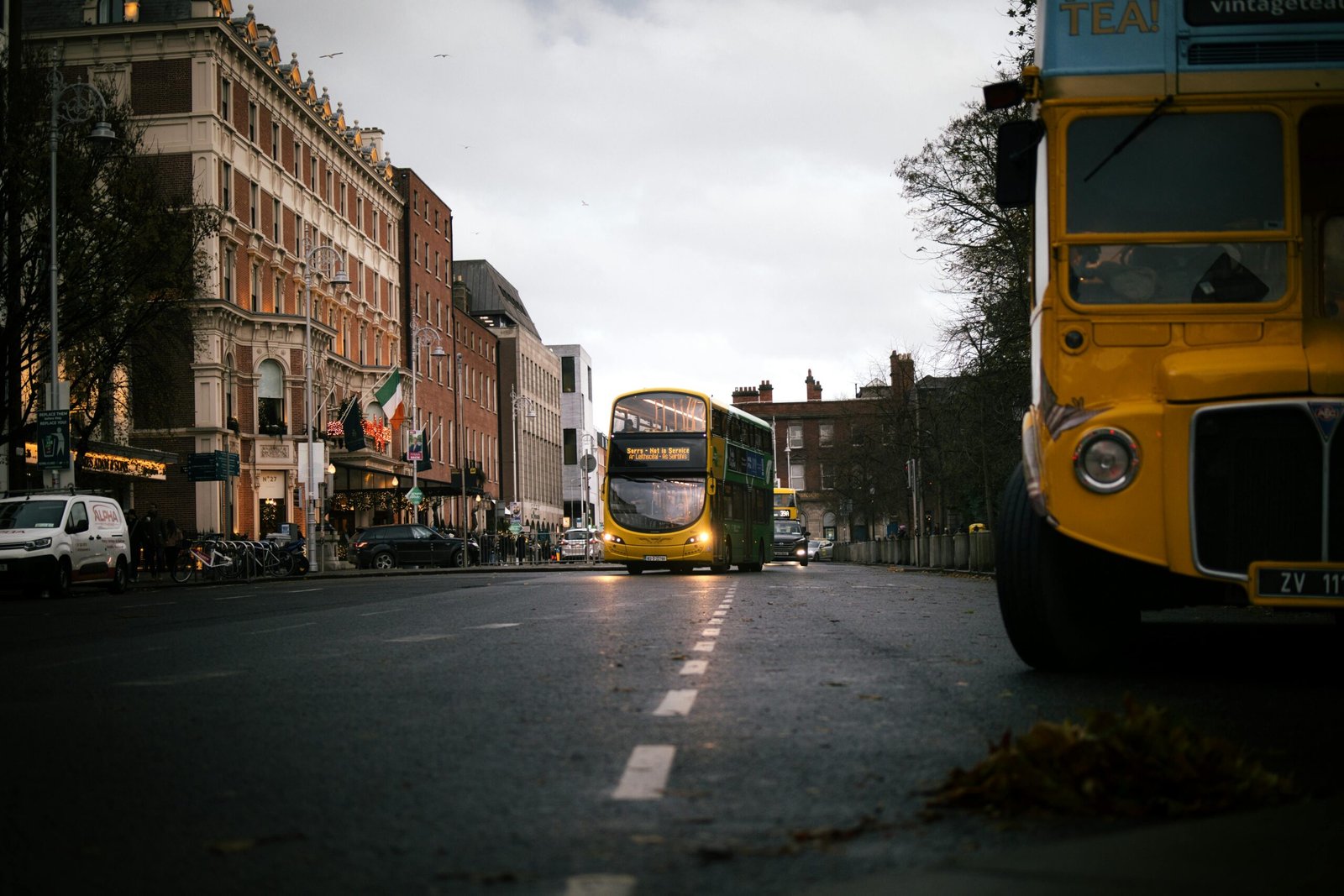
Essential Guide: Driving in Dublin – License Requirements, Insurance & Parking Laws (2026)
Driving in the capital of Ireland requires a solid understanding of local regulations, especially with the latest transport updates. Whether you are a resident, an expat, or a tourist, navigating the city involves more than just keeping to the left. As of 2026, Dublin has implemented stricter traffic management systems and new insurance verification protocols that every driver must follow.
Driving in Dublin: What You Need to Know First?
If you plan to drive in Dublin in 2026, your priority should be ensuring your documentation meets Irish legal standards. Ireland follows strict Road Traffic Acts that mandate specific insurance coverage and license validity.
The city center has also undergone significant changes under the Dublin City Transport Plan, restricting private car access on certain quays to prioritize public transit.
To drive legally, you must have a valid license, motor tax, a National Car Test (NCT) certificate for older vehicles, and an insurance disc displayed on your windscreen. Failure to meet these requirements can lead to vehicle impoundment or significant penalty points.
Driver’s License Requirements in Dublin for 2026
Your right to drive in Dublin depends largely on where your original license was issued and how long you have been in the country.
EU and EEA License Holders
If you hold a valid driver’s license from an EU or EEA member state, you can drive in Ireland for as long as your license remains valid. There is no immediate requirement to exchange it for an Irish one. However, if your license expires while you are living here, you must exchange it for an Irish license within 10 years of that expiry date.
Visitors from Outside the EU
Tourists from countries like the USA, Canada, and Australia can drive on their home country’s license for up to one year. This is provided the license is current and valid. If you stay for more than 12 months, you are considered a “normal resident” and must take steps to obtain an Irish permit.
Exchanging Your License for an Irish One
For those moving to Dublin permanently, the National Driver License Service (NDLS) manages the exchange process. In 2026, the process is streamlined through the MyGovID system.
- Recognized States: If your license is from the UK, Australia, Canada (certain provinces), or South Africa, you can usually exchange it directly for a fee of €65.
- Non-Recognized States: If your country does not have a reciprocal agreement, you must go through the full Irish testing process. This includes a theory test, a set of Essential Driver Training (EDT) lessons, and a practical road test.
- Documentation: You will need a Public Services Card (PSC), proof of address, and your original physical license to surrender.
Mandatory Vehicle Insurance Laws in Ireland
Insurance is not optional in Dublin. It is a criminal offense to drive a mechanically propelled vehicle in a public place without an approved insurance policy.
Types of Insurance Policies
Most drivers in Dublin choose between three main levels of cover:
- Third-Party Only: The minimum legal requirement. It covers damage to other people and their property, but does not cover your own vehicle.
- Third-Party Fire and Theft: Includes the basics plus protection if your car is stolen or catches fire.
- Comprehensive: Offers the highest protection, covering damage to your own car even if you are at fault.
New 2026 Documentation Rules
As of March 9, 2026, the Road Safety Authority (RSA) has introduced stricter insurance verification. If you are taking a driving test or are involved in a roadside check, you must provide a valid insurance certificate. If you are not the primary policyholder (e.g., driving a rental or a friend’s car), you must have written confirmation from the insurer that you are specifically covered to drive that vehicle.
Tips for Expats and New Residents
Securing affordable insurance in Dublin can be tough if you don’t have an Irish driving history. To lower your premiums:
- Obtain a “No Claims Discount” (NCD) letter from your previous insurer in your home country.
- Ensure the letter is in English or has a certified translation.
- Consider adding an experienced Irish driver to your policy to reduce the perceived risk.
Navigating Dublin’s Parking Zones and Costs
Parking in Dublin is highly regulated and divided into color-coded zones. The closer you are to the city center, the more expensive it becomes.
Understanding the Color-Coded Zones
Dublin City Council uses a tiered pricing system to manage parking demand. As of 2026, the rates are:
Zone Color Demand Level Hourly Rate
| Zone Color | Demand Level | Hourly Rate |
|---|---|---|
| Yellow | Very High | €4.00 |
| Red | High | €3.50 |
| Green | Medium | €2.00 |
| Orange | Low | €1.20 |
| Blue | Lowest | €0.90 |
There is also a White Zone in the central core where parking is €1.80 per hour, specifically on Sundays between 2:00 PM and 6:00 PM.
How to Pay for Parking in Dublin?
Most street parking is “Pay and Display.” You buy a ticket from a machine and place it on your dashboard. However, many residents now use the Parking Tag app or Payzone. These allow you to pay via smartphone and extend your session remotely without returning to your car.
Sunday Parking and Free Hours
In many parts of Dublin, parking is free on Sundays and after 7:00 PM on weekdays. However, always check the street signs. Some high-demand areas in the city center now charge for parking on Sundays to discourage congestion.
Essential Rules of the Road and Traffic Laws
Driving in Dublin requires awareness of local traffic laws that may differ from those in your home country.
The M50 Toll: Rates and Deadlines
The M50 motorway circles Dublin and features a barrier-free toll between Junction 6 and Junction 7. Cameras scan your license plate as you pass.
For 2026, the unregistered car rate is €3.80 per passage. If you have a video account, it drops to €3.20, and a tag account is €2.60. You must pay the toll by 8:00 PM the following day. If you miss this deadline, a €4.00 penalty is added. If left unpaid for weeks, the fines can escalate to over €150. You can pay online at eFlow.ie.
Dublin City Transport Plan 2026: Navigating the Center
The 2026 traffic landscape includes major restrictions on “through-traffic.” This means that if you are trying to get from one side of the city to the other, you are encouraged to use the M50 rather than driving through the city center. Specific quays, such as Bachelors Walk, now prohibit private cars from moving straight ahead, reserving those lanes for buses, taxis, and cyclists.
Alcohol and Speed Limits
Ireland has very strict drink-driving laws. The legal limit is 50mg of alcohol per 100ml of blood for experienced drivers, but only 20mg for learner and professional drivers. Essentially, the rule is: if you drive, do not drink at all.
Speed limits are generally:
- 30 km/h or 50 km/h in built-up city areas.
- 80 km/h on regional roads (R-roads).
- 100 km/h on national roads (N-roads).
- 120 km/h on motorways (M-roads).
How to Avoid Traffic and Congestion in Dublin?
To minimize delays in Dublin, follow these three steps:
- Use Park and Ride: Park your car at suburban Luas (tram) or Dart (train) stations and take public transport into the center.
- Check Real-Time Data: Use apps like Google Maps or Waze, which are updated with the latest 2026 road closures and “bus gate” restrictions.
- Avoid Peak Times: Traffic is heaviest between 7:30 AM and 9:30 AM and 4:30 PM – 6:30 PM.
Electric Vehicle (EV) Charging in Dublin
Dublin is rapidly expanding its EV infrastructure. The ESB ecars network provides public charging points across the city. Many parking garages now offer dedicated EV bays with rapid chargers. If you are driving an EV, you still have to pay for parking in most zones unless a specific sign states otherwise.
Final Thoughts on Dublin Driving
Driving in Dublin in 2026 is manageable if you stay informed. Respect the bus lanes, pay your tolls on time, and ensure your insurance documentation is always up to date. By following the parking color codes and staying aware of the new city center transport restrictions, you can navigate the capital with confidence and avoid unnecessary fines.
FAQs
Can I drive in Dublin with a UK license in 2026?
Yes, visitors can drive for up to a year. Residents must exchange their UK license for an Irish one, which is a straightforward process thanks to reciprocal agreements.
What happens if I forget to pay the M50 toll?
You will receive a late payment notice in the mail. The initial fine is small, but it increases significantly if not settled within 14 to 56 days.
Is it difficult to find parking in Dublin City Center?
On-street parking in the Yellow and Red zones is often full. It is usually easier to use multi-story car parks like those at Stephen’s Green, Jervis Street, or Arnotts.
What is the “Clamping” law in Dublin?
If you park illegally or overstay your paid time, your vehicle may be clamped. The release fee is typically €80, and it can take several hours for a technician to arrive and remove the device.