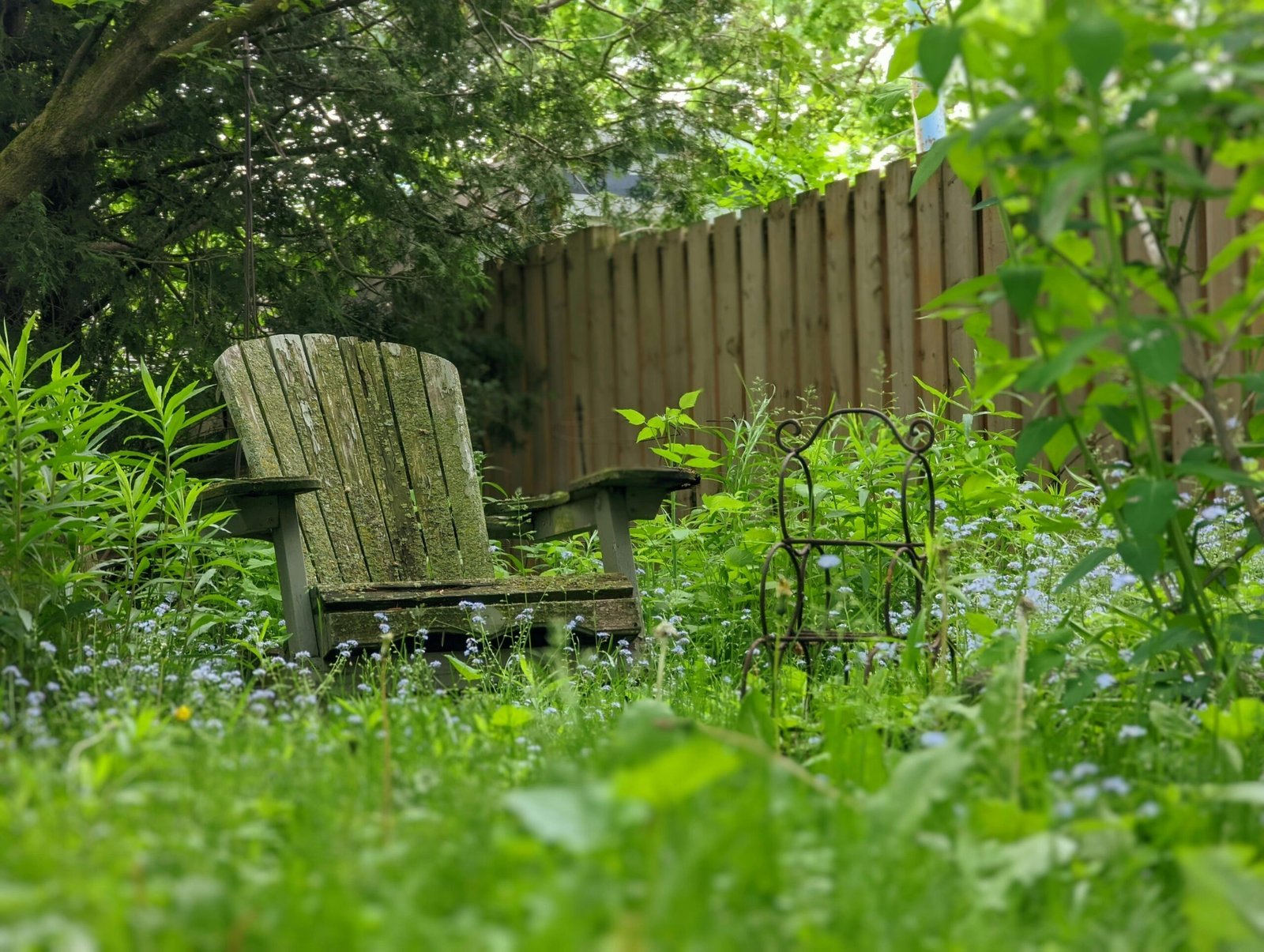
You can rescue a neglected garden in exactly 48 hours. How? By ruthlessly applying the 70/30 rule: Spend Saturday clearing out the 70% visual bulk dead wood, invasive weeds, and trash, and spend Sunday intensely hydrating and feeding the 30% of plants that survived with a 2-inch layer of fresh compost and 3 inches of mulch. That is the entire weekend rescue plan.
You need a plan before you wake up on Saturday. Neglected gardens look worse than they are because dead stalks from last year take up physical space. Your goal is to reset the baseline, not create a perfect landscape.
Friday Night: The 15-Minute Triage
You need to know what is dead and what is just dormant. Do not guess. You will rip out something expensive. Take your pruners and find a woody plant that looks entirely dead.
Scratch the bark lightly with the blade. If you see bright green underneath, it is alive. Leave it alone. If it is brown, hard, and snaps easily, it is dead wood.
Warning: Do not try to start pulling weeds on Friday night in the dark. You will pull out a sleeping perennial. I did this three years ago. I thought I was yanking a massive, ugly weed root out of my raised bed with a shovel.
I spent 20 minutes wrestling it out of the dirt in the dark. It was my prize-winning rhubarb crown. I killed a plant that had survived three harsh summers because I was impatient. Wait for the morning light.
Saturday Morning: The Brutal 70% Cutback
You wake up on Saturday. Drink your coffee. Put on thick leather gloves. Today is not about planting or making things look pretty. Today is about destruction. You are removing the visual noise.
Start with the weeds, but do not dig them out. If the soil is dry and neglected, pulling a weed will just snap the top off, leaving the root to grow back next week. Instead, cut the weeds down to exactly 1 inch above the soil line using shears or a weed whacker. We will deal with the roots later using mulch.
Next, attack the dead wood. Take your bypass pruners. Cut away any branch that is gray, brittle, or cracked. Cut it back to where the wood feels firm and looks green when scratched. If an entire shrub is dead, cut it down to 2 inches above the ground. Leave the stump for now. Digging out a stump takes four hours. You do not have four hours this weekend.
Bag all this debris immediately. Use heavy-duty 42-gallon black trash bags. If you leave the piles of cut weeds on the lawn, the wind will blow the seeds everywhere, or you will simply lose motivation looking at the massive mess. Stuff them in the bags. Tie them tight. Move them out of sight.
The 30% Pruning Rule
When you are removing living but overgrown branches, never remove more than 30% of the plant’s green leaves at one time. If you chop a massive, overgrown bush down to a stump, it will panic.
It will send out fifty weak, spindly shoots, or it will just die from shock. If a shrub is 6 feet tall and you want it to be 3 feet tall, cut it down to 4 feet this weekend. Wait until next spring to cut the rest.
When you make a cut, look for a small bump on the branch called a bud. Make your cut exactly 1/4 inch above a bud that faces outward, away from the center of the plant. Cut at a 45-degree angle.
This forces the new growth to grow out and away, keeping the center of the plant open for airflow. If you cut flat across the middle of a branch, the wood above the nearest bud will simply rot and invite disease.
Saturday Afternoon: The Deep Hydration Trick
By 2 PM, the garden will look naked. This is good. You can finally see the soil. Neglected soil is usually hydrophobic. This means it physically repels water. When organic matter in soil completely dries out, it shrinks. The microscopic gaps collapse, and the surface turns into a hard, waxy crust. If you spray a hose on it, the water just rolls off the surface and runs down the driveway.
Beating Hydrophobic Soil
You must break this surface tension before you can feed the surviving plants. Get a 10-liter watering can. Squeeze exactly 1 teaspoon of plain, non-antibacterial dish soap into the empty can. Fill it with water.
The soap breaks the surface tension of the water, allowing it to penetrate that hard crust of soil without harming the roots.
Pour this soapy water slowly around the base of every surviving plant. Give every plant a full 10 liters. Wait 15 minutes. Then, come back with your hose. Turn it into a slow trickle. Leave the hose at the base of your largest surviving shrub for 30 minutes.
Move it to the next one. A plant that has been starved of water for months cannot drink 100 liters in one minute. It needs a slow, steady IV drip.
Warning: Do not apply any fertilizer to bone-dry soil. Fertilizer contains heavy salts. If you put nitrogen fertilizer on dry roots, it will burn them instantly, and the plant will be dead by Tuesday. Always hydrate the root zone first.
Sunday Morning: Fixing Beds and Containers
You wake up on Sunday. The plants you watered yesterday will already look 20% better. The leaves will be standing up instead of drooping. Now we fix their food supply.
If you have raised beds or pots, they need special attention. Potting soil in neglected containers turns into a dead brick. It loses all its nutrients. You do not need to throw all the dirt away. That is expensive and heavy. Instead, remove the top 4 inches of old, crusty dirt with a trowel. Throw it in a bucket.
Replace those 4 inches with a 50/50 mix. Mix 2 parts fresh compost with 2 parts new potting soil. Mix it in a wheelbarrow or a large tub. Water this new mixture with 5 liters of water before you put it in the pot.
It is much easier to mix wet soil in a tub than to try wetting it once it is packed tightly into a container. Press this damp, nutrient-rich mix around your surviving plants.
For your raised beds, do not till the soil. Tilling destroys the delicate soil structure and brings thousands of dormant weed seeds up to the surface, where they will sprout. Instead, dump a solid 2-inch layer of rich, black compost directly on top of the old dirt. Do not mix it in. Just spread it flat like frosting on a cake.
Vegetable plants are heavy feeders. If your tomatoes were yellowing last year, they were starving. Before you lay down that 2-inch layer of compost on a vegetable bed, add a granular, slow-release organic fertilizer.
Look for a bag with the numbers 5-5-5 on it. Sprinkle exactly 1/2 cup of this fertilizer per 1 square meter of raised bed space. The compost goes on top of it, keeping the fertilizer moist so it breaks down and feeds the roots for the next 90 days.
Sunday Afternoon: The Smothering Strategy
It is 1 PM on Sunday. The dead stuff is gone. The plants are hydrated. The soil is fed with compost. Now you must stop the weeds from coming back. Remember those weed roots you left in the ground yesterday? We are going to smother them.
You need mulch. Go to the hardware store and buy natural cedar or pine bark mulch. Do not buy the dyed red or black mulch. The dyes leach weird chemicals, and the wood is often ground-up construction pallets that steal nitrogen from your soil as they break down.
Lay down exactly 3 inches of natural mulch over every inch of bare soil. Use a tape measure the first time you do this. Most people only put down 1 inch of mulch. One inch does nothing.
Weed seeds can push right through 1 inch of wood chips. Three-inch blocks 100% of the sunlight, stopping the cut weeds from regrowing and preventing new seeds from germinating.
One inch of mulch requires 1 cubic yard to cover 324 square feet. Three inches of mulch requires 3 cubic yards for that same space. Yes, you have to buy more bags. But if you skip this math, you will spend 20 hours pulling weeds next month instead of 2 hours spreading mulch today.
Warning: Keep the mulch exactly 2 inches away from the stems or trunks of your plants. If you pile wet wood chips directly against the bark of a shrub, the bark will rot, insects will get in, and the plant will slowly die. Leave a little bare-dirt donut around the base of every single plant.
Dealing with the “What Ifs”
You might look at a plant and wonder what to do if it has a disease. If you see leaves covered in white powder or black spots, do not panic. Do not spray chemicals immediately. Ninety percent of fungal issues in neglected gardens happen because the plants lack airflow and are highly stressed from a lack of water.
By cutting away the dead wood on Saturday and deep-watering on Sunday, you have already fixed the airflow and the drought stress. Cut off the worst-looking diseased leaves with your shears and throw them in the household trash—not your compost pile. Give the plant two weeks. Once it absorbs the new compost nutrients, it will usually push out healthy green growth on its own.
You might also wonder about planting new things to fill the empty gaps. Stop. Do not plant a single new seed or shrub this weekend. A rescue operation is about stabilizing the patient, not adding more mouths to feed.
Wait exactly 14 days. Watch how the sun moves across your newly cleared space. Watch which surviving plants suddenly double in size now that they have water and light. Only then should you go to the nursery.
Once the rescue is over, you need to establish a watering schedule for the recovery period. For the first 14 days, water every surviving plant with 5 liters of water every 2 days if the daytime temperature is above 30°C. If it is cooler, water every 3 days. Do this in the early morning, around 7 AM. Watering at night leaves the leaves wet in the dark, which practically guarantees fungal diseases.
The 5-Minute Maintenance Rule
By 5 PM on Sunday, your garden will look completely different. It will look deliberate. The sharp lines of the mulch and the cleared-out space will make the remaining plants look like they belong there. But you cannot abandon it again.
You do not need to spend three hours a day working outside. You need to spend 5 minutes. Set an alarm on your phone for 6:00 PM every evening. Go outside with a pair of shears and a small bucket. Do not take your phone. Look for one specific thing to do. Snip off 3 dead flower heads. Pull 4 tiny weeds before their roots get deep. Empty 1 watering can onto a thirsty pot.
When the 5 minutes are up, stop. Go inside. This daily, microscopic effort prevents the garden from ever reaching that overwhelming 70% failure rate again. It keeps you connected to the soil without burning you out. Gardening is not a weekend event; it is a daily, quiet observation.