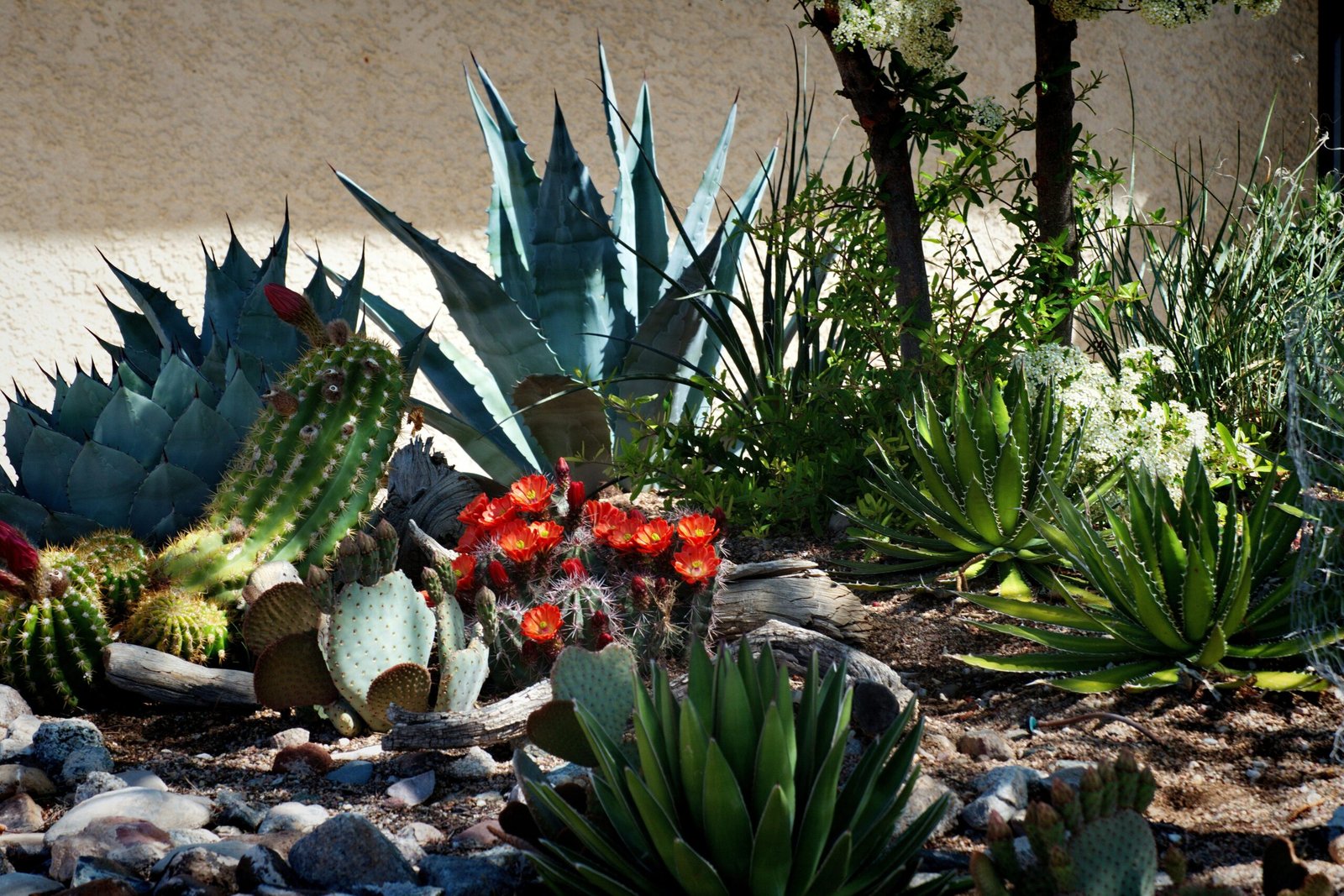
You spent $200 at the nursery. You dug the holes perfectly. You watered them twice. And the desert still baked them to a crisp. You are probably wondering how anyone grows anything in this hot, dry, dusty wasteland without wasting hundreds of dollars on water.
You must block 40% of the afternoon sun with shade cloth, apply exactly 4 inches of chunky woodchip mulch over the roots, and water deeply from below using buried unglazed clay pots or a drip line running at 1 gallon per hour. That is the entire system.
Stop spraying water on bare dirt. Stop leaving delicate leaves exposed to the 3 PM sun. Do not fight the desert. You have to insulate your plants against it.
The Dirt is Not Soil
Desert dirt is not ready for plants. It is usually alkaline sand or rock-hard caliche clay. It holds zero nutrients. It either drains water in two seconds or pools it on the surface until it evaporates. You cannot just dig a hole and drop a plant in. You have to build a sponge.
Dig your planting hole three times wider than the nursery pot. Do not dig it any deeper. The hole must be the same depth as the root ball. If you dig deeper, the loose soil will settle, the plant will sink, and the buried stem will rot.
Mix your native dirt with compost. Use a strict ratio of 70% native dirt to 30% compost. You might be tempted to fill the hole with 100% premium potting soil. Do not do this. If you put rich potting soil in a hole surrounded by hard desert clay, the roots will never leave that comfortable space.
They will circle themselves and eventually choke the plant. By mixing in 30% compost, you hold moisture, but you force the roots to push outward into the native ground to survive.
Do not add peat moss to your soil mix. Desert soils are usually highly alkaline, often sitting at a pH of 8.0 or higher. Peat moss breaks down too fast in the severe heat and turns into useless, water-repellent dust.
Use aged steer manure or mushroom compost instead. Add exactly 2 cups of worm castings to every planting hole. This gives the plant a slow-release nitrogen boost that will not burn the roots when the soil heats up.
The Armor You Need to Build
Bare dirt in a dry climate is a death sentence for plant roots. When the air temperature is 110 degrees Fahrenheit, the top two inches of bare soil can reach 140 degrees. Roots literally cook inside the earth. You must cover the soil.
Buy heavy, chunky woodchips. Do not buy shredded, fluffy cedar bark. The desert wind will blow fluffy bark into your neighbor’s yard in ten minutes. You need heavy pieces of wood.
Lay down exactly 4 inches of these chunky woodchips over the entire root zone of your plants. Measure it with a ruler. Keep the mulch exactly 2 inches away from the main stem of the plant. If wet mulch touches the stem constantly, the bark will rot and invite disease.
This 4-inch barrier drops the soil temperature by up to 30 degrees. It also physically stops the sun from turning your irrigation water into steam. Applying 4 inches of mulch will cut your water bill in half immediately.
Watering Without Wasting
Sprinklers are useless in a hot, dry climate. If you spray water through the air at 2 PM, 40% of it evaporates before it ever hits the dirt. You must deliver water directly to the root zone, under the soil line.
The most foolproof method in history is an Olla. This is an unglazed clay pot with a narrow neck. You bury it in the dirt next to your plant, leaving just the top two inches of the opening above ground.
You fill the pot with water twice a week. The water slowly seeps through the porous clay directly into the root zone. Because the water is underground, there is zero evaporation. The plant drinks exactly what it needs.
If you use a modern drip irrigation system, use inline emitter tubing. Place two lines of tubing on opposite sides of the plant. Use emitters rated for exactly 1 gallon per hour. Run the system for exactly 45 minutes, twice a week in the summer.
Do not water for 10 minutes every day. Shallow, daily watering creates weak, shallow roots. Those shallow roots dry out instantly when a heatwave hits. Deep, infrequent watering forces the roots to grow two feet down into the earth, where the soil stays cool and damp.
Set your watering timer for 4:00 AM. If you water in the evening, the soil stays wet and warm all night. This breeds fungal diseases, which can ruin a garden even in a dry climate. If you water at noon, the water heats up and boils the roots. Watering at 4:00 AM gives the plant maximum hydration right before the sun hits, allowing it to withstand the afternoon stress.
The Brick Oven Mistake
Here is where I failed miserably and lost an entire crop. Three years ago, I planted a beautiful row of heirloom tomatoes right up against my house. The house has a south-facing brick wall. I thought the wall would protect the fragile plants from the wind.
By mid-June, every single tomato plant was a scorched, yellow stick. I realized too late that a brick wall facing the summer sun acts like a giant thermal battery. It absorbs the brutal heat all day and radiates it back onto the plants all night. The ambient air temperature was 105 degrees, but the microclimate next to that wall was 130 degrees. I had accidentally built a brick oven.
Never plant tender vegetables or delicate flowers against a south or west-facing masonry wall. Save those baking spots for your toughest native succulents, cacti, or Bougainvillea. Keep your fragile plants out in the open where the air can circulate.
Filtering the Lasers
You cannot change the desert sun, but you must filter it. Most vegetables and delicate flowers completely stop growing when the temperature hits 95 degrees. To keep them producing, you need to throw shade.
Go to the hardware store and buy a roll of knitted shade cloth rated for 40% to 50% UV block. Do not buy the 90% block material. That heavy material is designed for human patios. If you put 90% shade cloth over tomatoes or peppers, you will starve them of light, and they will drop all their fruit. 40% is the magic number.
Build a simple frame using half-inch PVC pipes and drape the cloth over it. Leave the eastern side of the frame completely open. Plants love the gentle morning sun from 6 AM to 11 AM.
Pull the shade cloth down on the western and southern sides to block the brutal afternoon heat. Secure the cloth tightly to the frame with heavy-duty zip ties every 12 inches. If the cloth is loose and flaps in the wind, it will act like a whip and tear your plants to pieces.
Container Gardening in the Heat
Growing plants in pots is twice as hard in the desert. The sun hits the sides of the pot and heats the soil much faster than it heats the ground.
Never use black plastic pots. A black plastic pot in direct desert sunlight will heat the soil inside to 150 degrees and kill the plant in one afternoon. Unglazed terra cotta pots are also tricky. They look nice, but they are highly porous. The dry air pulls moisture right out through the sides of the clay. You will have to water a terra cotta pot twice a day in July to keep a plant alive.
Use thick-walled, glazed ceramic pots. The glaze seals the moisture inside. Choose light colors like white, light blue, or yellow to reflect the sun away. Buy pots that are a minimum of 20 inches in diameter. Small pots hold too little soil. Less soil means less water retention. A 20-inch pot holds enough soil mass to stay cool during a heatwave.
Defeating Dust and Pests
Desert winds carry massive amounts of fine silt and dust. This dust coats the leaves of your garden. Plants breathe through tiny pores on their leaves called stomata. When dust plugs those pores, the plant suffocates. It stops photosynthesizing and its growth stalls.
Once every two weeks, wake up at 5 AM and gently hose off the leaves of your entire garden. You must do this early in the morning. The leaves need time to dry completely before the sun gets hot. If water droplets stay on the leaves at noon, they act like tiny magnifying glasses and burn holes in the plant tissue.
This dust also brings a massive pest problem: Spider mites. Spider mites thrive in hot, dry, dusty conditions. They are nearly invisible, but you will see fine webbing under the leaves. The leaves will turn dull, yellow, and speckled.
Washing the dust off your plants naturally disrupts their life cycle. If you already have an infestation, mix exactly 1 teaspoon of pure cold-pressed neem oil and a few drops of dish soap into 1 quart of water. Spray the undersides of the leaves.
Only spray neem oil if the temperature is going to stay below 80 degrees for the next 12 hours. If you spray oil on leaves during a 100-degree day, you will fry the plant instantly.
The Upside-Down Calendar
You must throw away the traditional gardening calendar. You cannot read gardening books written by people in Ohio. The rest of the country plants seeds in May and harvests in August. If you plant a tomato seed in May, your plant will die before it ever makes a flower.
In a hot desert climate, your real spring starts in late September. Plant your tomatoes, peppers, squash, and beans between September 15th and October 15th.
The soil is still warm enough to sprout the seeds, but the air is cooling down. Your plants will grow massively over the mild, sunny winter. They will give you a huge harvest in March, April, and May.
When late June arrives, pull the vegetables out. Do not try to keep a tomato plant alive in July. It takes 10 gallons of water a week to keep a barren, stressed tomato vine on life support during the summer. It is a waste of water. Pull the plants, throw them in the compost pile, and let the garden bed rest.
Feeding When It Is Hot
Fertilizer pushes a plant to grow new leaves. Growing new leaves requires massive amounts of water. If you force a plant to grow during a 110-degree heatwave, it cannot drink fast enough to support the new, soft growth. The plant will collapse from the stress.
Never apply fertilizer if the daytime temperature is consistently over 90 degrees Fahrenheit. Stop all feeding by late May.
When you do feed your plants during the cooler growing months, use a liquid fish emulsion. Mix exactly 1 tablespoon of fish emulsion into 1 gallon of water. Apply this mixture directly to the soil over the root zone once every 14 days from October through March.
Liquid fertilizers are taken up instantly by the roots. Granular fertilizers just sit on top of dry desert dirt. They cannot dissolve and feed the plant without consistent, heavy rain, which you are not going to get.