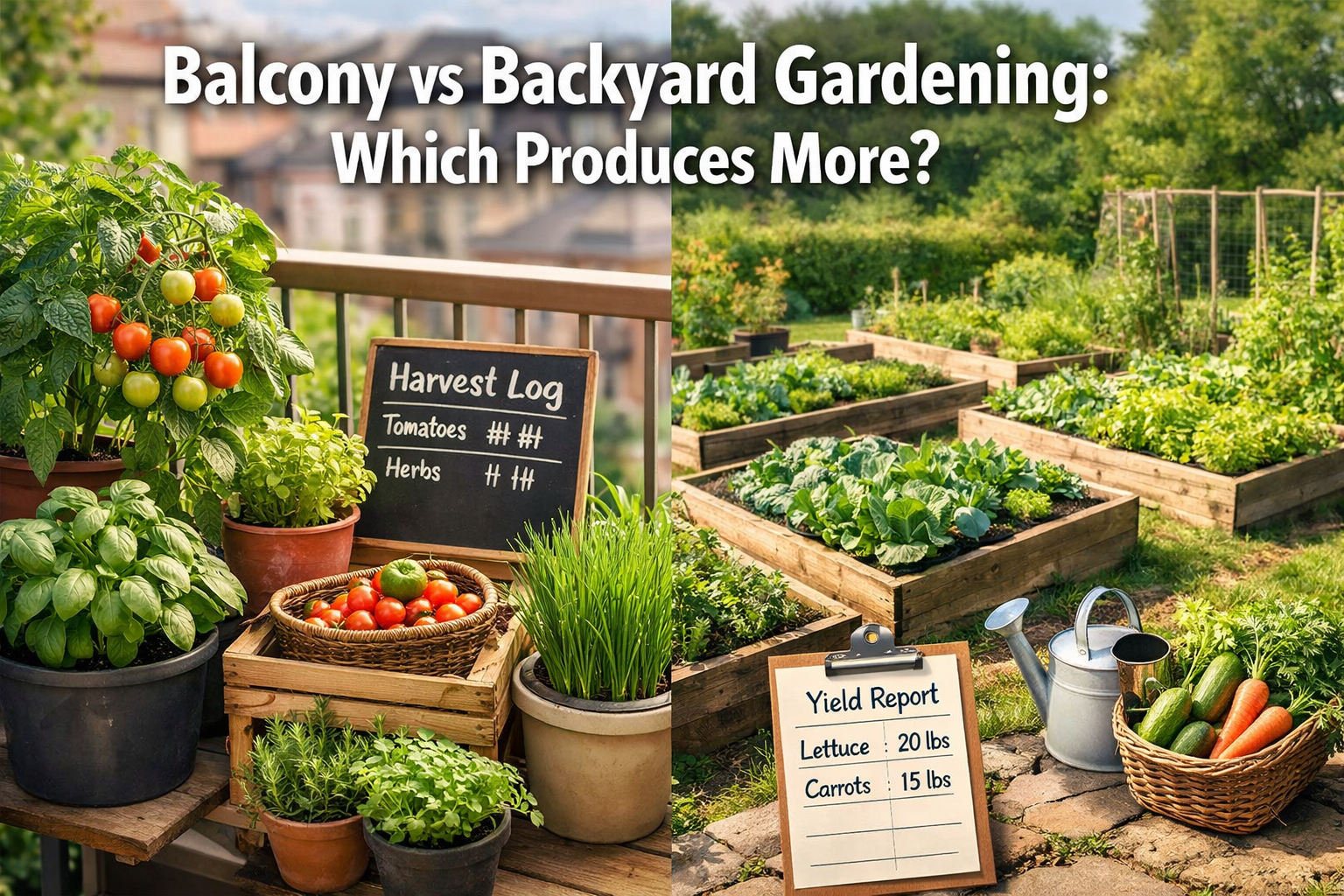
Backyard gardens typically produce 3-5 times more food per season than balcony gardens due to larger growing space and soil capacity. However, balcony gardens can achieve higher yields per square foot through intensive growing methods like vertical systems and succession planting.
The choice between balcony vs backyard gardening depends on available space, time commitment, and productivity goals rather than just total output.
Key Takeaways
- Space efficiency: Balcony gardens produce 2-4 pounds per square foot vs backyard gardens at 1-2 pounds per square foot.
- Total yield: Backyard gardens generate significantly more food overall due to larger growing areas.
- Growing season: Balcony gardens extend seasons with controlled microclimates and container mobility.
- Maintenance: Balcony setups require daily watering but less weeding and pest management.
- Startup costs: Balcony gardens cost $200-500 initially vs $300-800 for a backyard garden setup.
- Crop selection: Leafy greens and herbs thrive on balconies; root vegetables and large plants suit backyards.
- Water efficiency: Container gardens use 30-50% less water through precise irrigation control.
What Determines Garden Productivity?
Garden productivity depends on four main factors: growing space, soil quality, sunlight exposure, and management intensity. Balcony vs backyard gardening differs significantly across these variables.
Growing space affects total output but not necessarily efficiency. A 100-square-foot backyard plot produces more absolute volume than a 20-square-foot balcony, but the balcony might yield more per square foot.
Soil quality varies dramatically between setups. Backyard gardens rely on existing soil conditions, which may require amendments. Balcony container gardens start with premium potting mix, providing immediate optimal growing conditions.
Sunlight exposure often favors balconies in urban settings. Many balconies receive 6-8 hours of direct sun, while backyard gardens may face shade from buildings, trees, or fences.
Management intensity typically runs higher with balcony gardens. Container plants need daily attention but respond quickly to care adjustments.
Choose backyard gardening if space exceeds 200 square feet and soil conditions are good. Opt for balcony gardening when working with limited space but can provide intensive daily care.
How Much Space Do You Actually Need?
Balcony gardens function effectively in 15-50 square feet, while productive backyard gardens typically require 100+ square feet. The space calculation changes when considering vertical growing potential.
Balcony space utilization:
- Vertical towers: 4 square feet of floor space = 16 square feet growing area.
- Hanging planters: Add 30-50% more growing space without floor impact.
- Tiered systems: Triple growing area in the same footprint.
Backyard space requirements:
- Raised beds: 4×8 feet minimum for crop rotation.
- In-ground plots: 10×10 feet for a family of four.
- Pathways: Add 25% extra space for access.
Small balconies (15-25 square feet) work best for herbs and leafy greens. Medium balconies (25-50 square feet) support diverse vegetable production, including compact fruiting plants.
Common mistake: Overcrowding balcony containers reduces yields more than expanding to fewer, properly-spaced plants.
Which Crops Produce More in Each Setting?
Crop selection dramatically impacts the balcony vs backyard gardening productivity comparison. Different plants thrive in different environments based on root space, support needs, and care requirements.
High-yield balcony crops:
- Lettuce: 4-6 harvests per season in containers..
- Cherry tomatoes: 10-15 pounds per plant in large containers.
- Herbs: Continuous harvest, 2-3x grocery store value.
- Microgreens: 7-14 day harvest cycles.
Backyard garden advantages:
- Large tomatoes: 20-30 pounds per plant with ground space.
- Root vegetables: Carrots and potatoes need deep soil.
- Sprawling crops: Squash, cucumbers, melons.
- Perennial plants: Asparagus, fruit trees, berry bushes.
Yield comparison by crop type:
| Crop Type | Balcony (per sq ft) | Backyard (per sq ft) | Winner |
|---|---|---|---|
| Lettuce | 3-4 lbs | 1-2 lbs | Balcony |
| Tomatoes | 8-12 lbs | 6-10 lbs | Balcony |
| Peppers | 2-3 lbs | 2-4 lbs | Tie |
| Root vegetables | 0-1 lbs | 3-5 lbs | Backyard |
| Herbs | 2-3 lbs | 1-2 lbs | Balcony |
Focus balcony gardens on quick-growing, high-value crops that benefit from intensive care. Reserve backyard space for storage crops and plants requiring extensive root systems.
What Are the Real Costs of Each Approach?
Initial setup costs and ongoing expenses differ significantly between balcony vs backyard gardening approaches. Container gardening requires a higher upfront investment but lower maintenance costs.
Balcony garden startup costs:
- Containers and planters: $100-200.
- Premium potting soil: $50-100.
- Vertical growing systems: $75-150.
- Irrigation setup: $25-75.
- Total: $250-525
Backyard garden startup costs:
- Soil amendments: $100-200.
- Tools and equipment: $75-150.
- Raised bed materials: $150-300.
- Seeds and plants: $50-100.
- Total: $375-750
Annual operating costs:
- Balcony: $100-150 (soil replacement, fertilizer).
- Backyard: $75-125 (seeds, amendments, water).
Balcony gardens reach break-even faster due to higher yields per dollar invested. A $400 balcony setup typically pays for itself in 8-12 months through grocery savings.
Edge case: Balcony gardens in extreme climates may require additional heating/cooling costs that backyard gardens avoid through natural soil insulation.
How Do Seasonal Factors Affect Production?
Season length and weather protection significantly impact the balcony vs backyard gardening productivity equation. Container gardens offer more control but require more intervention.
Balcony seasonal advantages:
- Earlier spring starts with container warming.
- Extended fall growing by moving plants indoors.
- Weather protection with temporary covers.
- Microclimate control through positioning.
Backyard seasonal benefits:
- Natural soil insulation moderates temperature swings.
- Established root systems handle weather stress better.
- Less watering during rainy periods.
- Perennial crops provide multi-year yields.
Balcony gardens can extend growing seasons by 4-8 weeks in temperate climates through container mobility and protection. This extension often compensates for smaller growing space.
Season extension strategies:
- Move containers to protected areas during storms.
- Use row covers and cold frames more easily.
- Bring tender plants indoors for winter growing.
- Start seeds earlier in controlled conditions.
Choose balcony gardening if maximizing season length is important. Select backyard gardening for lower-maintenance seasonal growing.
Which Requires More Time and Effort?
Daily time investment varies significantly between balcony vs backyard gardening, with different task distributions and seasonal patterns.
Balcony garden time requirements:
- Daily watering: 10-15 minutes.
- Weekly feeding: 15-20 minutes.
- Harvest and maintenance: 30 minutes weekly.
- Total: 2-3 hours per week
Backyard garden time requirements:
- Watering (3x weekly): 20-30 minutes total.
- Weeding and maintenance: 45-60 minutes weekly.
- Seasonal tasks: 2-4 hours monthly.
- Total: 2.5-4 hours per week
Balcony gardens require consistent daily attention but involve less physical labor. Backyard gardens allow for batch work sessions but demand more seasonally intensive periods.
Task intensity comparison:
- Balcony: High frequency, low intensity.
- Backyard: Moderate frequency, higher intensity.
Time efficiency favors balcony gardens for busy schedules with daily routines. Backyard gardens suit weekend gardeners who prefer longer work sessions.
FAQ
Can balcony gardens really produce as much food as backyard gardens?
Per square foot, yes. Balcony gardens often produce 2-3x more per square foot through intensive methods, but backyard gardens produce more total food due to larger space.
What’s the minimum balcony size needed for meaningful food production?
15-20 square feet can produce significant herbs and salad greens for 1-2 people, especially with vertical growing systems.
Do container plants taste different from ground-grown vegetables?
No significant taste difference when using quality potting mix and proper fertilization. Container plants may actually have more intense flavors due to controlled growing conditions.
Which approach is better for beginners?
Balcony container gardening is often easier for beginners due to controlled soil conditions and fewer pest issues, despite requiring more frequent watering.
How long do balcony garden containers last?
Quality containers last 5-10 years. Potting soil should be refreshed or replaced annually for best results.
Can you grow root vegetables successfully on balconies?
Yes, but choose appropriate varieties. Use deep containers (18+ inches) for carrots, potatoes, and radishes. Compact varieties work best.
Which gardening method uses less water overall?
Balcony container gardens typically use 30-50% less total water through precise irrigation control, despite more frequent watering needs.
What’s the biggest productivity mistake in each gardening type?
Balcony: Overcrowding containers. Backyard: Poor soil preparation and inadequate spacing for the mature sizes.
Do balcony gardens work in apartments with limited sun?
Partial shade balconies (4-6 hours of sun) can grow leafy greens and herbs successfully. Full shade requires grow lights for productive yields.
How do pest problems compare between the two methods?
Balcony gardens typically have fewer pest issues due to elevation and container isolation, while backyard gardens face more diverse pest pressure but have natural predator benefits.
Conclusion
The balcony vs backyard gardening productivity debate ultimately depends on measuring efficiency versus total output. Balcony gardens excel in space efficiency, producing 2-4 pounds per square foot compared to backyard gardens’ 1-2 pounds per square foot. However, backyard gardens generate significantly more total food due to larger growing areas.
Choose balcony gardening if you:
- Have limited outdoor space (under 100 square feet)
- Want maximum productivity per square foot
- Can provide daily care and attention
- Prefer controlled growing conditions
- Focus on high-value crops like herbs and salad greens
Choose backyard gardening if you:
- Have adequate space (100+ square feet)
- Want maximum total food production
- Prefer lower-maintenance growing
- Grow storage crops and root vegetables
- Have good existing soil conditions
Next steps for maximizing productivity:
- Assess your available space and sunlight hours
- Calculate startup costs for your preferred method
- Select appropriate crops for your chosen approach
- Start small and expand based on success and time availability
- Track yields to optimize your specific growing conditions
Both approaches can provide substantial food production when matched to appropriate situations and managed effectively. The most productive garden is the one that fits your space, schedule, and growing goals.