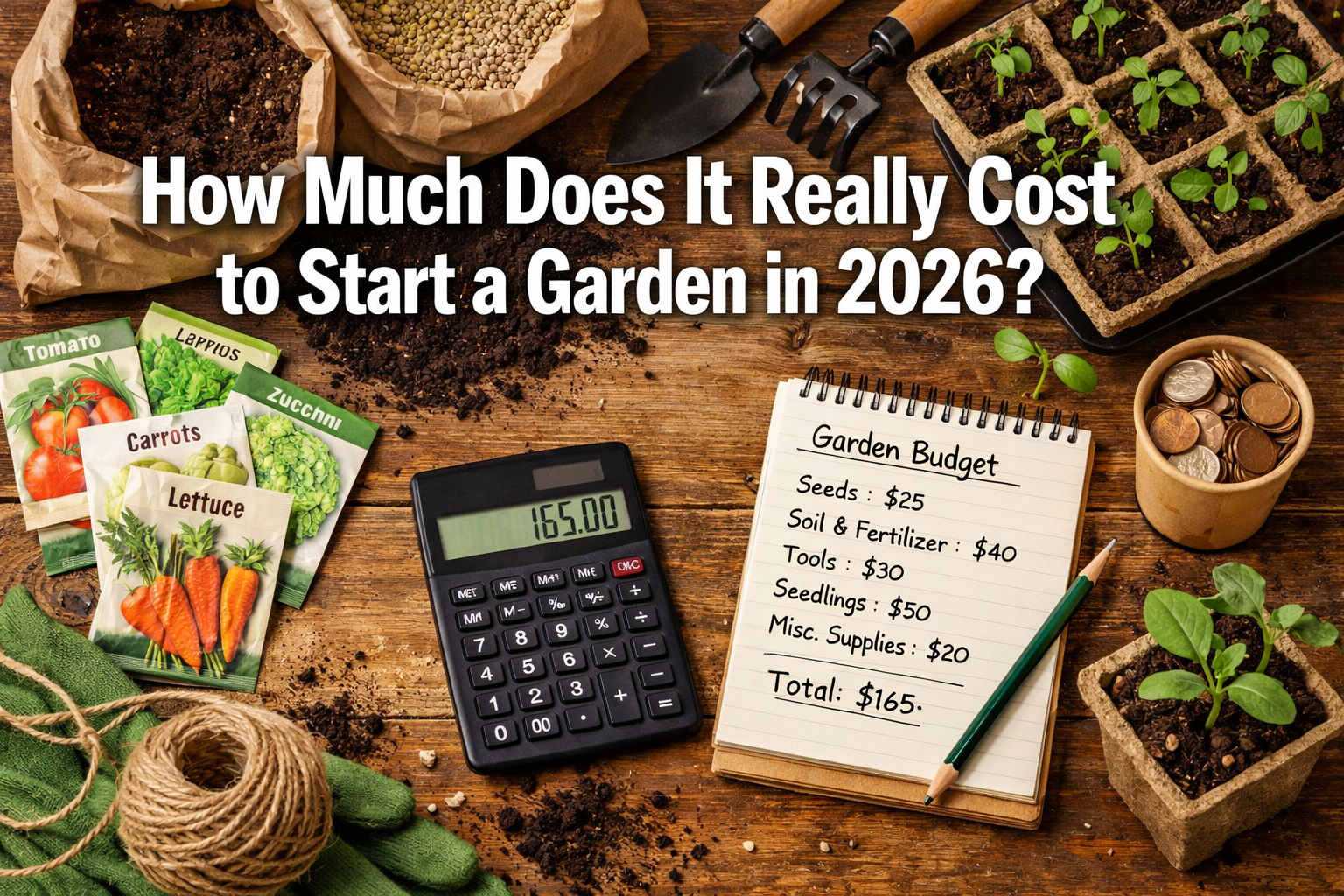
Starting a garden in 2026 costs between $50-$500 for most home gardeners, depending on garden size and approach. A basic container garden runs $50-$150, while a full backyard vegetable garden typically costs $200-$500 initially. The biggest expense factors are soil preparation, tools, and whether you choose seeds versus starter plants.
What Are the Essential Startup Costs for Any Garden?
Every garden requires four basic categories of investment: tools, soil, seeds or plants, and containers or bed preparation. The minimum viable garden costs around $50-$75 for a small herb container setup.
Essential tools ($40-$80 total):
- Hand trowel: $8-$15
- Pruning shears: $12-$25
- Watering can or hose: $10-$30
- Garden gloves: $5-$12
- Small rake or cultivator: $8-$18
Soil and amendments ($15-$40 per garden):
- Potting mix for containers: $12-$25 per cubic foot
- Compost: $8-$15 per bag
- Basic fertilizer: $10-$20
Seeds versus starter plants creates the biggest cost difference. A packet of tomato seeds costs $3-$5 and contains 20-50 seeds, while a single tomato plant costs $3-$6. Choose seeds if you have 8-12 weeks before planting season and want maximum variety.
Common mistake: Buying premium tools immediately. Start with mid-range options and upgrade specific tools as you discover your gardening preferences.
How Does Garden Size Affect Your Total Investment?
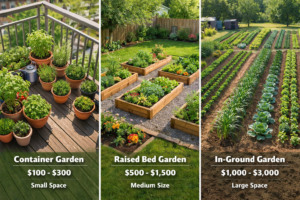
Garden size directly determines soil volume needs, which represents the highest variable cost. Small gardens under 20 square feet cost $50-$150, medium gardens (20-100 sq ft) run $150-$300, and large gardens over 100 square feet typically cost $300-$500+.
Container garden (10-15 pots):
- Containers: $30-$60
- Potting soil: $40-$80
- Seeds/plants: $25-$50
- Total: $95-$190
Raised bed garden (4×8 feet):
- Lumber and hardware: $80-$150
- Soil to fill bed: $100-$200
- Seeds/plants: $30-$60
- Total: $210-$410
In-ground garden (10×10 feet):
- Soil amendments: $60-$120
- Seeds/plants: $40-$80
- Bed preparation: $20-$40
- Total: $120-$240
Decision rule: Choose containers if you rent, have poor native soil, or want mobility. Select raised beds for permanent homes with drainage issues. Go in-ground if you have decent existing soil and want the lowest ongoing costs.
What’s the Real Cost Difference Between Seeds and Plants?
Seeds cost 85-95% less per plant but require 6-12 weeks of indoor growing time and have lower success rates for beginners. Starter plants offer immediate gratification and higher survival rates at premium pricing.
Seeds advantages:
- Tomato seeds: $0.10-$0.25 per plant.
- Lettuce seeds: $0.05-$0.15 per plant.
- Herb seeds: $0.20-$0.50 per plant.
- Unlimited variety access.
- Season-long supply from one packet.
Starter plants advantages:
- Tomato plants: $3-$6 each.
- Lettuce transplants: $1-$3 each.
- Herb plants: $2-$5 each.
- Immediate planting capability.
- 90%+ survival rate for beginners.
Hybrid approach: Start easy crops like lettuce, radishes, and beans from seed while buying challenging plants like tomatoes, peppers, and eggplants as transplants. This reduces costs by 40-60% while maintaining success rates.
Edge case: If you’re starting mid-season or live in areas with short growing seasons, starter plants become more cost-effective despite higher upfront prices.
How Much Should You Budget for Ongoing Garden Maintenance?
Beyond initial setup, gardens require annual inputs that typically cost 30-50% of the original investment each year. Plan for $25-$150 annually, depending on garden size and intensity.
Annual recurring costs:
- Seeds/new plants: $20-$80.
- Fertilizer: $15-$40.
- Pest control: $10-$30.
- Soil amendments: $15-$50.
- Water costs: $10-$60 (varies by region).
Tool replacement happens every 3-5 years for most items, except quality pruners and shovels, which last 10+ years with care. Budget $20-$40 annually for tool maintenance and replacement.
Water costs vary dramatically by location. Desert climates can add $40-$80 annually, while areas with regular rainfall might see minimal increases. Install drip irrigation ($30-$80 setup) to reduce water waste and costs.
Money-saving tip: Collect seeds from successful plants, compost kitchen scraps for free soil amendment, and join local garden clubs for plant swaps and bulk purchasing opportunities.
Are There Hidden Costs Most Beginners Miss?
Several overlooked expenses can inflate garden budgets by 25-40% if not planned properly. The most common surprise costs are soil testing, pest management, and season extension supplies.
Frequently missed expenses:
- Soil testing kit: $15-$30 (essential for in-ground gardens).
- Plant supports/cages: $20-$60.
- Mulch: $15-$40 per season.
- Organic pest control: $20-$50.
- Row covers for season extension: $15-$35.
Infrastructure surprises:
- Irrigation timer: $25-$60.
- Garden cart or wheelbarrow: $40-$120.
- Storage shed or tool organization: $50-$200.
- Fencing for pest protection: $50-$150.
Seasonal extensions can double growing seasons but require additional investment in cold frames ($40-$100), row covers, or greenhouse space ($100-$500+).
Planning tip: Add 20% to your initial budget for unexpected needs and opportunities. Most successful gardeners expand their growing area within the first two seasons.
How Can You Start a Garden on a Tight Budget?
A functional garden can start for under $50 using creative sourcing and focusing on high-value crops. The key is starting small and expanding gradually as plants begin producing.
Ultra-budget strategies:
- Use recycled containers (yogurt cups, milk jugs).
- Make compost instead of buying soil amendments.
- Start with easy, fast-growing crops (lettuce, radishes, herbs).
- Buy tools secondhand or borrow initially.
- Focus on expensive grocery items (herbs, salad greens).
Free resource opportunities:
- Community tool libraries.
- Seed swaps and plant exchanges.
- Municipal compost programs.
- Craigslist/Facebook garden groups.
- Extension office classes and resources.
Minimum viable garden ($35-$50):
- 6-8 recycled containers: $0.
- Potting soil: $25-$35.
- Herb and lettuce seeds: $10-$15.
- Basic hand tools (used): $15-$25.
ROI focus: Grow crops that cost $3+ per pound at grocery stores. Fresh herbs, salad greens, and cherry tomatoes offer the fastest payback on garden investments.
FAQ
How long before a garden pays for itself?
Most vegetable gardens recover initial costs within 1-2 growing seasons. Herb gardens often pay back within 3-4 months since fresh herbs cost $2-$4 per package at stores.
What’s the cheapest way to start gardening?
Container gardening with recycled pots, starting from seeds, and focusing on high-value crops like herbs and salad greens. The total startup cost can be under $40.
Should I buy organic or conventional gardening supplies?
Organic seeds cost only 10-20% more and are worth it for edible crops. For tools and containers, conventional options work fine and cost significantly less.
How much does it cost to maintain a garden each year?
Ongoing costs typically run 30-50% of initial setup costs annually, or $25-$150 for most home gardens, mainly for seeds, fertilizer, and soil amendments.
Is it cheaper to grow vegetables or buy them?
Growing vegetables saves money on expensive items like herbs, cherry tomatoes, and salad greens. Basic vegetables like carrots and potatoes are often cheaper to buy unless you have a large garden.
What tools should I buy first?
Start with a hand trowel, pruning shears, and a watering can. These three tools handle 80% of garden tasks and cost $25-$50 total.
How much does garden soil cost?
Bagged potting soil costs $8-$15 per cubic foot. A 4×8 raised bed needs about 32 cubic feet, costing $250-$400 for soil alone.
Can I start a garden in winter?
Yes, but costs increase 20-30% due to season extension needs like row covers, cold frames, or indoor growing setups.
What’s the most expensive gardening mistake beginners make?
Buying too many plants or tools initially, and not preparing the soil properly. Poor soil leads to plant failures and wasted money on replacements.
How much should I spend on my first garden?
Budget $100-$200 for your first season. This allows for quality basics without overspending before you know your preferences and local growing conditions.
Conclusion
The cost to start a garden in 2026 ranges from $50 for a simple container setup to $500 for a comprehensive backyard vegetable garden. Success depends more on proper planning and soil preparation than on expensive equipment.
Start with these immediate steps: Choose your garden size based on available space and budget, invest in quality soil and basic tools, and begin with easy crops that match your local growing season. Focus your initial investment on soil quality and a few essential tools rather than numerous plants or premium equipment.
For long-term success: Plan for annual maintenance costs of 30-50% of your initial investment, expand gradually based on what grows well in your specific conditions, and connect with local gardening communities for ongoing support and resource sharing.
The most successful gardens balance initial investment with realistic expectations, proving that thoughtful spending creates more value than simply spending more money.