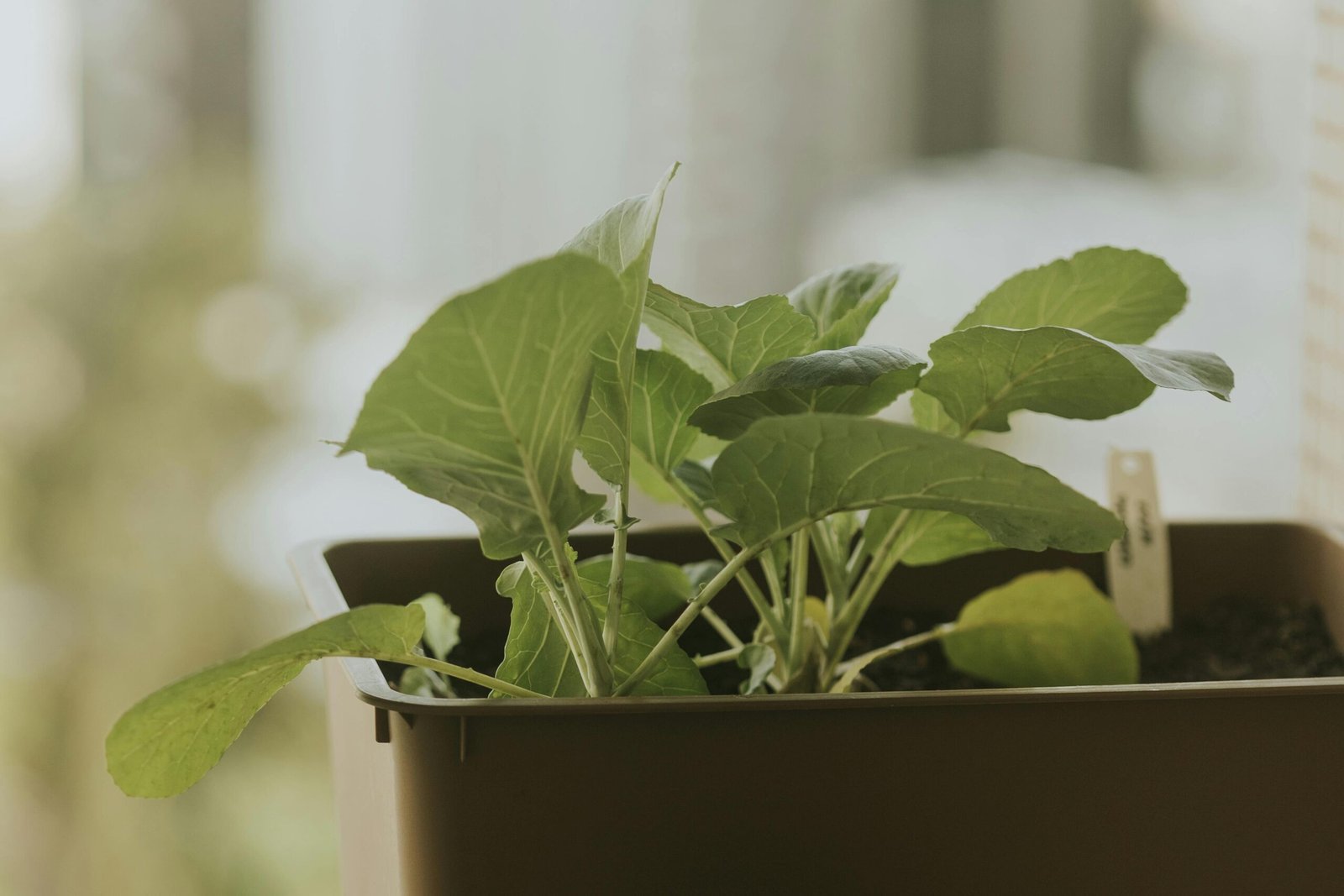
You are staring at that ugly, beige-carpeted corner of your living room, wondering if you can squeeze a tomato plant there without losing your security deposit. It’s 11:00 PM, you’ve been scrolling through seed catalogs, and you’re paralyzed by the fear that your landlord, who flips out over a stray command hook, will see a bag of potting soil and serve you an eviction notice.
You want to eat a salad you grew yourself, but you feel like a criminal for wanting a bit of green in a concrete box.
You can grow a significant amount of food in a rented apartment without your landlord ever suspecting a thing. The secret isn’t a “stealth garden” hidden in a closet; it’s choosing high-yield, low-mess plants and using furniture that disguises your hobby as high-end interior design.
If you stick to vertical hydroponics, self-watering containers that prevent floor leaks, and LED lights that mimic a standard warm-white floor lamp, your landlord will walk right past your “farm” during an inspection and think it’s just a nice collection of houseplants.
Why is your landlord actually scared of your garden?
To hide your garden effectively, you have to understand what your landlord is actually looking for during an inspection. They don’t hate kale. They hate water damage and mold.
If they see a plastic pot sitting directly on a hardwood floor, they see a $2,000 floor refinishing bill. If they see high-intensity purple “blurple” lights glowing from your window at 3:00 AM, they think you’re running a commercial grow operation that will blow the circuit breaker.
To keep them happy, you need a Zero-Contact Policy. This means no water ever touches the building’s structure. I learned this the hard way. Years ago, I had three beautiful zucchini plants in 20-liter buckets on my balcony. I thought the saucers underneath were enough.
Two months later, I moved a bucket and found a permanent, black ring of rot eaten into the wood deck. I lost $500 of my deposit over a few zucchinis.
Now, I use “Double Containment.” Every single plant pot sits inside a secondary, decorative, waterproof tray or a deep silicone mat. If you use a shelf unit, buy one with solid metal lips on the shelves so that if you spill a liter of water, it stays on the shelf and doesn’t soak the carpet.
Choosing the “Invisible” Crops
If you try to grow corn or giant pumpkins, you’re going to get caught. They are too big, too messy, and they look like “farming.” To stay under the radar, you want crops that look like ornamental foliage.
Microgreens are your best friend. You can grow a tray of radish or sunflower shoots in just 10 days. From a landlord’s perspective, a flat tray of greens on a kitchen counter looks like a tray of wheatgrass for smoothies—something “trendy” people do, not something “messy gardeners” do.
Herbs are the ultimate disguise. A large pot of rosemary or lavender smells great and looks like expensive decor. But the real heavy hitter for a hidden apartment garden is Loose-Leaf Lettuce.
Instead of trying to grow a whole head of iceberg (which takes forever and looks like a vegetable), grow “Cut and Come Again” varieties. They look like lush, ruffled ferns. You can harvest the outer leaves every 4 days, and the plant just keeps growing.
The Specifics of the “Secret” Setup:
- The Lighting: Avoid purple lights. Buy full-spectrum white LEDs with a color temperature of 4,000K to 5,000K. To the outside world, this looks like a bright reading lamp.
- The Timer: Set your lights to turn on at 6:00 AM and off at 8:00 PM. If your windows are glowing bright white at 2:00 AM, it draws unwanted attention.
- The Soil: Use a “soilless” potting mix (usually peat moss or coconut coir). Traditional garden soil smells like “dirt” and can harbor fungus gnats. A sterile mix smells like nothing.
The Furniture Hack: Hiding in Plain Sight
If you have a random assortment of plastic pots on the floor, it looks like a mess. If you put those same plants on a sleek, black metal tiered shelf, it looks like an “indoor plant feature.”
Go to a furniture store and look for “industrial” style shelving with adjustable heights. You want a unit that is roughly 120cm wide and 180cm tall. This gives you about 2 square meters of growing space while only taking up a tiny bit of floor real estate.
On each shelf, zip-tie two 120cm LED shop lights to the underside of the shelf above. This is the secret to high yields in small spaces. By keeping the lights just 15cm to 20cm above the plants, you prevent them from getting “leggy” and weak. When a plant is leggy, it looks like a weed. When it’s compact and bushy, it looks like a healthy houseplant.
How to Water Without a Mess?
Don’t use a watering can inside. It’s too easy to drip. Instead, use a 2-liter pressure sprayer. You can find these for about $10 at any hardware store. They have a long nozzle that lets you reach deep into the foliage and deliver water exactly at the base of the stem.
In the heat of summer, your lettuce will need about 250ml of water every 2 days. In the winter, you can drop that back to once every 5 or 6 days. Because you’re growing indoors in a climate-controlled room, your plants won’t experience the massive evaporation that outdoor plants do.
My $400 Mistake with “Secret” Hydroponics
I once tried to be too clever. I built a DIY “Deep Water Culture” system using a 40-liter plastic tote and an aquarium air pump. It worked brilliantly for about three weeks. I had the fastest-growing basil I’ve ever seen.
Then, one Tuesday, the air stone became disconnected inside the tank. The water started splashing against the lid, and a tiny, slow drip started running down the side of the tote. I didn’t notice it because it was behind the sofa. By the time I found it, the water had soaked into the baseboard and caused the wood to swell and the paint to peel.
If you want to grow food in an apartment, avoid deep-water hydroponics unless you buy a professional, sealed unit. Stick to “passive” hydroponics or high-quality potting mix.
Passive hydroponics (often called the Kratky method) uses a jar or a pot with no moving parts. No pumps means no noise and no splashing. Silence is your best friend when you’re keeping your garden a secret.
Dealing with the “Garden Smell”
Fresh basil smells amazing to you, but to a landlord, any strong scent is a red flag. Tomatoes have a very distinct, musky “green” smell that can fill a room. If you are worried about the scent giving you away, you need to manage your airflow.
Buy a small, 15cm desk fan. Keep it on the lowest setting, pointed directly at your plants. Not only does this stop the “garden smell” from pooling in the room, but it also strengthens the stems of your plants.
A plant grown in perfectly still air becomes weak and floppy. A plant that has to “fight” a gentle breeze grows a thick, sturdy stalk.
For feeding, stay away from organic fish emulsion fertilizers. They work great, but they smell like a rotting pier. Your landlord will think there is a dead animal in the walls. Instead, use a high-quality, water-soluble mineral fertilizer.
I recommend a “MaxiGro” or similar 10-5-14 NPK powder. Use exactly 5 grams (about one teaspoon) per 4 liters of water. It has zero smell, and it won’t stain your containers.
The Inspection Day Protocol
What happens when you get that “Notice of Entry” for a routine inspection? Don’t panic. You don’t need to move the plants to a storage unit. You just need to re-contextualize them.
First, harvest anything that looks “too much like food.” If you have big, red tomatoes hanging off a vine, pick them. Eat them or put them in the fridge. A tomato plant with no fruit just looks like a green shrub.
Second, clean the “perimeter.” Vacuum any stray bits of dried leaves or potting mix. Wipe down the shelves. A clean garden is a “hobby.” A messy garden is a “violation of the lease.”
Third, place a scented candle or an air neutralizer near the door. You want the landlord to smell “Clean Linen,” not “Damp Peat Moss.”
If they ask what you’re growing, have a boring answer ready. Don’t say, “I’m growing enough salad to be self-sufficient.” Say, “Oh, those? They’re just some indoor ornamentals. I’m trying to improve the air quality in here. I think one might be a Swedish Ivy?” Most landlords don’t know the difference between a pepper plant and a hibiscus if there are no peppers on it.
Common Problems You’ll Hit (and how to fix them)
“My leaves are turning yellow!”
This is almost always over-watering. In an apartment, the humidity is usually higher than outdoors, and there is less wind. If you water every day, you are drowning the roots. Stick your finger 3cm into the soil. If it feels even slightly damp, do not water. Wait until the top layer is bone dry.
“There are tiny black flies everywhere!”
These are fungus gnats. They love damp soil. To get rid of them without using smelly sprays, buy “Mosquito Bits.” Take one tablespoon of the bits, soak them in 2 liters of water for 30 minutes, and use that water for your plants. It contains a natural bacteria that kills the fly larvae but is completely harmless to you and your pets.
“The plants are leaning toward the window.”
They are starving for light. Even a sunny window usually isn’t enough for food crops. You need those LED lights I mentioned earlier. If you can’t afford lights yet, rotate your pots 180 degrees every single morning. It’s a pain, but it keeps the plants upright and prevents them from looking like they’re trying to escape the apartment.
Verticality is the Secret to Volume
You can easily grow 5kg of produce a month in a space the size of a coat closet if you go vertical. Use “pocket” planters that hang on the back of a door, but and this is crucial place a heavy-duty plastic sheet between the planter and the door.
In these pockets, grow herbs like thyme, oregano, and mint. Mint is a beast; it will grow in low light and forgive you if you forget to water it for three days. Just remember: never plant mint in a shared pot. It is an invasive monster that will strangle every other plant you have. Give mint its own 15cm pot and let it be the king of its own tiny mountain.
Is it Worth the Risk?
You might be thinking, “This sounds like a lot of work just to hide some lettuce.” But it’s not just about the food. It’s about the feeling of autonomy. When you live in a rental, nothing is truly yours. You can’t paint the walls, you can’t change the light fixtures, and you can’t even have a cat without paying a monthly “pet rent.”
But a garden? A garden is yours. When you harvest a handful of arugula that you grew from a tiny black seed in your living room, you aren’t just a “tenant” anymore. You’re a producer. You’re someone who can take care of themselves. That feeling is worth the small effort of keeping your potting soil in a decorative bin instead of a messy bag.
Take Action Today
Don’t go out and buy a massive hydroponic setup or 50 bags of soil. You’ll get overwhelmed and make a mess that gets you caught.
Go to the grocery store today and buy one single organic basil plant in a plastic pot. When you get home, take it out of the ugly plastic sleeve. Put it into a nice ceramic pot that has no hole in the bottom (this acts as your “outer containment” to prevent leaks).
Place it on your kitchen windowsill. Spend the next week learning exactly how much water it needs to stay upright without the soil becoming soggy.
Once you’ve mastered keeping that one plant alive and your counter dry, you’ll have the confidence to add a second, then a third, until you have a secret forest providing you with fresh food every single day.