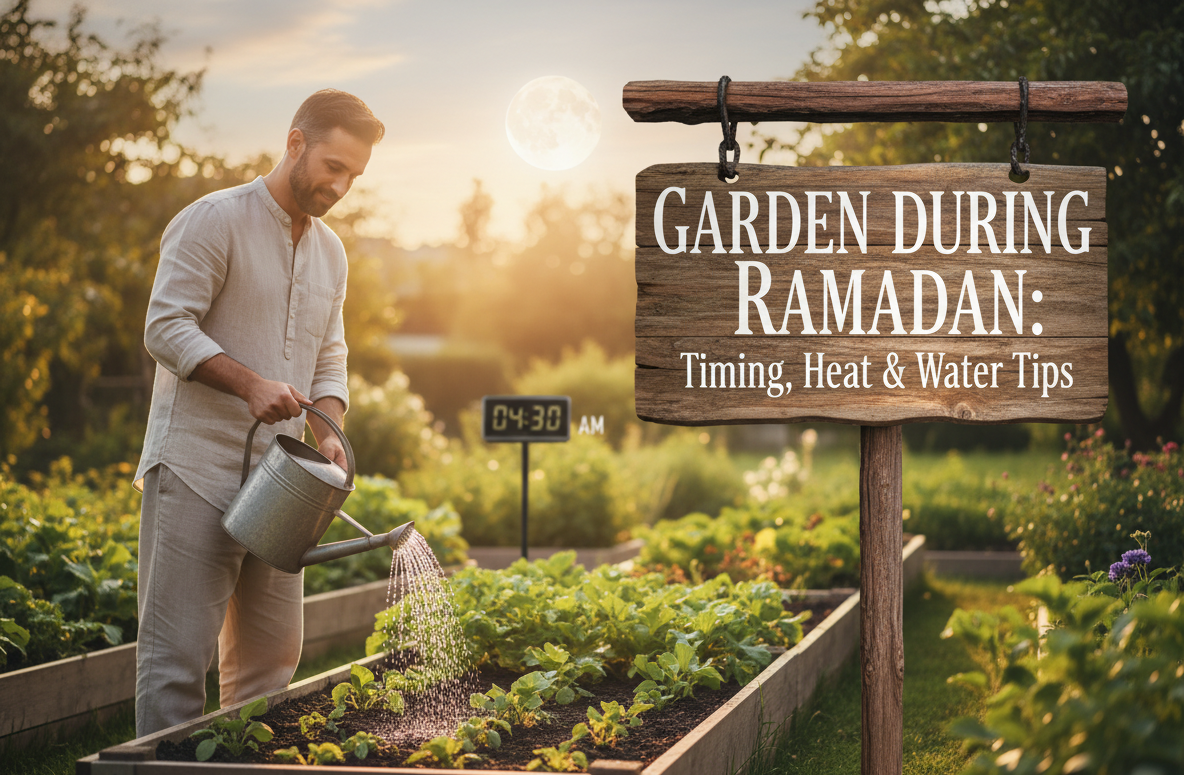
Gardening during Ramadan requires smart planning around fasting hours, rising temperatures, and limited hydration windows. How to garden during Ramadan: timing, heat, and water management become essential when balancing spiritual practice with outdoor care.
This guide delivers practical, faith-aligned strategies to keep your garden flourishing while honoring your fast. You’ll learn when to work, which plants survive extreme heat, and how to conserve every drop of water without compromising growth.
When Should You Garden During Ramadan?
Timing your gardening tasks around Suhoor and Iftar maximizes energy and minimizes dehydration risk.
- Pre-dawn window (after Suhoor): Water plants and complete light tasks like deadheading or harvesting. Soil absorbs moisture better before sunrise, reducing evaporation.
- Post-Iftar period: Reserve heavier work—digging, planting, pruning—for after breaking your fast when hydration and energy levels rebound.
- Avoid midday sun: Temperatures peak between 11 am and 3 pm. Even brief exposure while fasting accelerates fluid loss and fatigue.
Align garden sessions with local prayer times. Tools like Islamic Finder provide accurate Suhoor and Iftar schedules for your location, helping you plan outdoor work efficiently.
How Do You Manage Garden Work in Extreme Heat?
High temperatures challenge both the gardener and plants. Smart adjustments protect your health and your harvest.
Dress and Prepare Strategically
- Wear loose, light-colored clothing and a wide-brimmed hat to reflect sunlight.
- Apply sunscreen before leaving home—reapplication isn’t possible while fasting.
- Keep a shaded rest area nearby for brief recovery breaks.
Prioritize Light Tasks During Fasting Hours
Focus on low-exertion activities when energy is limited:
- Inspect plants for pests or disease.
- Deadhead spent blooms.
- Harvest ripe vegetables or herbs.
- Light weeding around established plants.
Save soil-turning, transplanting, or lawn mowing for after Iftar when you can hydrate and refuel.
Choose Heat-Resilient Plants
Select varieties adapted to hot, dry conditions:
- Native shrubs: Bougainvillea, oleander, and lantana thrive with minimal water.
- Succulents: Snake plants, agave, and aloe store moisture and tolerate intense sun.
- Fruit trees: Date palms and pomegranates handle desert climates and hold spiritual significance.
These plants reduce maintenance demands while supporting a vibrant garden through Ramadan and beyond.
What Are the Best Water Management Practices?
Water conservation becomes critical when outdoor use can account for half your household consumption during hot months. Efficient techniques protect plants and honor environmental stewardship.
Water at the Right Time
- Early morning (post-Suhoor): Watering before sunrise allows moisture to penetrate deeply before evaporation begins.
- Evening (post-Iftar): A second light watering can help, but avoid late-night saturation that encourages root rot or pests.
Apply Water Directly to Roots
- Use soaker hoses or drip irrigation to deliver moisture where plants need it most.
- Avoid overhead sprinklers that waste water to the wind and evaporation.
- Water deeply but less frequently to encourage strong root development.
Mulch to Lock in Moisture
Apply a 5–7cm layer of organic mulch (straw, wood chips, or compost) around plants:
- Reduces soil temperature fluctuations.
- Cuts evaporation by up to 70%.
- Suppresses weeds that compete for water.
Reuse Household Water Safely
- Collect rinsing water from fruits or vegetables for garden use.
- Use cooled cooking water (unsalted) for non-edible plants.
- Avoid greywater with soap or chemicals on food crops.
These methods align with Islamic principles of resource conservation and environmental care.
Which Plants Thrive During Ramadan Season?
Choosing the right plants reduces workload and increases success during hot, dry periods.
Top Heat-Tolerant Varieties
| Plant Type | Examples | Water Needs | Benefits |
|---|---|---|---|
| Flowering Shrubs | Bougainvillea, Lantana | Low | Colorful blooms, drought-resistant |
| Succulents | Aloe, Agave, Sedum | Very Low | Store water, minimal care |
| Herbs | Rosemary, Thyme, Sage | Low | Culinary use, fragrant, pest-repelling |
| Vegetables | Eggplant, Okra, Swiss Chard | Moderate | Heat-loving crops that produce through summer |
| Trees | Date Palm, Pomegranate, Olive | Low-Moderate | Spiritual significance, long-term value |
Native Plants for Regional Climates
Select species adapted to your local environment:
- Middle East: Desert marigold, Arabian jasmine, ghaf tree.
- North Africa: Olive, fig, prickly pear.
- South Asia: Neem, hibiscus, curry leaf.
Native plants require less water, resist local pests, and support regional biodiversity.
Container Gardening Tips
Pots dry faster but offer flexibility:
- Use large containers (minimum 30cm diameter) to retain moisture.
- Add water-retaining crystals or coconut coir to the potting mix.
- Group pots in shaded areas to reduce individual watering needs.
How Can You Balance Fasting Energy With Garden Tasks?
Maintaining garden care while fasting demands realistic planning and self-awareness.
Listen to Your Body
- Stop immediately if you feel dizzy, overly fatigued, or dehydrated.
- Short, focused sessions (15–20 minutes) prevent exhaustion.
- Pair gardening with dhikr or quiet reflection to blend physical and spiritual practice.
Delegate or Share Responsibilities
- Involve family members in post-Iftar gardening sessions.
- Rotate tasks: one person waters, another weeds, a third harvests.
- Community gardens offer shared labor and social connection.
Embrace Minimalism
Not every task needs daily attention:
- Let lawns go dormant during extreme heat—they recover with autumn rains.
- Accept some leaf scorch on hardy plants; focus energy on fruiting crops.
- Prioritize plants with immediate value (food, medicine, shade) over ornamentals.
Final Thoughts on Ramadan Garden Care
Successfully gardening while fasting hinges on smart timing, heat adaptation, and water wisdom. How to garden during Ramadan: timing, heat, and water management isn’t about perfection, it’s about working with your body, your climate, and your faith.
By aligning tasks with energy levels, choosing resilient plants, and conserving resources, you create a garden that thrives alongside your spiritual practice.
Every drop saved, every plant nurtured, and every moment spent in reflection becomes an act of stewardship and devotion.