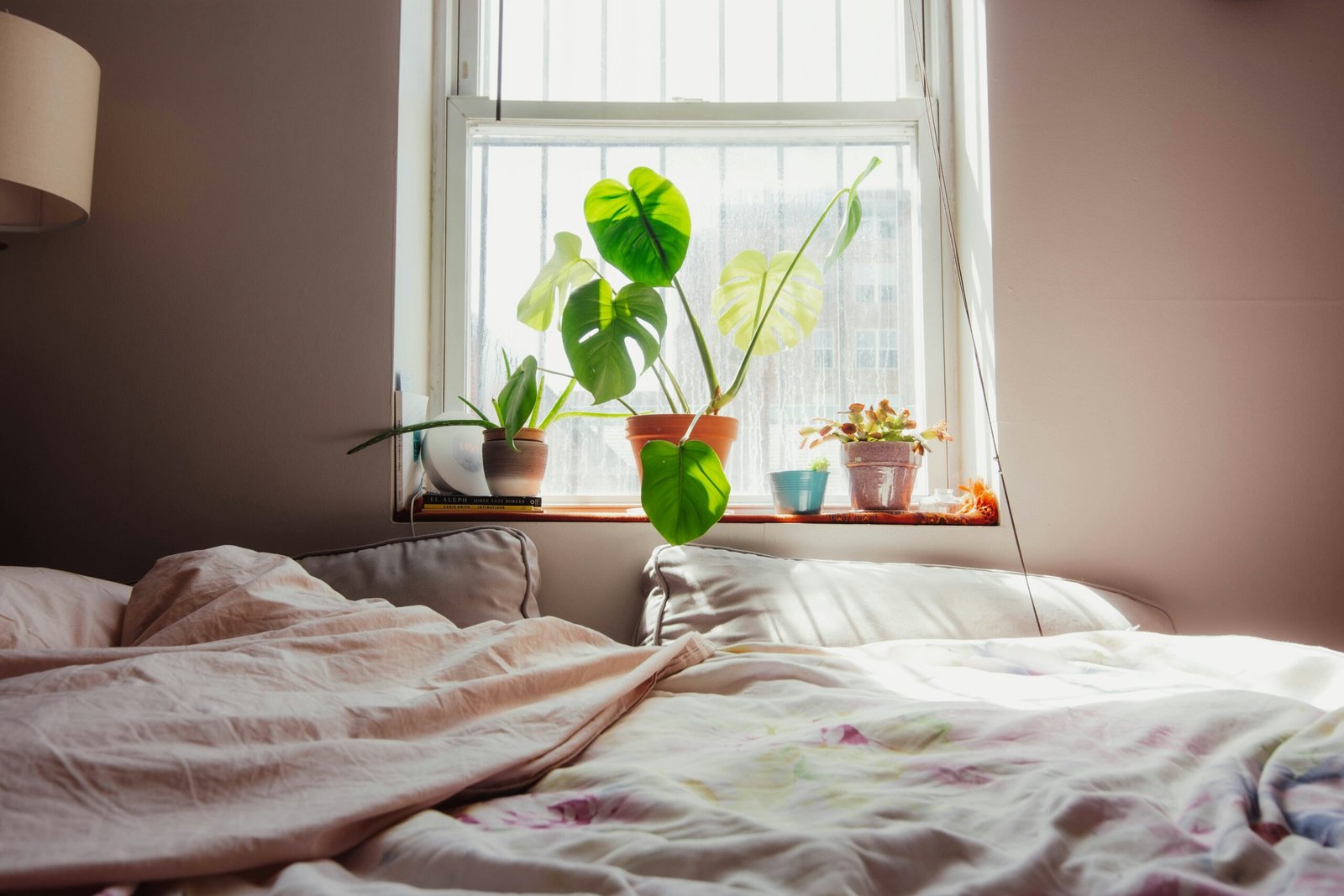
Staring at the dark ceiling while the clock flips from 2:00 AM to 3:00 AM is a special kind of torture. Your mind simply will not shut off. You feel that tight anxiety in your chest, and you are desperately searching for anything that will force your brain to power down so you can just get some rest before your alarm goes off.
You have probably seen the viral videos or articles claiming a specific houseplant is the miracle cure for your sleepless nights.
No plant will knock you out like a sleeping pill. That is pure hype. But the reality is that certain plants, specifically Lavender for its stress-reducing scent, and Snake Plants for their nighttime oxygen production, will absolutely create a biological and physical environment that helps your body wind down much faster.
They work by lowering your heart rate and improving your immediate air quality, not by casting a magic sleep spell over your bed.
Let’s look at exactly what works, what is completely fake, and how to actually keep these green sleep-helpers alive in your bedroom.
The Big Air-Purifying Myth We Need to Clear Up
If you look up plants for sleep, you will immediately read about a famous 1989 NASA Clean Air Study. People read that study and rushed out to buy fifty ferns, thinking their bedroom would suddenly have the pure air of a mountain forest.
Do not fall for this. It is mostly hype.
To get the massive air-purifying benefits NASA documented, you would need roughly 10 plants per single square foot of floor space. That is a dense jungle, not a place to sleep. A single Peace Lily on your dresser is not going to magically suck all the toxins out of a 400-square-foot master bedroom.
Instead of expecting plants to be vacuum cleaners, you need to use them for their localized, immediate benefits. You want plants that release specific chemical compounds into the air right next to your pillow, or plants that change the oxygen balance in the three feet around your head.
The Scent Powerhouses That Actually Lower Your Heart Rate
Smell is tied directly to the emotional and resting centers of your brain. When you inhale certain plant compounds, your physical body has no choice but to react.
Lavender: The Undisputed Heavyweight
Lavender is not hype. The scent of lavender contains a compound called linalool. When you breathe it in, linalool physically interacts with your neurotransmitters to lower your heart rate and your blood pressure. It tells your nervous system to stop fighting and start resting.
But here is where people fail. Keeping lavender alive indoors is notoriously difficult.
I learned this the hard way. A few years ago, I bought a beautiful, blooming French Lavender plant. I put it right on my nightstand in a dark corner of my bedroom because I wanted the scent right next to my nose. Within three weeks, it was a crispy, gray, dead mess. I killed it because I ignored what the plant actually needed to survive, prioritizing my sleep instead.
Lavender absolutely refuses to live in the dark. It needs exactly 6 to 8 hours of direct, harsh sunlight every single day. If your bedroom does not have a large south-facing window, do not buy a live lavender plant. Buy a dried bundle instead and hang it over your bed.
If you do have the sunlight, here is how you keep it alive: Put it in a terracotta pot with a drainage hole. Mix 3 cups of standard potting soil with 1 cup of sand to make sure the water drains fast. Water it exactly once every 10 to 14 days. Pour exactly 2 cups of water over the soil, let it drain out the bottom, and throw away the excess water. Never let it sit in a puddle.
Jasmine: The Anxiety Reducer
If your insomnia is caused by an anxious, racing mind, Jasmine is your best option. German researchers found that the scent of jasmine acts on the GABA receptors in your brain. These are the same pathways targeted by anti-anxiety medications like Valium.
Jasmine has small, white flowers that release a sweet scent, and the smell is actually stronger at night when the temperature drops.
To keep Jasmine blooming indoors, you need to trick it into thinking it is outside. It needs temperatures between 60 and 75 degrees Fahrenheit during the day, but it needs the room to drop to about 55 degrees at night to trigger the flowers to open.
Keep it near a cool window. Water it every 3 to 4 days when the top inch of the soil feels completely dry to the touch. In the spring, feed it with a liquid houseplant fertilizer. Use exactly 1/2 teaspoon of fertilizer mixed into one gallon of water, and pour about a cup of that mixture into the pot once a month.
The Night-Shift Oxygen Factories
Almost all plants take in carbon dioxide during the day and release oxygen. But at night, when the sun goes down, most plants switch. They start taking in oxygen and releasing carbon dioxide.
If you want better sleep, you want the rare plants that do the exact opposite. You want plants that use a special process called Crassulacean Acid Metabolism, or CAM. These plants hold their breath all day to save water, and then open their pores at night to release fresh oxygen while you are sleeping.
Snake Plant: The Unkillable Roommate
The Snake Plant (often called Mother-in-Law’s Tongue) is the king of nighttime oxygen. Having fresh, localized oxygen near your bed prevents you from waking up with a stuffy head or a dry throat.
The best part about the Snake Plant is that it thrives on neglect. You can put it in a dark corner across the room, or right next to your bed. It does not care.
The only way you can ruin this plant is by showing it too much love. If you water it too much, the roots will turn to mush and rot in a matter of days. In the summer, give it exactly 1 cup of water every 3 weeks. In the winter, drop that down to 1 cup of water every 6 weeks. That is it.
Aloe Vera: The Backup Generator
Aloe Vera does the same nighttime oxygen trick as the Snake Plant, but it needs a bit more light. Keep it on a windowsill or a dresser that gets bright, indirect sunlight. Direct sun will burn the fleshy leaves and turn them red.
Water your Aloe Vera once every 14 days. Give it about 1 cup of water, and make sure the pot has holes in the bottom. If the leaves start to look flat and thin, you are waiting too long between waterings. If the leaves get mushy and yellow, you are drowning them.
The Hype List: Plants That Will Ruin Your Sleep
Not every plant belongs in a bedroom. Some are actively going to keep you awake, either because of how they smell or the extreme stress of trying to keep them alive.
Valerian: Good in a Mug, Terrible in a Pot
You have probably heard of valerian root. It is a main ingredient in almost every “Sleepy Time” tea at the grocery store. The root contains compounds that act as a mild sedative.
Because of this, people write articles telling you to grow a Valerian plant in your bedroom. Do not do this. While the root makes a great tea, the blooming flowers of the Valerian plant smell remarkably like old, dirty gym socks. It is a sour, pungent smell. Having that smell waft over your bed at 2:00 AM will absolutely keep you awake.
Gardenias: High Risk, High Stress
Gardenias have an incredibly sweet scent that has been proven to lower stress levels. But the plant itself is a total diva. If you put a Gardenia in your bedroom, you will lose sleep just worrying about keeping it alive.
They require extreme humidity above 60% at all times. They need precise temperatures. If you miss a watering cycle by a single day, or if a cold draft from your air conditioner hits the plant, it will drop every single one of its flower buds in protest.
Leave the Gardenias to the greenhouse experts. You want your bedroom to be a place of low stress, not a high-stakes gardening experiment.
The Hidden Danger of Bedroom Soil
There is one major warning you need to hear before you start bringing pots of dirt into the room where you sleep.
Wet soil breeds fungus gnats. These are tiny, harmless black flies that multiply by the hundreds in damp potting soil. They are not dangerous, but they are incredibly annoying. Trying to fall asleep while a tiny gnat flies into your nose or buzzes by your ear will spike your adrenaline and ruin your night.
To prevent this, you must change how you water your bedroom plants.
First, never let the top two inches of soil stay wet. Gnats can only lay eggs in damp topsoil.
Second, start bottom-watering. Fill a small bowl with 2 inches of water. Take your potted plant (which must have drainage holes) and set it directly into the bowl. Leave it there for exactly 20 minutes.
The soil will soak up the water from the bottom like a sponge. Take the pot out of the bowl and let the excess drip away in the sink. This keeps the deep roots hydrated, but leaves the top layer of soil bone-dry so bugs cannot lay eggs.
How the Routine ITSELF Cures Insomnia?
There is a secret benefit to bedroom plants that no one talks about. It has nothing to do with oxygen or scent. It is about your physical routine.
Insomnia is often triggered by screens. You sit in bed scrolling through your phone, blasting your eyes with blue light, which actively blocks your brain from producing melatonin—the hormone you need to fall asleep.
When you put a few plants in your bedroom, you create a new, physical anchor for your evening routine. Instead of staring at a screen for the last ten minutes of your day, you spend five minutes checking the leaves of your Snake Plant. You touch the soil of your Jasmine to see if it is dry. You spend a moment looking closely at something physical, green, and quiet.
This simple, five-minute offline activity lowers your cortisol (your stress hormone) and signals to your brain that the busy part of the day is completely over. It creates a buffer between the chaotic digital world and your pillow.
What You Should Do Right Now?
Do not try to build a jungle tomorrow. Start with one reliable, stress-free plant to change the atmosphere of your room.
Here is your single action to take today: Go to a local nursery or hardware store and buy one medium-sized Snake Plant in a 6-inch pot. Bring it home, place it directly on your nightstand or on the floor right next to your bed, and do not water it for two weeks.