That dry, scratchy feeling in the back of your throat when you wake up. The faint, chemical smell lingering around the new rug you just bought. The dust motes you watch dancing in the sunlight pouring through your bedroom window. You want cleaner air in your house, and you want to fix it naturally.
Here is the truth I found after pressing three different medical specialists for a straight answer: No, a houseplant is not going to magically scrub the air in your living room. The famous 1989 NASA study everyone quotes to sell you ferns was conducted in tiny, perfectly sealed gas chambers.
To get that exact air-purifying effect in a normal, drafty house, you would need to cram between 10 and 1,000 plants into every single square meter of floor space.
But do not throw your pots away just yet. All three doctors agreed that keeping plants does improve your indoor environment in very specific, measurable ways. Plants act as natural humidifiers; they trap airborne dust on their leaves, and they actively lower your stress hormones.
The Snake Plant, Golden Pothos, and Spider Plant are the absolute best at surviving indoors while doing this work.
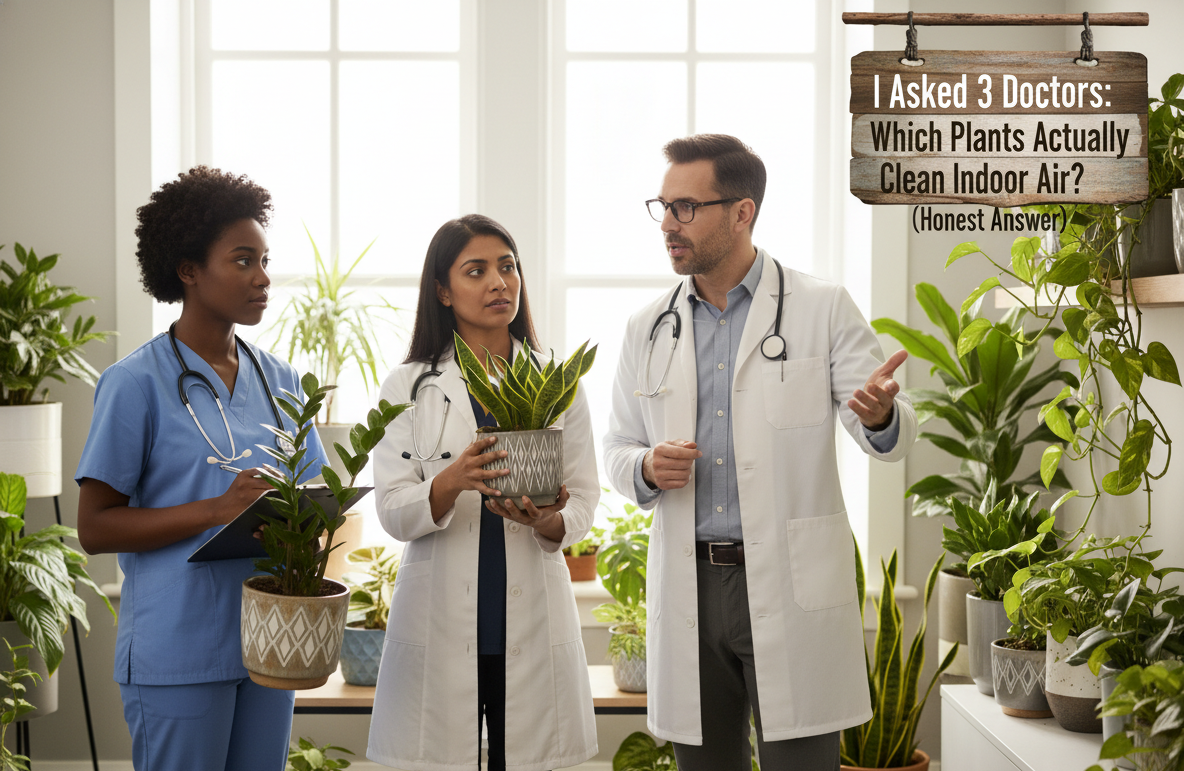
Here is exactly what the medical experts told me, how plants actually change the air you breathe, and how to keep them alive without turning your house into a moldy swamp.
The Big Lie We All Believed
If you have ever searched for air-purifying plants, you have seen the NASA clean air study. It is the holy grail of houseplant marketing. In 1989, NASA wanted to figure out how to clean the air inside space stations.
They placed plants in small, sealed plexiglass boxes. Then, they pumped those boxes full of Volatile Organic Compounds (VOCs). VOCs are the harsh chemicals floating in your house right now. Formaldehyde leaks out of your couch cushions and cheap particleboard furniture. Benzene evaporates from your household cleaning sprays.
Inside those tiny, sealed boxes, the plants did a fantastic job. The microbes in the plant roots literally ate the toxic gases.
The problem is that you do not live in a sealed plexiglass box. You open doors. Your windows have drafts. Your air conditioner circulates air. The dirty air moves through your house far too quickly for a potted plant to catch it. To actually remove VOCs from your living room, an electric HEPA air purifier with a carbon filter is your only real defense.
However, plants still alter your air in ways a machine cannot.
What the Pulmonologist Said: The Humidity Fix
I asked a lung specialist how indoor plants affect our respiratory system. He did not care about VOCs. He cared about water.
During the winter, your home heating system absolutely destroys indoor humidity. The humidity in a heated house can drop to 15%. Human lungs and throats need humidity levels between 40% and 60% to function properly.
When the air is bone-dry, the tiny hairs in your throat—called cilia—stop moving. Those hairs are supposed to sweep dust and viruses out of your airways. When they dry out and stop moving, you get sick. You wake up with a sore throat.
Plants solve this. Through a process called transpiration, plants sweat. They pull water up from their roots and release it into the air as pure water vapor.
A group of three medium-sized plants crowded together in a 10-foot by 10-foot bedroom can raise the ambient humidity by 5% to 10%. That slight bump is often enough to push your bedroom out of the danger zone, keeping your throat lubricated while you sleep.
What the Allergist Said: The Mold Warning
The allergy specialist gave me a harsh warning. Plants can easily make your indoor air much worse if you are not careful.
The danger is not the plant itself. It is the wet dirt. When you overwater a plant, the soil stays damp. Damp soil is the perfect breeding ground for Aspergillus mold. The mold releases invisible spores into the air. Every time you walk past the plant, a breeze kicks those spores up. You breathe them in, and your immune system panics. Your nose runs, your eyes itch, and your asthma flares up.
To prevent mold, you must control your soil drainage. You cannot just use heavy, cheap potting soil straight out of the bag. Use the 70/30 rule. Mix 70% standard indoor potting soil with 30% perlite.
Perlite is those little white volcanic rocks that look like styrofoam. This mixture forces water to drain quickly. Fast drainage means the top layer of dirt dries out fast, completely robbing mold of the moisture it needs to grow.
What the Psychologist Said: The Mental Air
The third doctor I spoke with was a psychologist. She pointed out something I had completely missed. Air quality is not just chemical; it is also a physical perception.
When you feel stressed, your chest tightens. You take shorter, shallower breaths. You literally take in less oxygen. Staring at screens all day causes a psychological state called directed attention fatigue. Your brain gets tired, your cortisol (stress hormone) spikes, and your breathing becomes shallow.
Looking at a living, green plant for just 40 seconds measurably lowers your heart rate by up to 4 beats per minute. It drops your blood pressure. It signals to your nervous system that you are in a safe environment. When your nervous system relaxes, your diaphragm expands. You take deeper, fuller breaths. The air feels cleaner because your body is finally breathing it in properly.
My Embarrassing Mold Disaster
I learned the allergist’s warning the hard way a few years ago. I wanted my home office to feel like a lush, clean-air jungle. I bought four massive Boston Ferns and hung them in the corners.
Ferns love humidity, so I bought a plastic spray bottle and misted them heavily. I sprayed them with 10 squirts of water every single morning. I thought I was being a great plant parent.
Three weeks later, I noticed a strange, earthy smell in the room. I looked closely at the wall behind the largest fern. The drywall was completely covered in a fuzzy, black shadow. By constantly spraying water into a corner with zero airflow, I had grown toxic black mold across my wall. I was actively poisoning the air I was trying to clean.
I had to throw the beautiful ferns in the trash, scrub the wall with pure bleach, and repaint the entire corner.
The lesson was brutal but clear. Never mist your plants if there is no wind to dry the leaves. If you want to increase humidity for your plants, buy a cheap electronic humidifier. Keep the leaves dry.
The Only 3 Plants You Should Buy
Forget the massive lists of 50 different plants. Most of them will die in a normal house, or they require massive amounts of light that you do not have. If you want the humidity benefits and the psychological benefits without the stress of dead leaves, only buy these three.
1. The Snake Plant (Sansevieria)
Most plants stop photosynthesizing at night when the sun goes down. They stop producing oxygen. The Snake Plant is different. It uses a rare biological process called Crassulacean Acid Metabolism. It opens its pores and releases oxygen at night, making it the absolute best plant to put on your bedside table.
It is also nearly impossible to kill. It thrives on neglect.
How to keep it alive: Put it anywhere in the room. It does not care about light. Water it exactly once every 21 days. Pour just one cup of water (250 milliliters) directly onto the soil. If you water it more than that, the roots will rot, and the leaves will turn to mush.
2. Golden Pothos (Epipremnum aureum)
This is a trailing vine plant with heart-shaped leaves. It grows incredibly fast, which means it pulls a lot of water out of the soil and releases it into the air. It is a workhorse for adding slight humidity to a dry room.
How to keep it alive: Put it within 5 feet of a window, but out of direct sunlight. Direct sun will burn the leaves black. Do not water it on a schedule. Stick your index finger 2 inches deep into the dirt. If the dirt feels dry against your skin, water it until water runs out the bottom of the pot. If the dirt feels even slightly moist, walk away and wait 3 more days.
Warning: Pothos leaves contain sharp calcium oxalate crystals. If a dog or cat chews on a leaf, it will cause severe burning in their throat and stomach, and vomiting. Keep this plant hanging high up on a shelf if you have pets.
3. The Spider Plant (Chlorophytum comosum)
The Spider Plant looks like a spray of thick, green grass. It is fantastic because it constantly grows “pups”—tiny baby spider plants that hang down on long stems. More leaves mean more surface area to catch dust floating in your air.
How to keep it alive: It needs bright light to make babies. Put it directly in a window that gets morning sun, but avoid hot afternoon sun. Water it once every 7 to 10 days. Spider plants are sensitive to the fluoride and chlorine in city tap water.
If the very tips of the green leaves turn crispy and brown, your tap water is too harsh. Leave a jug of tap water sitting open on your counter for 24 hours before watering. The harsh chemicals will evaporate into the room, leaving safe water behind for the plant.
The Dust Problem Nobody Mentions
There is one critical maintenance task you must do if you want plants to improve your room. You have to clean them.
Houses are incredibly dusty. Because plant leaves are static objects, they act like dust magnets. Over a month, a thick layer of grey dust will coat the top of every leaf.
When a leaf is covered in dust, two bad things happen. First, the dust physically blocks sunlight from hitting the plant’s cells, starving the plant of energy. Second, the dust clogs the plant’s stomata. Stomata are the microscopic pores on the leaf that release water vapor and oxygen. If the mouths are clogged with dog hair and skin cells, the plant stops sweating. It stops acting as a humidifier.
You must manually clean your plants. Every 30 days, take a damp microfiber cloth and gently wipe the top and bottom of every large leaf. Support the back of the leaf with your hand so you do not snap the stem.
For small leafy plants like ferns or spider plants, put the entire pot in your shower. Turn the shower on the gentle, lukewarm setting, and let the artificial rain wash the dust down the drain for 60 seconds.
Stop Expecting Miracles, Start Growing
Stop looking at plants as biological air filters. They are not going to save you from a poorly ventilated house or off-gassing furniture. Open your windows for 10 minutes every morning to flush out the stale air. Buy a real HEPA filter if your allergies are severe.
But bring the green inside anyway. Bring them in for the 10% bump in humidity during a dry winter. Bring them in to catch the dust floating near your desk. Bring them in because looking at a living thing while you drink your morning coffee forces your shoulders to drop and your lungs to take a real, deep breath.