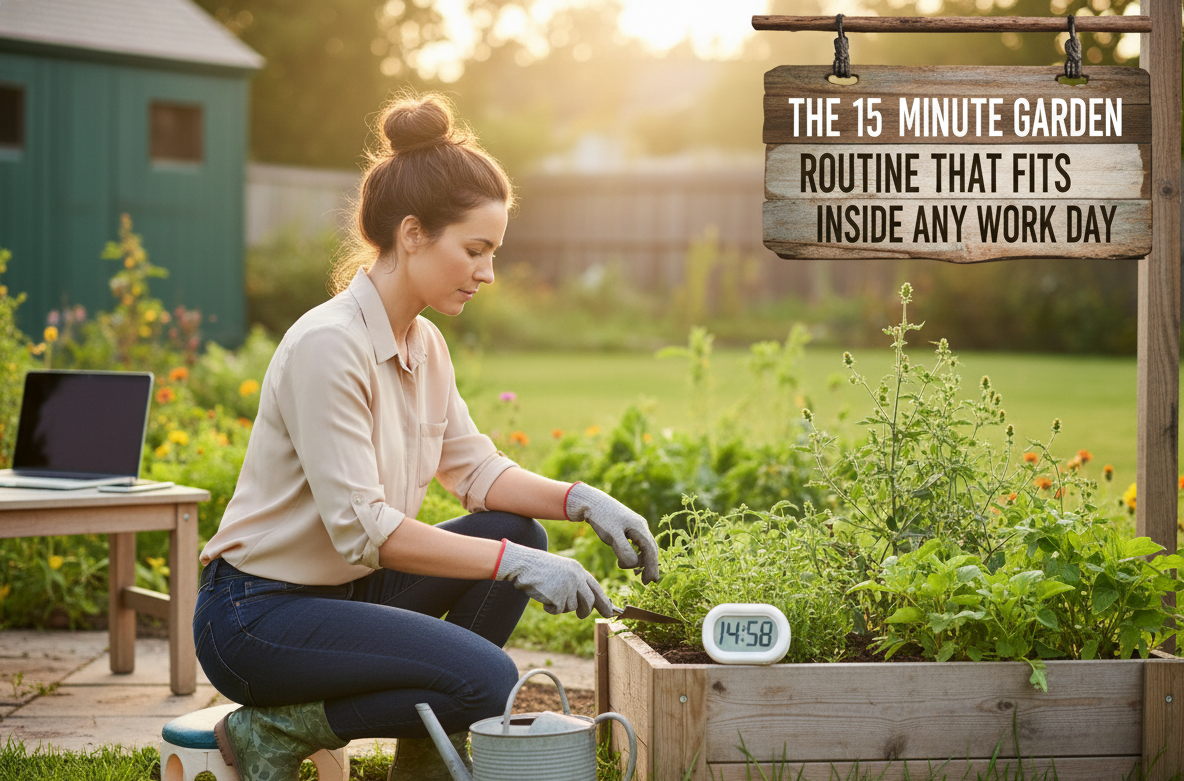
You can keep a vibrant, productive garden with just 15 minutes a day. Not 15 minutes of frantic scrambling. Fifteen focused, intentional minutes, broken into micro-tasks that slot between your coffee and your commute. Let me show you how.
Why 15 Minutes Actually Works (And Why Longer Sessions Fail)?
Your brain resists big, vague commitments. “Spend the afternoon gardening” feels heavy. “Spend 90 seconds checking soil moisture” feels doable. That’s the secret. We’re not trying to replicate a weekend warrior’s marathon session.
We’re building tiny habits that compound. Think of it like brushing your teeth. You don’t brush for an hour once a week. You do two minutes twice a day. Gardens thrive on consistency, not intensity.
Years ago, I set aside Saturday mornings for “garden time.” I’d pull weeds for two hours, water everything, fertilize, and prune. My plants would look great for three days.
Then life would hit a work deadline, a sick kid, a rainy weekend, and I’d skip a session. The weeds would explode. The soil would crack. I’d feel guilty, overwhelmed, and quit.
It wasn’t until I switched to daily 15-minute check-ins that my garden finally thrived. The plants got steady attention. I stopped dreading the work. And honestly? I started enjoying it more.
Your Morning 7: The 3-Minute Scan
Set a timer. Seriously. Three minutes is all you need before you head to work. Grab a small basket or a repurposed coffee tin. Walk your garden space—balcony, backyard, windowsill—and do just three things:
First, touch the soil. Stick your finger about 2 inches deep into each pot or garden bed. If it feels dry like a sidewalk, that plant needs water today. If it feels cool and slightly damp, skip it.
This simple test saves you from the #1 killer of houseplants and container gardens: overwatering. For most vegetables and flowers in summer, that finger test means watering every 2 days. In winter? Once a week is usually enough.
Second, pick up exactly three things that don’t belong. A fallen leaf. A stray pebble. A dead flower head. Don’t aim for perfection. Just three. This tiny act prevents disease (rotting leaves harbor fungus) and keeps your space feeling cared for.
It’s psychological magic. A tidy garden invites you to spend more time there.
Third, look for one change. A new bud on your pepper plant. A yellowing leaf on your fern. A snail trail on the patio. Don’t fix it yet. Just notice. Jot it in a notes app if you want. This builds your plant intuition. You’ll start spotting problems before they become emergencies.
Your Lunch Break 5: The Micro-Task Rotation
This is where the routine gets smart. Instead of trying to do everything every day, rotate one 5-minute task throughout your week. You’ll cover all the essentials without burnout.
- Monday: Water deeply. If your morning scan flagged dry soil, water now. But don’t just sprinkle. Water slowly at the base of the plant until you see a little runoff from the bottom of the pot. For a standard 12-inch container, that’s about 1 liter of water. For in-ground tomatoes, aim for 2 gallons per plant, applied slowly so it soaks deep. Deep watering encourages deep roots, which means drought-resistant plants.
- Tuesday: Snip and harvest. Grab scissors. Harvest any ripe herbs or veggies—basil tips, cherry tomatoes, lettuce leaves. Even if you’re not cooking with them, snipping encourages more growth. Remove any yellow or dead leaves. One minute of pruning can prevent a week of pest problems.
- Wednesday: Feed lightly. Mix one tablespoon of balanced liquid fertilizer (like 10-10-10) into 5 liters of water. Water one or two hungry plants with this mix—think fruiting plants like tomatoes or heavy feeders like roses. Rotate which plants you feed each week. Over-fertilizing burns roots. Underfeeding starves growth. This middle path works.
- Thursday: Pest patrol. Flip over a few leaves. Check stems. Look for aphids (tiny green dots), spider mites (fine webbing), or chew marks. Spot a few? Blast them off with a strong spray of water from a spray bottle. For persistent aphids, mix one teaspoon of mild dish soap into 1 liter of water and spray affected areas. Do this early in the day so the leaves dry before nightfall.
- Friday: Tidy and train. Spend five minutes guiding vines onto a trellis. Tuck a sprawling strawberry runner back into place. Tie up a floppy sunflower stem with soft garden twine. This prevents breakage and keeps your space productive. It also feels satisfying—you’re shaping your garden, not just maintaining it.
Your Evening 3: The Wind-Down Check
Before you crash on the couch, give your garden three final minutes. This isn’t work. It’s a transition ritual.
Walk through with your phone flashlight. Look for anything that changed since morning. Did that tomato you watered perk up? Did a new flower open? Celebrate that. Then, do one preventative thing: empty any saucers under pots (standing water breeds mosquitoes), or pull one obvious weed while the soil is soft from evening dew. Finally, take one photo. Just one.
A bud, a leaf pattern, the way the light hits your lavender. Over time, this becomes a visual journal. You’ll see progress you’d otherwise miss. And on tough days, scrolling through these tiny victories is better than any meditation app.
What About Weekends? (And Travel? And Forgetfulness?)
You’re thinking: “This sounds great, but what if I miss a day?” Good news: this routine is antifragile. Missing one 15-minute session won’t crash your system. The key is the rotation. If you skip Wednesday’s feeding, just do it on Thursday. The plants won’t notice. The system absorbs the hiccup.
For weekends, don’t add more time. Instead, use one 15-minute block for a slightly bigger task that rotates weekly: repotting one plant, sowing a new batch of seeds, or cleaning your tools. Keep it contained. Protect your rest.
Traveling? Before you leave, do a deep water (soak pots until runoff, then let them drain fully), mulch the soil surface with a 1-inch layer of straw or shredded leaves to retain moisture, and move shade-loving plants out of direct sun.
For trips longer than 5 days, ask a neighbor to do just the 3-minute morning scan for you. Give them a printed checklist: “1. Finger test soil. 2. Pick up 3 things. 3. Water only if dry.” Most people will say yes to a 3-minute favor.
The One Mistake That Changed Everything for Me
I used to water my garden every evening after work. Seemed logical, right? Cool temps, less evaporation. But my fungal problems were constant. Mildew on my zucchini.
Blight on my tomatoes. I was baffled. Then I talked to a master gardener who asked one question: “Are your leaves wet at night?” Duh. Evening watering meant leaves stayed damp all night the perfect party for fungus.
I switched to morning watering only. Problem solved in two weeks. Now, my 7 am scan includes a quick check: if leaves are damp from dew, I skip overhead watering and go straight to the soil. That one shift saved my summer harvest. Don’t make my mistake. Water the soil, not the leaves. And do it early.
Picking Plants That Play Nice With Your Schedule
Not all plants are created equal for the 15-minute routine. Choose varieties that forgive occasional neglect and reward consistency. For edibles: cherry tomatoes (like ‘Sun Gold’), bush beans, lettuce, kale, and herbs like rosemary, thyme, and mint.
These tolerate slight watering variations and produce heavily with minimal fuss. For flowers: zinnias, marigolds, salvia, and lavender.
They’re drought-tolerant once established and bloom for months. Avoid high-maintenance divas like fuchsias or hydrangeas until you’ve mastered the rhythm. Start small. Three pots. One window box. Master the routine with a few plants, then expand.
The Real Magic Isn’t in the Minutes—It’s in the Momentum
Here’s what no one tells you: the 15 minutes isn’t just about plant care. It’s about connection. That morning scan? It’s a mindfulness practice. You’re outside, breathing, noticing growth. The lunch break micro-task? It’s a mental reset from screen fatigue.
The evening check? It’s a boundary between work and rest. Your garden becomes an anchor in a chaotic day. And because the commitment is so small, you actually stick with it. Consistency builds confidence. Confidence builds joy. That’s how a chore becomes a sanctuary.
Your One Action Today
Tonight, before you brush your teeth, step outside with a small basket. Walk your garden space—however tiny and pick up exactly three things that don’t belong. A leaf. A twig. A spent bloom. Put them in the basket. Compost them tomorrow.
That’s it. Three things. Three minutes. You’ve just started the routine. Tomorrow, add the finger test. The day after, try one micro-task. You don’t need more time. You just need to begin where you are. Your future self, the one with thriving plants and a calmer mind, will thank you.