
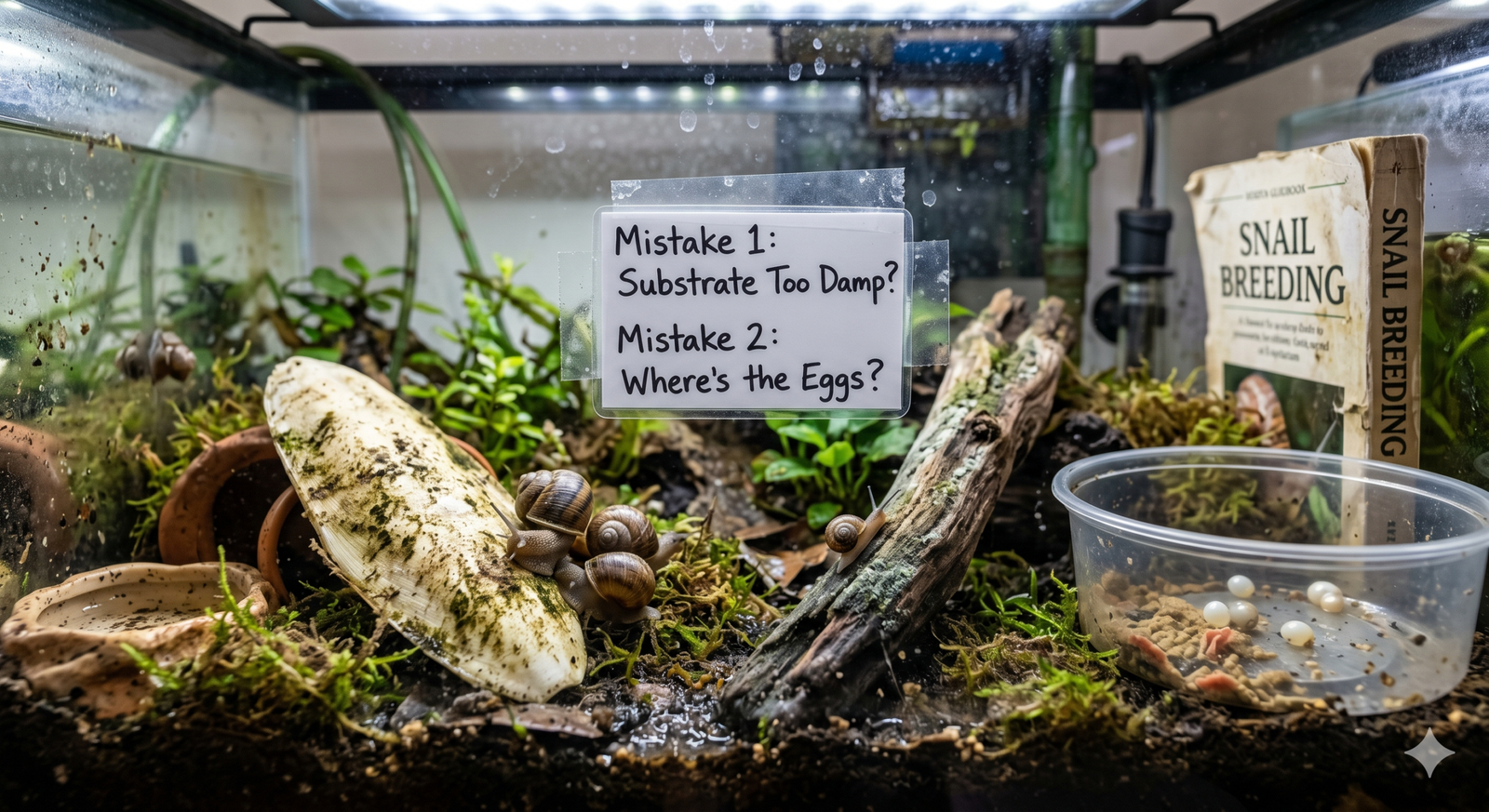
Snail breeding, legally termed heliciculture, represents a unique branch of agricultural husbandry that requires strict environmental parameters to succeed.
While these gastropods are highly productive hermaphrodites capable of generating substantial populations within controlled timelines, they are exceptionally delicate during their early life stages.
Many novice breeders venture into snail farming under the false impression that land snails thrive on simple neglect.
In reality, a high baseline mortality rate—frequently exceeding twenty per cent in poorly managed systems—stems directly from minor, preventable husbandry errors.
Recognising and adjusting these core operational errors ensures higher survival, proper shell formation, and optimal colony reproduction.
Choosing the Wrong Soil Composition
Novice keepers frequently overlook soil quality, using standard garden dirt or pure sand within their breeding pens.
This oversight represents a critical breakdown in habitat design, as soil is not merely a floor covering but an active biological substrate.
Snails rely on the ground beneath them to burrow, regulate internal moisture, absorb vital minerals, and safely deposit egg clutches.
Using a heavy clay medium stalls production because the dense material hardens when dried, preventing adult snails from digging reproductive nests.
Conversely, sandy substrates fail to hold moisture, leading to rapid dehydration of both adult gastropods and their vulnerable egg clutches.
Ideal heliciculture setups leverage loose, organic loamy soils devoid of industrial fertilisers or synthetic chemicals. The substrate must feature a neutral to slightly alkaline chemical balance, ideally sustaining a pH value between 6.5 and 7.5.
Acidic soil profiles erode the protective outer layers of the snail shell, causing long-term structural weakness and increasing the death rate of newly hatched juveniles.
Supplying Inadequate Calcium Levels
A foundational error in amateur operations is the failure to deliver a constant, bioavailable source of calcium.
The skeletal framework of a gastropod is entirely external, and its shell requires continuous mineralisation to support rapid tissue growth.
Without an abundant supply of this elemental mineral, snails experience severe shell thinning, cracked mantles, and stunted development.
| Source | Utilization / Biomarkers |
|---|---|
| Cuttlebone | High bioavailability, easily scraped |
| Agricultural Lime | Substrate amendment corrects pH |
| Powdered Eggshells | Sustainable alternative, needs washing |
| Plaster of Paris | Structural blocks, target fallback |
Relying exclusively on fresh green vegetables like lettuce or cabbage will not satisfy structural dietary requirements.
Breeders must introduce dedicated mineral supplements to the feeding area at all times. High-grade cuttlebone, micro-powdered oyster shells, and pure agricultural limestone provide excellent options.
Never utilise hydrated lime or industrial quicklime, as these highly alkaline chemicals cause chemical burns upon direct tissue contact, resulting in immediate fatalities across the colony.
Neglecting Essential Humidity and Moisture Profiles
Land snails require elevated environmental humidity to generate mucus, move efficiently, and prevent fatal cellular dehydration.
Beginners often fluctuate between two dangerous extremes: allowing the enclosure to dry out completely or oversaturating the soil until it turns into stagnant mud.
Dry habitats force the gastropod into an artificial state of dormancy known as estivation. During this process, the animal retreats deep inside its shell and seals the opening with a calcified mucus membrane called an epiphragm.
While estivation serves as a wild survival mechanism, it halts all growth, stops reproduction, and eventually kills the animal via starvation if sustained.
Overwatering is equally hazardous, particularly within egg-laying zones. Soil structures that hold pools of water cut off oxygen to subterranean nests, effectively drowning the developing embryos inside their eggs.
To keep environments balanced, use automated fine-mist sprayers to maintain ambient humidity percentages between seventy-five and eighty-five per cent.
The soil should stay damp to the touch, similar to a wrung-out sponge, without pooling water.
Overcrowding the Breeding Enclosures
High population density stands out as a leading driver of invisible stress and mass mortality in amateur small-scale heliciculture.
When too many specimens occupy a single square meter of space, the overall quality of the microenvironment degrades quickly.
| Species | Recommended Adults per Square Meter |
|---|---|
| Cornu aspersum | 25–40 specimens |
| Archachatina | 5–10 specimens |
| Achatina achatina | 8–12 specimens |
Overcrowding causes several negative biological effects:
- Chemical Growth Inhibitors: Snail mucus trails contain natural pheromones that signal population limits; high concentrations of these secretions stunt the growth of younger hatchlings.
- Aggressive Competition: Overcrowding sparks intense competition for feeding positions, leaving smaller or weaker snails malnourished.
- Rapid Disease Transmission: High density speeds up the spread of devastating bacterial infections, flagellate parasites, and fungal outbreaks through the entire enclosure.
Feeding Suboptimal and Imbalanced Diets
Providing an improper diet is a widespread issue among beginners, who often feed their colonies kitchen scraps like wilting lettuce leaves and potato peels.
While land snails consume a wide range of organic materials, a basic scrap diet lacks the proteins, trace minerals, and energy metrics required for commercial breeding.
| Nutrient Category | Optimal Target Percentage |
|---|---|
| Crude Protein | 16%–18% (Growth & Egg Production) |
| Calcium (Ca) | 12%–14% (Shell Mineralization) |
| Crude Fiber | 4%–6% (Digestive Regulation) |
| Total Fat / Lipids | 2%–3% (Metabolic Processes) |
Note: These ranges are commonly used as target values for formulated commercial snail feeds to support growth, reproduction, shell development, and overall health.
Young hatchlings need structured carbohydrate bases and high crude protein percentages to build muscle tissue alongside their expanding shells.
If you fail to offer balanced, formulated mash feeds containing ground grains, oats, and soybean meal, your snails will grow slowly and show weak shell development.
Additionally, avoid feeding foods high in starch, like raw pasta or rice, which can expand internally and cause fatal blockages.
Salt is an absolute chemical toxin to land snails; even trace amounts destroy their cellular osmotic balance, causing rapid, painful desiccation.
What Are the Primary Signs of Poor Snail Health?
A critical question for anyone entering heliciculture is: How can a breeder quickly identify failing environmental conditions before widespread mortality occurs?
| Observed Symptom | Primary Root Cause |
|---|---|
| Deep Retraction | Chronic Low Humidity / Dehydration |
| Shell Rasping | Severe Calcium Deficiency |
| Whitened Shell Apex | High Soil Acidity (Low pH) |
| Flaccid Body Tissue | Systemic Bacterial Infection |
Note: These symptoms are diagnostic indicators and should be evaluated alongside environmental conditions, diet, substrate quality, and overall colony health before determining a treatment plan.
Regular observation of behaviour provides immediate operational data. Healthy snails show active nocturnal movement, clean shell margins, and clear, uniform mucus production.
If you notice specimens deeply retracted into their shells during peak humidity periods, or if they are actively chewing on the shells of their pen mates (a behaviour known as rasping), your system is suffering from low moisture levels or a severe calcium shortage. Addressing these early indicators quickly prevents colony-wide failures.
Mixing Incompatible Snail Species
Amateur breeders often try to house different types of snails in the same enclosure, mixing temperate species with tropical varieties.
This practice creates massive husbandry problems because different species require distinct environmental setups.
For instance, the common garden snail (Cornu aspersum) thrives in temperate climates and undergoes natural hibernation cycles when temperatures drop.
On the other hand, the Giant African Land Snail (Achatina achatina) requires constant tropical warmth, with temperatures remaining between 25°C and 30°C year-round.
Forcing these different species into the same space means one or both will suffer from constant environmental stress.
Keeping larger species alongside smaller, delicate ones often leads to smaller snails getting crushed or outcompeted for food.
Inadequate Pest Control and Quarantine Procedures
Snail enclosures naturally feature warm, moist, and food-rich conditions, which make them prime targets for a variety of pests and predators.
Beginners often fail to implement proper physical screening, allowing destructive invaders into their breeding rooms.
| Pest Type | Damage Mechanism |
|---|---|
| Phorid / Sciarid Flies | Lay eggs in the mantle; larvae consume tissue |
| Carabid Beetles | Direct predation; shell destruction |
| Rats and Mice | Crush shells to access adult flesh |
| Nematodes | Internal parasites are causing wasting |
Note: Effective snail farm biosecurity includes regular pest monitoring, proper sanitation, secure enclosure barriers, and prompt removal of diseased or dead snails to reduce infestation risks.
Predatory beetles can easily breach open outdoor pens, causing severe shell damage as they prey on adult snails.
Meanwhile, small phorid flies slip through wide mesh ventilation panels to lay eggs directly inside the snail’s breathing pore. The resulting maggots feed on the live tissue from the inside out.
To protect your colony, use ultra-fine insect netting with a pore size under one millimetre, elevate your breeding boxes off the ground, and use salt barriers around the base of support structures to keep crawling pests away.
Mishandling Sensitive Snail Eggs and Hatchlings
The reproductive phase is the most delicate period in the lifecycle of a snail. Novice breeders often make the mistake of frequently digging up or roughly handling freshly laid egg clutches.
Snail eggs are bound together by a fragile fluid membrane that tears easily under physical pressure, which stops embryo development.
Egg Hatching Cycle
- Maintain 22°C–25°C temperature.
- Keep 80% stable humidity.
- Provide powdered starter feed and calcium.
When eggs hatch, the young juveniles emerge with soft, translucent shells that are as thin as paper. Handling newborn snails with bare hands or using heavy metal tools can instantly fracture their shells, leading to fatal injuries.
Instead, use soft, damp artist brushes to move hatchlings when necessary, gently. Keep young juveniles in dedicated nursery bins separate from adult populations to prevent accidental crushing and ensure they get specialised starter food.
Neglecting Daily Waste Management and Sanitation
With high population densities comes a substantial accumulation of organic waste, including faeces, old slime tracks, and decaying leftover food.
Leaving these waste materials to build up in a warm, humid environment creates a perfect breeding ground for dangerous pathogens.
Anaerobic bacteria quickly multiply in soiled substrate, producing toxic ammonia gases that can poison the air inside the enclosure.
Slime buildup on the walls of your pens creates a sticky barrier that traps dirt and harbours harmful fungal spores.
To keep conditions safe, clean out uneaten food every morning before it starts to rot. Spot-clean faeces daily, and completely refresh or pasteurise the soil substrate every four to six weeks to keep your breeding environment clean and stable.
