
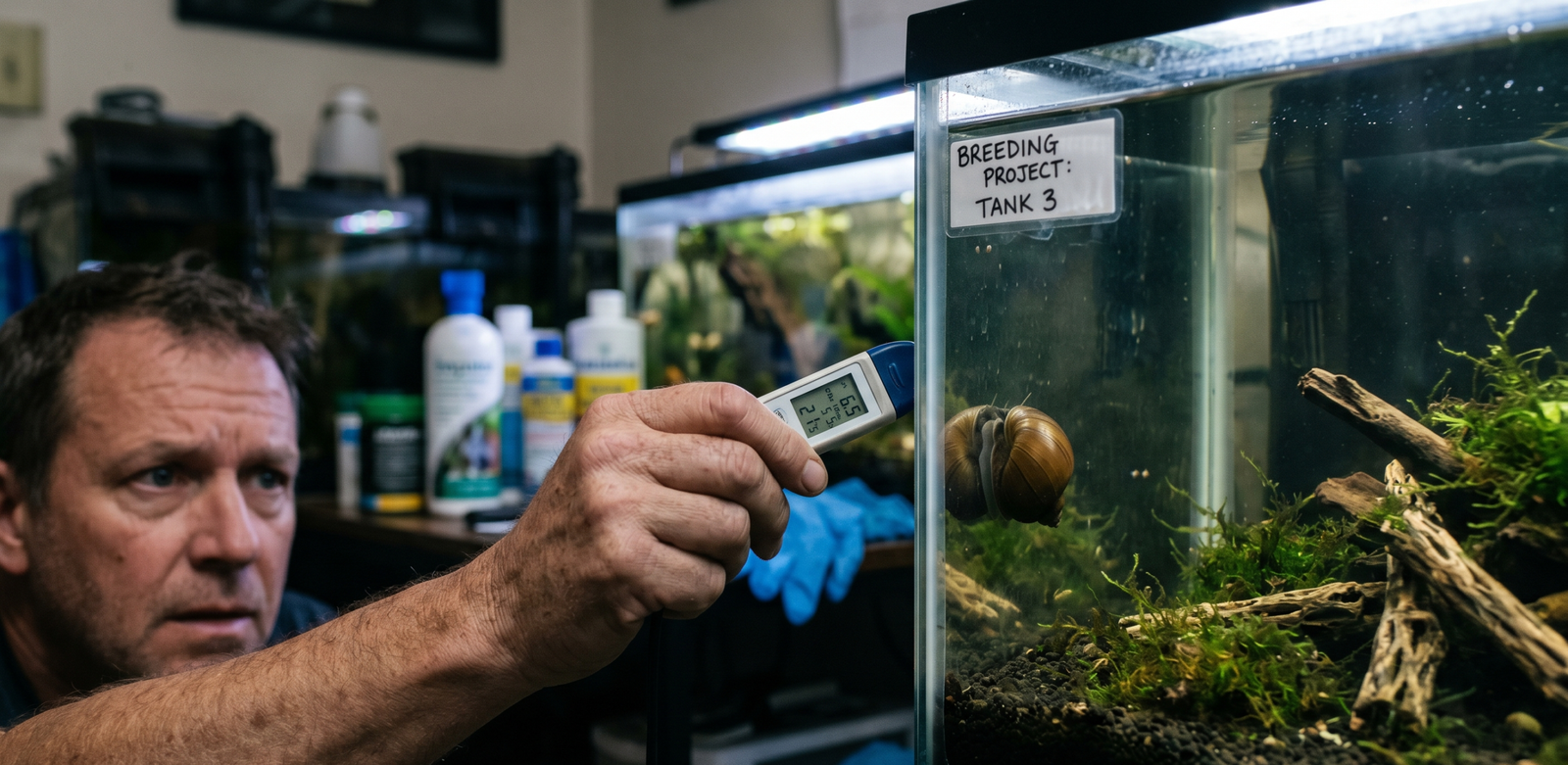
Aquarium hobbyists often look forward to seeing new life in their tanks. When your aquatic snails stop reproducing, it typically indicates a specific environmental issue or biological factor.
Understanding the mechanics of snail reproduction is the first step toward solving this frustrating problem.
If you are asking yourself, why are my snails not laying eggs, the core answers lie in water parameters, nutritional deficiencies, temperature shifts, and tank space limitations.
Addressing these elements directly will help restore the proper conditions needed for your snails to deposit healthy egg clutches.
Why Your Snails Stopped Depositing Eggs?
When aquatic snails fail to produce egg clutches, it is generally due to one of these core reasons:
- Inadequate Space Above the Waterline: Species like mystery snails require a dry zone of 2 to 4 inches below the aquarium lid to safely lay their eggs.
- Low Calcium and Poor Nutrition: Snails need massive amounts of calcium to develop shell strength and produce eggs. Without it, reproduction shuts down.
- Incorrect Water Temperatures: Sudden cooling or sustained cold water signals to the snail’s body that it is winter, halting breeding behaviour.
- Improper Gender Balance: Many popular aquarium snails are not hermaphrodites; they require both a distinct male and a female to reproduce.
- Poor Water Quality: High levels of ammonia, nitrites, or nitrates stress the invertebrates, forcing them into survival mode rather than breeding mode.
1. Lack of Dry Space Above the Waterline
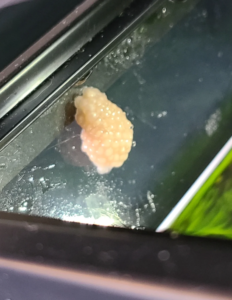
One of the most common reasons a healthy snail avoids reproduction is a lack of physical space.
Popular aquarium species like mystery snails (Pomacea bridgesii) and apple snails do not lay their eggs underwater. Instead, they climb above the water level to deposit a delicate, gelatinous clutch that hardens over time.
If your aquarium is filled completely to the brim, the female snail will search for a suitable nesting spot but fail to find one. This forces her to retain the eggs, which can eventually compromise her health.
How to Fix the Water Level?
To resolve this issue, lower the water level in your aquarium by 3 to 4 inches. This adjustment exposes the upper portion of the glass or acrylic tank walls.
This dry space gives the female the necessary room to climb out, assess the humidity, and safely anchor her egg clutch.
Ensure your tank has a tight-fitting lid, as snails looking for a nesting spot can easily climb completely out of an open-top aquarium and fall.
2. Calcium Deficiencies and Nutritional Gaps
Egg production places an immense physical demand on an invertebrate’s body. Snail eggs are housed in protective casings that require high amounts of calcium. If your aquarium water lacks essential minerals or if the food supply is poor, the snails will prioritise their own survival over breeding.
Snails cannot build healthy eggshells or maintain their own protective coverings if the water is too soft or acidic.
Acidic water dissolves calcium, making it nearly impossible for invertebrates to thrive.
Snail Dietary Requirements for Reproduction:
- Minerals: Calcium carbonate, Magnesium.
- Vegetables: Blanched zucchini, Kale, Spinach.
- Protein: High-quality shrimp pellets, Fish flakes.
Boosting Nutritional Value
To kickstart egg-laying, introduce specific mineral supplements to the tank. Adding cuttlebone pieces directly to the water or using crushed coral as a substrate gradient raises the water hardness naturally.
You can track your mineral levels by monitoring general hardness (GH) and carbonate hardness (KH) using standard [aquarium water testing kits](https://www.api fish.com).
Additionally, feed your snails a dedicated diet of blanched green vegetables like spinach and kale, which are naturally rich in calcium.
3. Water Temperature and Seasonal Triggers
Aquatic invertebrates are highly sensitive to the temperature of their environment. In nature, snail reproduction cycles are dictated by the seasons.
Warmer water signals the arrival of spring and summer, which is the prime time for abundant food and successful hatching.
If your tank temperature sits below 72°F (22°C), your snails will remain in a semi-dormant metabolic state. They will eat less, move more slowly, and completely cease all mating activities to conserve energy.
| Snail Species | Optimal Breeding Temperature | Minimum Threshold |
| Mystery Snail | 75°F – 78°F (24°C – 26°C) | 68°F (20°C) |
| Apple Snail | 76°F – 82°F (24°C – 28°C) | 70°F (21°C) |
| Nerite Snail | 74°F – 79°F (23°C – 26°C) | 72°F (22°C) |
Adjusting the Thermal Environment
To encourage mating behaviour, gradually raise the aquarium temperature using an adjustable submersible heater.
Aim for a stable range between 75°F and 78°F. The slight increase simulates seasonal warming, which prompts the snails’ endocrine systems to begin egg production.
Avoid sudden shifts, as a rapid change in water dynamics can cause severe stress or shock.
4. Misunderstanding Snail Genders
A frequent misconception among aquarium keepers is that all snails can reproduce on their own.
While certain pest snails like ramshorn and bladder snails are hermaphroditic (possessing both male and female reproductive organs), other popular species are gonochoristic. This means they have distinct, individual sexes.
Mystery snails and apple snails require a male and a female to copulate and produce fertile eggs successfully. If you only own two mystery snails and they happen to both be male, you will never see an egg clutch.
Ensuring a Proper Mating Pair
Determining the sex of a snail visually can be incredibly difficult for beginners. It involves gently lifting the snail while it is extended from its shell to inspect the right mantle cavity for the presence of a male reproductive organ.
The easiest practical solution is to keep a small group of four to six individuals in the same enclosure.
Mathematically, increasing the colony size ensures a near-certain probability of having both males and females present in the tank.
5. Elevated Stress and Poor Water Chemistry
High water parameters are the enemy of invertebrate reproduction. Snails absorb water directly through their skin and bodies. When toxic compounds like ammonia or nitrite accumulate in the tank, it causes immediate physical distress.
Target Water Parameters for Breeding Snails:
Ammonia: 0 ppm (Strict Maximum).
Nitrite: 0 ppm (Strict Maximum).
Nitrate: < 20 ppm.
pH Range: 7.2 – 8.0.
In a high-stress environment, a female snail’s biological resources are entirely focused on cellular repair and basic survival. Reproductive functions are the very first systems to shut down when water conditions deteriorate.
Stabilising the Ecosystem
Perform regular water testing to verify your parameters match the target profiles. Implement a schedule of weekly 25% water changes to lower nitrate levels and remove organic waste.
Always treat tap water with a dedicated aquarium conditioner to eliminate heavy metals and chlorine, which are highly toxic to snails.
Keeping the pH slightly alkaline (above 7.2) protects the shell from erosion and provides a stable baseline for mating.
Step-by-Step Guide to Triggering Snail Reproduction
If you have confirmed your water parameters are correct, but your snails are still refusing to lay eggs, you can use a targeted conditioning sequence to encourage breeding. This method mimics natural environmental triggers.
1. Perform a Large Water Change:
Day 1:
Change 30% to 40% of the aquarium water. Use a gravel vacuum to thoroughly clean the substrate of excess debris and leftover organic material. This lowers dissolved solids and freshens the environment.
2. Adjust the Water Line:
Day 1:
Leave a distinct 3-inch gap of dry glass between the top of the water surface and the rim of your aquarium lid. Ensure the lid remains tightly sealed to preserve ambient humidity in that upper chamber.
3. Elevate the Temperature:
Days 2-3:
Slowly adjust your aquarium heater to raise the temperature to 78°F (26°C). Increase the heat by no more than one degree per day to prevent thermal shock to your tank inhabitants.
4. Implement High-Protein and Calcium Feeding:
Days 3-7:
Feed the snails daily with calcium-enriched foods, crab bites, or blanched zucchini. The sudden abundance of dense nutrients tells the female snail that the ecosystem can support offspring.
Frequently Asked Questions About Snail Breeding
How long can a snail hold her eggs if conditions are bad?
A female snail can retain her eggs for several weeks if she cannot find a safe, humid environment to deposit them.
However, prolonged retention can lead to internal health complications and reduced lifespan.
Do mystery snails lay eggs underwater?
No, mystery snails do not deposit their clutches submerged in water. If an egg clutch accidentally falls into the water, the developing embryos will drown within a short period. The eggs must remain damp from ambient humidity but completely out of the water to hatch successfully.
You can read more about specific aquatic reproductive strategies via scientific resources like the University of Florida IFAS Extension.
Why is my single snail suddenly laying eggs?
Certain species can store viable sperm inside their bodies for months after a single mating event.
If you purchased an adult female snail from a community tank at a pet store, she may use that stored resource to deposit multiple fertile clutches long after being isolated in your home aquarium.
Final Troubleshooting Checklist
Before looking for complex explanations for why my snails are not laying eggs, run through this rapid checklist to ensure the basics are fully covered:
- Is there a clear, dry space of at least 3 inches above the waterline?
- Is your water temperature consistently above 74°F?
- Are you supplying external sources of calcium, like cuttlebone or fresh greens?
- Is your pH level safely above 7.2 to prevent shell deterioration?
- Have you verified that you have both genders present within your snail colony?
By systematically optimising these basic environmental parameters, you remove the hidden barriers to invertebrate reproduction. In most cases, addressing the water line gap and increasing calcium intake will trigger the appearance of healthy egg clutches within a couple of weeks.
