
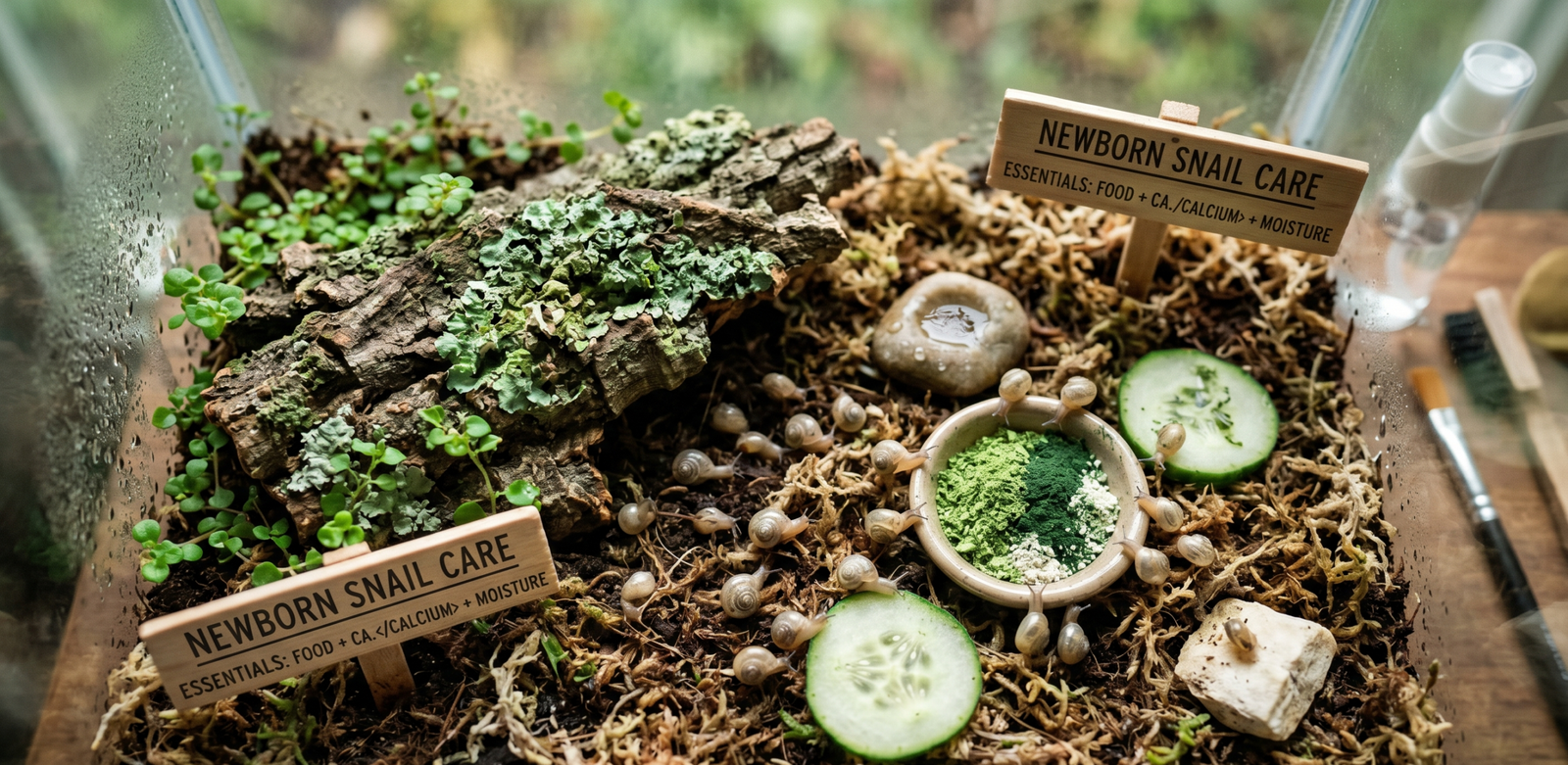
Welcoming a clutch of newly hatched gastropods into the world is an extraordinary event for any aquarist or terrarium keeper.
However, these microscopic juveniles are incredibly fragile and require precise environmental adjustments to survive their first critical weeks.
To care for baby snails after hatching, you must provide a shallow nursery enclosure, maintain a constant relative humidity of 60% to 90%, and supply an uninterrupted source of dietary calcium alongside soft, blanched vegetables.
Setting Up the Ideal Baby Snail Nursery Enclosure
Adult terrariums or display aquariums pose significant hazards to newly hatched clutches. To protect your young invertebrates, establish a dedicated rearing system designed specifically for small-scale containment.
Selecting the Right Hatchling Container
Avoid large spaces where tiny invertebrates can easily lose track of their food supply. A small, ventilated plastic container measuring roughly 30 by 20 centimetres provides the perfect perimeter for monitoring growth.
Ensure all ventilation punctures are smaller than the hatchlings themselves, as these microscopic creatures are notorious escape artists.
Substrate and Environmental Safety
For land-dwelling species, line the bottom of the enclosure with a 2-centimetre layer of unfertilized, pre-moistened coco coir or specialized terrarium soil.
Avoid using wild dirt, which can introduce predatory mites or harmful pathogens into your clean system.
If you are raising aquatic varieties like apple or mystery snails, keep the water level exceptionally shallow—no deeper than 5 to 7 centimetres—to allow the tiny infants to reach the surface for oxygen easily.
Maintaining Critical Temperature and Humidity Levels
Environmental stability is the primary factor dictating juvenile mollusc survival rates during the initial thirty days post-hatching.
Optimizing Relative Moisture Levels
Terrestrial juveniles dry out rapidly due to their high surface-area-to-volume ratio. Keep your enclosure’s ambient humidity between 60% and 90% by misting the internal walls with dechlorinated tap water every single morning.
An overly dry environment triggers premature estivation—a state of dormant inactivity—which permanently stunts early developmental cycles.
Managing Thermal Parameters
Maintain a stable temperature range based closely on your specific species’ native ecosystem.
For common garden varieties and temperate land options, a steady thermal baseline of 20 degrees Celsius is highly effective.
Target Range for Common Species
- Ambient Temperature: 18°C – 22°C (64°F – 72°F).
- Relative Humidity: 60% – 90%.
Avoid placing the nursery anywhere near direct windows or household heating vents, as abrupt thermal spikes can prove fatal within hours.
Nutritional Requirements and Feeding Workflows
When gastropods first emerge from their protective casings, their dietary needs shift rapidly from embryonic yolk consumption to active grazing.
Post-Hatch Nutrition Map
- Eggshell Eating: (First 24-48h).
- Blanched Greens: (Days 3 – 14).
- Calcium Baseline: (Continuous).
The Initial Post-Hatch Feast
Do not immediately remove the empty egg remnants from your nursery setup. Newborn gastropods typically consume their own discarded eggshells during their first forty-eight hours of life to absorb foundational minerals.
Once they begin migrating away from the hatching site, you can introduce external food choices.
Selecting Soft, Nutrient-Dense Foods
Young mouthparts cannot scrape through tough, fibrous vegetation. Offer soft, easily digestible organic produce ad libitum to prevent malnutrition.
Excellent starter options include:
- Thinly sliced organic cucumbers and zucchini.
- Steam-softened, blanched organic carrots.
- Mashed organic sweet potato.
- Finely powdered rolled oats mixed with water.
Always remove unconsumed food items within twenty-four hours to prevent toxic mould outbreaks or soil spoilage.
Preventing Shell Deformities with Dietary Calcium
A gastropod shell is comprised primarily of calcium carbonate, which is continually secreted by a highly specialized tissue layer called the mantle.
Without an abundant, easily accessible mineral source, developing shells will crack, thin out, or warp.
Continuous Mineral Delivery Method
Keep a clean, natural cuttlebone inside the nursery container at all times. The young animals will rasp at the soft surface whenever their bodies require supplemental minerals.
For aquatic setups, you can add specialized mineral blocks or high-calcium substrate supplements directly into the water column to maintain optimal water hardness.
Proper Cleaning and Handling Protocols
Due to their microscopic size and soft, unhardened external structures, standard cleaning and maintenance routines must be adapted to avoid accidental crushing.
Safe Enclosure Sanitization
Clean the nursery container thoroughly on a strict weekly schedule without using any synthetic chemical soap or household detergents. Carefully pick up individual pieces of waste using smooth, blunt-ended plastic tweezers or an organic cotton swab.
When replacing soiled substrate sections, double-check every single handful to ensure no tiny hatchlings are accidentally discarded.
Strict No-Touch Handling Rule
Never use your fingers to peel a newborn snail off an enclosure wall or a piece of food. The physical pressure required to break their muscular suction can instantly separate their soft body tissue from the internal shell anchor, resulting in a fatal injury known as mantle collapse.
If you must relocate an individual, gently slide a wet piece of heavy paper or a damp leaf underneath their foot and lift them smoothly.
Frequently Asked Questions
Can baby snails live with their parents right after hatching?
It is highly recommended to separate them immediately. Adult specimens can easily crush fragile newborns while moving through the enclosure, and they will quickly consume the limited food resources required by the growing juveniles.
Why are my baby snails not growing at the same rate?
Runting is a completely natural biological process within mollusc clutches. A percentage of every hatch will grow at a significantly slower pace due to genetic variations, ensuring only the strongest variations survive long-term.
How often should I feed newly hatched snails?
Provide fresh, calcium-rich food items daily. Because juveniles undergo a rapid growth phase during their first two months of life, their metabolic demands are exceptionally high, requiring continuous access to nutrients.
