
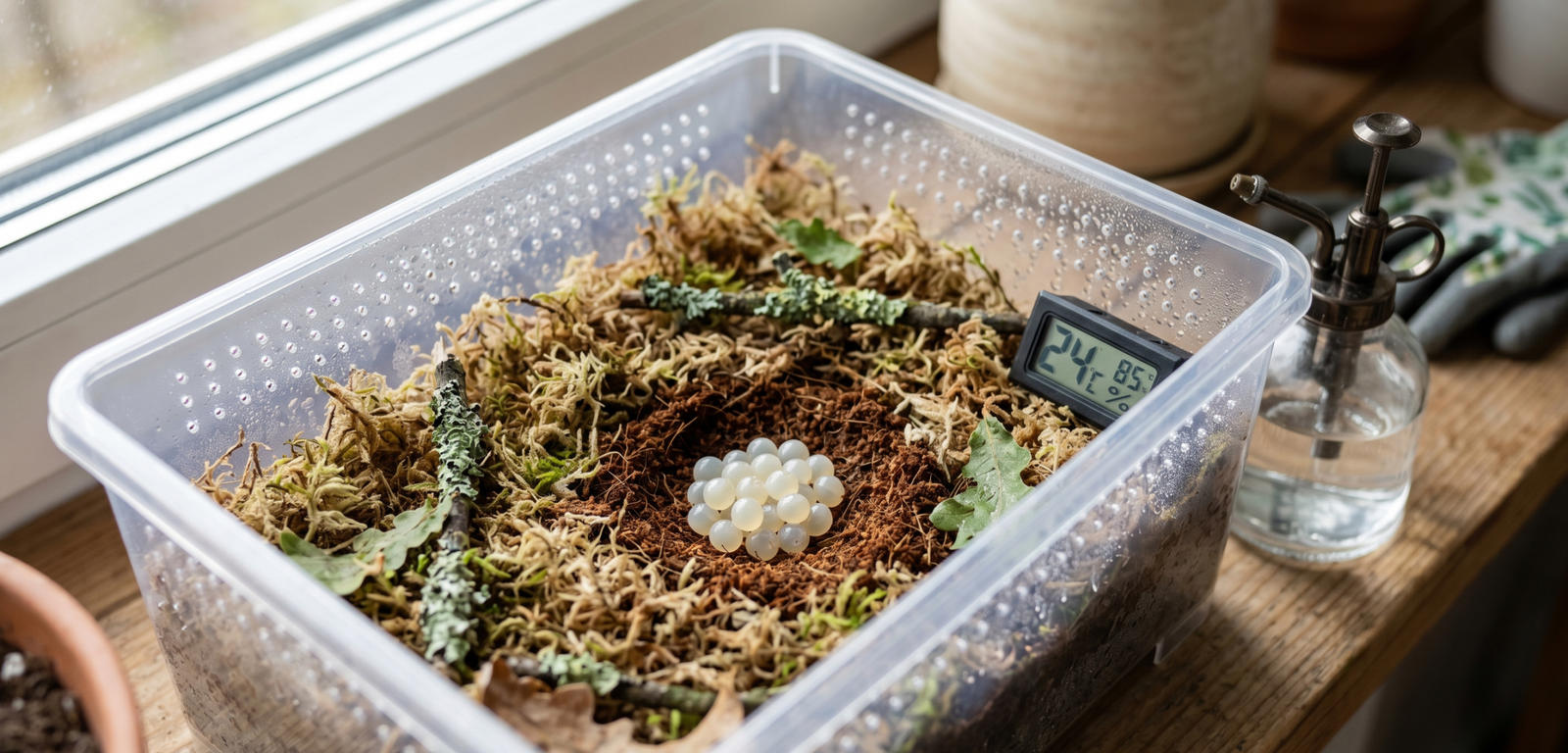
Discovering a clutch of snail eggs in your terrarium is an exciting milestone for any gastropod keeper. Whether you raise terrestrial land snails like the African Giant Snail or aquatic species like Mystery Snails, proper incubation makes the difference between a thriving colony and a failed clutch.
To incubate snail eggs successfully, you must replicate their natural microclimate by controlling moisture, air circulation, and warmth.
Snails are highly sensitive to environmental shifts during their embryonic stage.
How to Incubate Snail Eggs Successfully?
To incubate snail eggs successfully, carefully transfer the clutch to a ventilated container lined with damp paper towels or moist peat moss.
Maintain a consistent temperature between 74°F and 78°F (23°C to 26°C) and a relative humidity level of 80% to 90%.
Keep the substrate damp but never waterlogged, as excess pooling water will drown the developing embryos. Hatching typically occurs within 14 to 28 days, depending entirely on the specific snail species.
Identifying and Assessing the Health of Snail Eggs
Before setting up your incubation chamber, examine the clutch to confirm fertility and structural integrity. Healthy eggs vary in appearance depending on whether the species is terrestrial or aquatic.
Characteristics of Healthy Clutches
Land snail eggs usually look like tiny, opaque white or cream-colored spheres. They possess a semi-rigid or hard calcified shell.
Aquatic snail eggs, such as those from Mystery Snails, are deposited above the waterline in a pinkish-orange, calcareous cocoon-like pod.
Over time, healthy aquatic clutches turn a dull, ash-grey colour. This shift indicates that the baby snails are consuming their internal yolk sacs and preparing to emerge.
Signs of Infertile or Damaged Eggs
Infertile eggs often remain completely translucent, yellow, or collapse inward shortly after deposition. If a clutch develops a fuzzy white or green coating, it has fallen victim to fungal contamination.
Promptly remove infected eggs using plastic tweezers. Mould spreads rapidly across a clutch and destroys healthy embryos by cutting off their oxygen supply.
Setting Up the Ideal Incubation Chamber
A controlled environment shields delicate embryos from shifting room temperatures and structural damage caused by adult snails. Creating this setup requires a few basic materials.
Step 1: Choosing the Container
Select a small, clear plastic food container with a secure lid. A transparent container allows you to monitor development without opening the lid, which preserves the internal humidity.
Use a heated needle to poke four to six tiny ventilation holes in the lid to facilitate passive oxygen exchange.
Step 2: Preparing the Substrate
Line the bottom of the container with a 1-inch layer of organic, fertiliser-free peat moss, coco coir, or unbleached paper towels. Moisten the substrate with distilled or dechlorinated water.
Squeeze the material firmly in your fist. It should feel like a wrung-out sponge. If water drips from your hand, the substrate is too wet and will rot the outer protective membrane of the eggs.
Step 3: Moving the Clutch Safely
Snail eggs are incredibly fragile during the first 48 hours. Allow the clutch to harden slightly before touching it.
Gently roll land snail eggs onto a plastic spoon to move them. For aquatic clutches attached to glass, gently slide a clean razor blade underneath the base of the cluster to detach it without fracturing the outer shell.
Place the eggs gently on top of your prepared substrate.
Crucial Environmental Parameters for Optimal Hatch Rates
Embryonic snails cannot regulate their own moisture or temperature. You must maintain strict environmental parameters throughout the multi-week incubation cycle.
Temperature Restrictions
Keep the incubation container in a dedicated room or draft-free cabinet where temperatures stay between 74°F and 78°F (23°C to 26°C).
Avoid placing the container near windows, air conditioning vents, or direct sunlight. Sudden temperature spikes can bake the embryos, while drops below 68°F (20°C) slow development down to a complete halt.
Humidity and Moisture Management
Maintain a constant relative humidity level between 80% and 90%. You can monitor this by placing a small digital hygrometer inside the chamber.
If the substrate dries out, the internal egg fluid evaporates, causing the embryo to calcify and stick to the inner shell.
Mist the walls of the container with a fine-spray water bottle once every two days. Never spray the eggs directly, as impact droplets can crack thin shells.
| Parameter | Optimal Range | Monitoring Method |
| Temperature | 74°F – 78°F (23°C – 26°C) | Digital thermometer probe |
| Relative Humidity | 80% – 90% | Mini digital hygrometer |
| Substrate Moisture | Damp, damp-sponge consistency | Manual squeeze test |
| Air Exchange | Low, continuous passive flow | 4-6 micro ventilation holes |
Key Differences: Terrestrial vs Aquatic Snail Incubation
While the baseline needs for warmth and moisture are universal, you must adjust your technique based on whether you are raising land snails or aquatic species.
Managing Terrestrial Snail Eggs
Land snails naturally burrow into soft, damp topsoil to deposit their clutches. When incubating them indoors, lightly press the individual eggs into your coco coir substrate so they are nestled securely.
You can scatter a paper-thin layer of loose substrate over the top to block ambient light, mimicking an underground nest.
Managing Aquatic Snail Eggs
Aquatic snails lay eggs above the water line to prevent the embryos from drowning before their lungs or gills fully form. Never submerge aquatic snail eggs in water.
Instead, place a piece of plastic mesh or a floating styrofoam raft inside your humid container, then rest the clutch on top.
This keeps the eggs suspended directly above the damp substrate, providing maximum humidity without direct water saturation.
Timelines: What to Expect During Incubation
Patience is vital when learning how to incubate snail eggs successfully. The exact duration of the incubation period hinges on genetics, species variation, and ambient room temperatures.
Incubation Duration by Species
- Garden Snails (Cornu aspersum): 14 to 21 days.
- Mystery Snails (Pomacea bridgesii): 10 to 24 days.
- Giant African Land Snails (Lissachatina fulica): 11 to 21 days.
Signs of Imminent Hatching
As the hatching window approaches, the physical appearance of the clutch alters dramatically. Hard white shells become brittle, thin, and translucent, occasionally showing tiny dark spots inside.
Aquatic clutches look dry, brittle, and begin to crumble around the edges. Do not peel or break the eggs open yourself.
The hatchlings possess a specialised, temporary structure called an egg tooth to exit the shell safely on their own.
Post-Hatch Care and Neonate Husbandry
The first 48 hours after hatching are critical for the survival of the neonate snails. Your management style must shift immediately once the first baby emerges.
The Initial Diet
Do not remove the empty eggshells from the incubator. Baby snails stay underground or inside the cluster for the first couple of days to consume their own calcium-rich eggshells.
This meal hardens their soft initial shells, known as the protoconch.
Once they begin moving away from the nest site, introduce thinly sliced organic zucchini, romaine lettuce, and powdered calcium carbonate.
Juvenile Housing Requirements
Move the young snails to a dedicated nursery tank separate from adult snails. Adults can accidentally crush the fragile juveniles or outcompete them for food resources.
Keep the nursery environment simple, using damp unbleached paper towels as a substrate for the first month to make it easy to clean up waste and track food consumption.
Troubleshooting Common Incubation Problems
Even with precise preparation, unexpected environmental shifts can threaten the survival of your clutch. Use these diagnostic steps to fix issues quickly.
Problem 1: White or Green Fuzzy Mould Growth
Mould indicates poor air circulation or excessive moisture in the substrate. Use a sterile cotton swab to wipe away minor mould patches gently. Increase the size of the ventilation holes in your container lid and reduce your misting schedule.
Problem 2: Eggs Shrivelling or DENTING
If the egg surfaces look dented or wrinkled, your humidity has dropped below the minimum threshold. Immediately mist the inner walls of the chamber and seal two of the ventilation holes with tape to lock in remaining moisture.
Problem 3: No Hatching After 30 Days
If the timeline passes 30 days without activity, the eggs may be infertile, or the room temperature was too low, causing development to stall. Hold a small flashlight behind land snail eggs to check inside. If the egg is completely clear with no dark mass, the embryo did not develop.
Summary Checklist for Snail Egg Care
To ensure your next batch develops perfectly, verify your setup against this essential care list:
- Procure a clear plastic incubator with 4 to 6 tiny ventilation holes.
- Moisten the coconut coir or paper towels until damp like a wrung-out sponge.
- Gently move the clutch using a plastic spoon or a clean razor blade.
- Regulate temperature continuously between 74°F and 78°F.
- Maintain humidity levels between 80% and 90% via regular misting.
- Leave empty shells in place post-hatch to provide essential calcium for newborns.
