
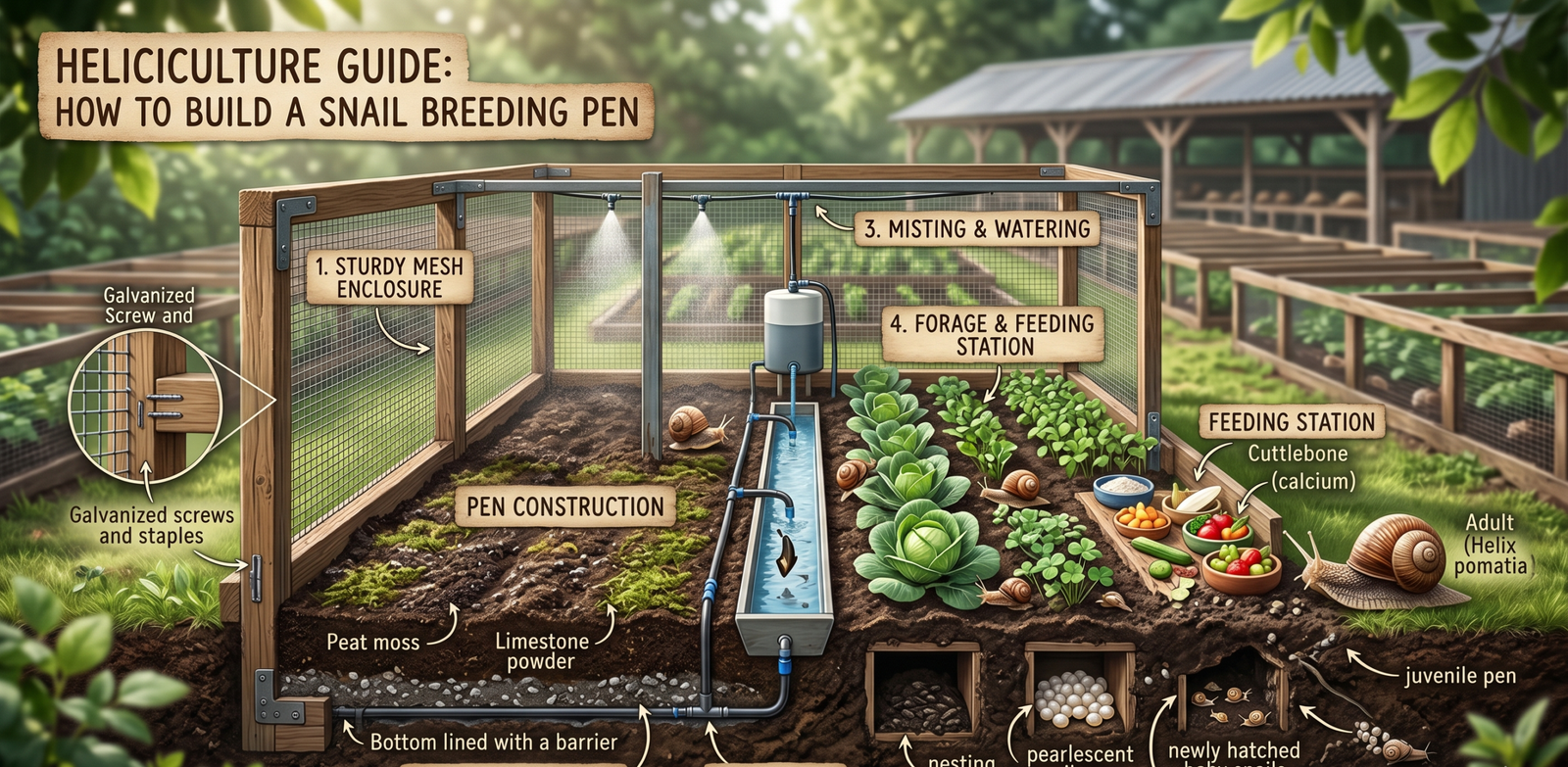
Building a productive, escape-proof environment is the most critical step for successful heliciculture, also known as snail farming.
Snails are selective about where they lay their eggs, requiring precise soil conditions, balanced ambient moisture, and complete protection from predators.
If you want to raise healthy, breeding populations of species like the African Giant Snail (Achatina achatina) or the Garden Snail (Cornu aspersum), a standard storage box will not suffice.
A specialised habitat must be engineered from the ground up to support their biological needs.
Essential Considerations Before Building Your Snail Pen
Before gathering construction materials, select an optimal location and decide which structural design fits your production goals.
The physical placement of the habitat influences internal temperature and humidity levels, both of which are vital for encouraging breeding behaviours.
Ideal Environmental Factors
Snails are cold-blooded creatures that thrive in consistent warmth and elevated moisture levels. The environment should ideally maintain a temperature range between 25°C and 30°C (77°F to 86°F) and a relative humidity level of 80% to 95%.
High winds dry out snail tissue quickly, causing them to retreat into their shells and enter a dormant state known as estivation.
Position the habitat in a sheltered space away from prevailing winds and harsh, direct afternoon sunlight.
Space Requirements and Stocking Density
Overcrowding a habitat triggers stress, stunts growth, and can cause adult snails to eat their own eggs. For adult breeding stock, limit density to roughly 4 to 6 mature snails per square meter.
Conversely, young hatchlings require significantly less space initially. A single square meter of a dedicated nursery habitat can safely house up to 100 small hatchlings before they need to be moved to larger grow-out structures.
RECOMMENDED STOCKING DENSITIES:
- Breeding Adults: 4 to 6 Mature Snails per Square Meter.
- Young Hatchlings: Up to 100 Hatchlings per Square Meter.
Choosing the Right Snail Pen Design
The type of structure you choose depends on your local climate, budget, and physical workspace. There are three primary physical layouts used in modern production.
1. The Elevated Hutch Box System
Perfect for small-scale projects, home backyards, or dedicated breeding programs, these wooden or plastic structures are raised on sturdy legs or stilts.
This design keeps the habitat at waist-height, making maintenance and egg collection easy. It also isolates the breeding population from ground-dwelling predators.
2. The Concrete Trench System
Trench systems are permanent structures built directly on the ground using concrete blocks or bricks.
They are excellent for mid-scale operations because they provide excellent insulation against heat spikes, are highly durable, and prevent any burrowing pests from entering.
3. The Free-Range Paddock System
This large-scale option involves fencing off a larger plot of outdoor ground and planting preferred vegetation directly inside.
While cost-effective for growing out adult populations, free-range layouts make tracking egg clutches and protecting small hatchlings difficult.
For strict reproduction purposes, the hutch box or concrete trench styles are far superior.
Materials and Tools Needed for Construction
To build a standard 1m x 1m elevated hutch box or a mini-trench breeding habitat, gather the following supplies:
- Frame Materials: Rot-resistant, untreated timber planks (such as cedar or redwood) or hollow concrete blocks. Avoid chemically treated wood, as toxic preservatives can leach into the soil and kill your snails.
- Screening: Heavy-duty nylon mosquito netting paired with fine, rust-resistant galvanised steel wire mesh (5mm or smaller mesh size).
- Fasteners: Exterior-grade wood screws, heavy staples, and rust-proof utility hinges.
- Escape Barriers: Smooth plastic stripping, flashing, or specialised wire netting.
- Substrate: Organic, untreated loamy topsoil mixed with natural calcium sources.
- Predator Controls: Pest traps, physical covers, and protective aprons for elevated stilts.
Step-by-Step Instructions: How to Build a Snail Breeding Pen
Follow this systematic construction sequence to build a reliable, high-yield habitat that prevents escapes and maximises egg survival rates.
Step 1: Establish the Base and Structural Frame
For a wooden hutch box, cut your untreated timber planks to form a square or rectangular enclosure that measures at least 1 meter wide by 1 meter long, with a height of 50 to 60 centimetres.
If you are building a concrete ground trench, dig out a flat foundation area and lay a perimeter of concrete blocks to the same height dimensions.
Ensure the base of a wooden hutch contains several pre-drilled 6mm drainage holes. Snails require a damp environment, but stagnant, waterlogged soil creates deadly anaerobic bacteria and rots egg clutches.
Step 2: Install Fine Screening and Ventilation
Cover all open drainage holes on the floor with your fine galvanised wire mesh, securing it firmly with heavy-duty staples or exterior screws.
This setup allows excess moisture to escape while keeping burrowing pests from entering through the floorboards.
Construct a secure, lightweight wooden lid frame that fits tightly over the top of the structure. Stretch a double layer of wire mesh and nylon mosquito netting across this lid frame, securing it tightly.
This configuration ensures excellent air circulation while keeping tiny, newly hatched snails from squeezing through the gaps.
VENTILATED TOP LID LAYER
- Outer Layer: Fine Nylon Mosquito Netting (Stops Escape).
- Inner Layer: Galvanised Wire Mesh (Stops Predators).
MAIN STRUCTURAL FRAME
Untreated Timber Planks or Hollow Concrete Blocks.
DRAINAGE BASE LAYERS
- Top Layer: Organic, Loose Loamy Soil (15cm Depth).
- Bottom Layer: Wire Mesh Screen over Drainage Holes.
Step 3: Implement an Inward-Facing Escape Barrier
Snails are excellent climbers and can scale vertical walls easily. To prevent them from gathering along the rim and escaping when you open the lid, mount a 5cm wide strip of smooth plastic sheeting or metal flashing completely around the top inside perimeter of the frame.
Angle this smooth flashing inward at a 45-degree angle. Because snails cannot easily navigate a sharp, smooth overhang, this physical barrier naturally directs them back down toward the soil floor.
Step 4: Isolate the Habitat from Predators
If you are using an elevated hutch design, mount the frame on sturdy wood or metal stilts to raise the base roughly 60 to 80 centimetres off the ground.
To block climbing pests like ants, rats, and beetles, attach inverted plastic cones or metal pans to each stilt leg.
You can coat the undersides of these protective aprons with automotive grease or natural oils. This creates an impassable physical trap that prevents crawling predators from ever reaching the main breeding box.
Preparing the Breeding Substrate and Soil
The floor insulation layer is the most critical element of a breeding habitat. Snails use their muscular feet to dig deep into the earth to lay their eggs, meaning the soil quality directly dictates their reproductive success.
Soil Selection and Treatment
Always use a loose, organically rich, loamy topsoil. Avoid soils with high sand profiles because they cannot hold essential ambient moisture.
You must also avoid heavy clays, which harden completely and prevent snails from burrowing down to lay eggs.
Never use raw garden dirt without treating it first, as it often contains hidden centipedes, predatory beetles, and nematode worms that eat snail eggs.
Bake your soil in a thin layer at 93°C (200°F) for 30 minutes, or steam-treat it to neutralise all hidden pests and weed seeds before placing it in the enclosure.
CRITICAL SUBSTRATE PROPERTIES
- Soil Type: Loose, Organic Loamy Topsoil.
- Target Depth: 15 Centimeters Minimum.
- Target pH: Neutral to Slightly Alkaline (7.0-7.5.
- Calcium Additives: Balanced Agricultural Lime or Chalk.
Depth and Calcium Enrichment
Pour the treated loamy soil into the bottom of your completed enclosure to a minimum depth of 15 centimetres.
This depth gives large adult breeders plenty of vertical space to fully submerge and deposit their egg clutches safely.
Mix natural, unfertilized agricultural lime (calcium carbonate) or finely crushed eggshells deep into the soil layer. Snails absorb calcium directly through their skin and food to develop strong, healthy shells and form protective outer casings around their eggs.
Keep the soil pH neutral to slightly alkaline, aiming for a stable reading between 7.0 and 7.5.
Internal Environment: Shelter, Hydration, and Food Plants
An empty box of soil will not trigger breeding behaviours. Snails need a complex, varied landscape that offers security, constant hydration, and accessible nutrition.
Providing Hiding Spots and Shelters
Snails are nocturnal and highly sensitive to light. They require dark, cool hiding places during the daytime to rest and conserve body moisture.
Scatter clean, inverted terracotta flower pots, split lengthwise, hollow logs, or curved pieces of PVC pipe across the soil surface.
Group these shelter structures near the corners of the habitat to give adults calm spaces to gather and rest without crowding the centre layout.
Hydration and Feeding Station Design
Place a shallow plastic dish, such as an upside-down wide jar lid, into the soil so its rim sits flush with the dirt surface to serve as a watering station. Fill this dish exclusively with clean rainwater or well-filtered water.
Never use untreated tap water, as dissolved chlorine can kill sensitive land molluscs. Keep the water level under 1 centimetre deep to eliminate any risk of smaller snails drowning completely.
Set up a separate flat plastic tile or heavy slate stone on the opposite side of the enclosure to serve as a clean feeding platform.
This design prevents fresh food items like sweet potato slices, pumpkin chunks, and leafy greens from contacting the soil directly, which reduces fungal mould growth and preserves soil hygiene.
Managing Your Snail Breeding Pen for Maximum Yield
Once your structure is physically complete and the interior environment is established, maintaining proper husbandry routines is essential for keeping reproduction rates high.
Daily Moisture Management
Mist the interior of the habitat thoroughly every evening using a clean spray bottle filled with filtered water. The ideal time to mist is right at dusk when the snails naturally wake up and begin foraging for food.
The soil should always feel damp like a wrung-out sponge, but never muddy or waterlogged.
If you notice water pooling at the bottom corners of the pen, clear out your base drainage screens immediately to let the excess liquid escape.
Sanitising the Substrate
To maintain a hygienic environment, remove uneaten food fragments and solid waste from the feeding platform every morning.
Every six to eight weeks, gently move your adult population to a temporary holding container so you can inspect the soil quality.
Turn the soil over carefully to prevent compaction, and replace the top few centimetres if it smells sour or looks heavily fouled.
If you spot buried, translucent spheres of egg clutches during this process, handle them with extreme care or leave the area undisturbed to protect the delicate shells until they hatch.
For more detailed information on large-scale heliciculture systems and agricultural design standards, consult the FAO Snail Farming Manual.
Frequently Asked Questions About Snail Breeding Pens
How many eggs do snails lay in a typical breeding pen?
Most commercial land snails are hermaphrodites, meaning every individual has both male and female reproductive organs and can lay eggs after mating.
Depending on the specific species and environmental conditions, an adult can lay anywhere from 100 to 500 eggs during a single reproductive cycle, repeating this process multiple times a year.
How deep should the soil be for large African Giant Snails?
Large species like Achatina achatina require a deeper substrate layer than standard garden varieties.
Maintain a soil depth of at least 15 to 20 centimetres so these large adults can completely bury themselves to deposit their eggs safely away from drying surface air.
Can I use plastic storage tubs to build a temporary breeding habitat?
Yes, large plastic storage tubs can be modified into functional short-term breeding environments. You must cut out large ventilation panels in the plastic lid and sides, sealing those windows with fine nylon mesh to maintain airflow while preventing escape. Drill several small drainage holes through the plastic bottom to keep water from pooling.
How do I stop ants from killing my snail eggs?
Ants are a primary threat to snail eggs and hatchlings. If you use an elevated hutch system, stand the legs in small bowls filled with water or oil to create impassable moats.
For ground-level concrete trenches, apply a thick, continuous band of sticky insect-barrier gel completely around the outside base of the walls.
What plants can I grow directly inside a free-range snail pen?
Suppose you are operating an open paddock system, plant dense, leafy vegetation like sweet potato vines, pumpkins, kale, and cabbage.
These plants provide an excellent, constant food source while creating natural, humid canopy shade that protects your snails from heat during the middle of the day.
