
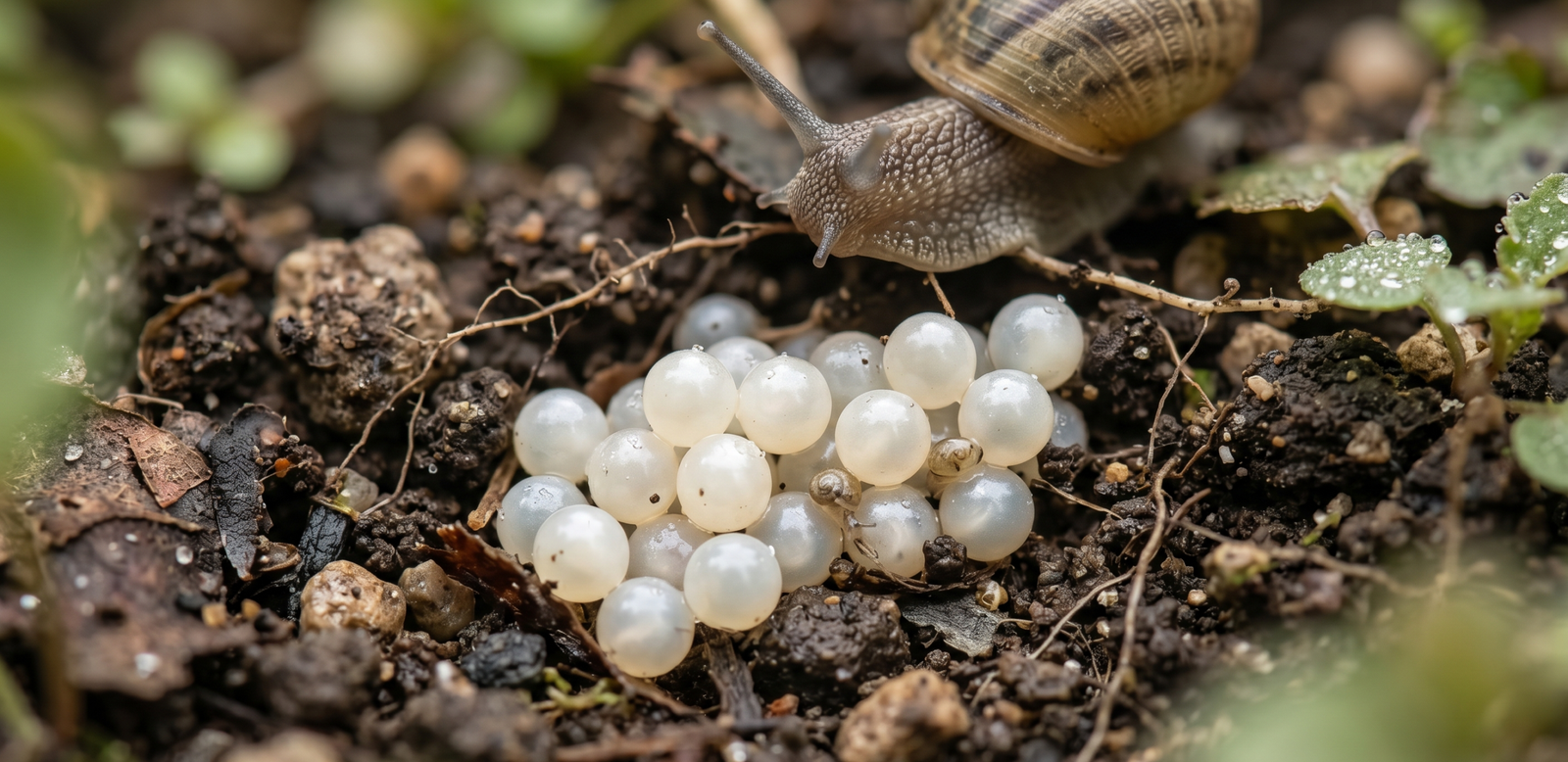
Snails are famous for their slow pace, but their reproductive cycle moves surprisingly fast. If you spot tiny, gel-like clusters in your garden or aquarium, you are likely looking at a massive generation of future snails.
How many eggs does a snail lay? On average, a single land snail lays between 30 and 120 eggs during a single nesting session. Exotic freshwater species, like the Apple Snail, can deposit clutches containing anywhere from 200 to over 1,000 eggs at one time.
Because most snails are hermaphrodites, possessing both male and female reproductive organs, almost every individual in a population can lay eggs after mating.
This dual reproductive capability allows snail populations to multiply exponentially under the right environmental conditions.
Snail Egg Production Across Different Species
Snail reproductive habits vary wildly depending on whether they live on land, in freshwater, or in the ocean.
Environmental factors like temperature, humidity, and food availability also directly dictate the size and frequency of their clutches.
Land Snails
Common land snails, including the Garden Snail (Cornu aspersum), are subterranean layers. They seek out loose, damp soil to dig a shallow nest where they safely deposit their offspring.
- Garden Snail (Cornu aspersum): Typically lays 80 to 120 eggs per clutch. They can repeat this process every four to six weeks during warm, humid seasons.
- Giant African Land Snail (Lissachatina fulica): This massive species is highly prolific. A single adult can lay a clutch of 100 to 500 eggs, producing up to 2,500 eggs annually.
- Roman Snail (Helix pomatia): Also known as the Burgundy snail, this species takes a slower approach, laying a modest 30 to 65 eggs once a year.
Freshwater Snails
Aquatic snails utilise different survival strategies. Instead of burying their eggs, they often cement them to rocks, plants, or aquarium glass above or below the water line.
- Mystery Snail (Pomacea bridgesii): These popular aquarium inhabitants lay bright pink, cocoon-like clutches above the water line. Each clutch holds 100 to 600 eggs.
- Apple Snail (Pomacea canaliculata): A larger relative of the mystery snail, a female apple snail can produce giant clusters containing up to 1,000 eggs or more.
- Nerite Snail (Neritina natalensis): Nerite snails lay small, individual white capsules containing dozens of microscopic eggs. However, these eggs only hatch in brackish or saltwater environments.
- Ramshorn Snail (Planorbidae): These snails lay flat, jelly-like translucent packets on aquatic plants. Each small packet contains roughly 10 to 30 eggs, but they breed continuously.
How Often Do Snails Lay Eggs?
The frequency of egg-laying depends heavily on climate stability and resource availability. In tropical regions or indoor aquariums with constant warm temperatures, snails can breed year-round.
In temperate climates, wild snails restrict their breeding to the spring and summer months when the weather is warm and food is abundant. A healthy adult garden snail generally reproduces two to four times per year.
Because many species can store sperm for several months after a single mating session, a lone snail can produce multiple fertile clutches over a long period without needing another partner.
The Anatomy and Appearance of Snail Eggs
Snail eggs look vastly different depending on the specific environment the species inhabits. Recognising these structures helps gardeners and aquarium hobbyists identify which species are reproducing.
Terrestrial Snail Eggs
Land snail eggs closely resemble tiny, translucent pearls or white BB pellets. They measure roughly 3 to 5 millimetres in diameter and feature a slightly sticky, gelatinous membrane that helps retain moisture while buried in the dirt.
Aquatic Snail Eggs
Freshwater snail eggs are generally encased in a protective matrix. Ramshorn and Bladder snails produce clear, flexible jelly blobs attached to underwater surfaces.
In contrast, Apple and Mystery snails lay hard, calcified structures above the water surface to protect their young from aquatic predators like fish.
These aerial clutches look like miniature corn cobs and dry out into a crisp, brittle shell right before hatching.
Incubation and Hatching Timelines
The time it takes for snail eggs to hatch depends almost entirely on the surrounding temperature and humidity levels. Warmer conditions accelerate embryonic development, while cold weather can delay the process or stop it completely.
| Snail Type | Average Clutch Size | Incubation Period | Nesting Location |
| Garden Snail | 80 – 120 eggs | 14 – 28 Days | Subterranean (Damp Soil) |
| Giant African Land Snail | 100 – 500 eggs | 11 – 21 Days | Shallow dirt or leaf litter |
| Mystery Snail | 100 – 600 eggs | 10 – 21 Days | Above the waterline |
| Ramshorn Snail | 10 – 30 eggs | 7 – 14 Days | Submerged surfaces |
Upon hatching, juvenile snails emerge as fully formed, microscopic versions of their parents. They are born with a delicate, translucent protoconch, which is the foundational shell layer that hardens as they consume calcium in their environment.
Environmental Factors that Trigger Spawning
Snails require specific environmental cues to initiate the energy-intensive process of egg production. If conditions are unfavourable, they will actively delay mating and egg-laying.
High Humidity and Moisture
Terrestrial snails are highly prone to desiccation (drying out). They require a moisture-saturated environment to produce the protective mucus needed for travelling and mating, as well as to keep their buried eggs from drying out.
Warm Temperatures
Spawning activity spikes when ambient temperatures sit between 68°F and 82°F (20°C to 28°C). Cold temperatures signal the snail to enter a state of dormancy known as hibernation, while extreme heat forces them into a similar summer dormancy called estivation.
Abundant Calcium and Nutrition
Creating eggshells requires a massive amount of calcium. Snails will actively seek out calcium-rich food sources, such as leafy greens, limestone deposits, or cuttlebone, before laying a clutch.
A diet low in calcium results in thin, fragile egg walls that rarely survive incubation.
Snail Population Control for Gardeners and Hobbyists
Because snails lay such a high volume of eggs, they can quickly turn from fascinating creatures into overwhelming pests in both landscapes and home aquariums. Managing their reproductive output is key to keeping the balance.
Controlling Land Snails in the Garden
If garden snails are destroying your vegetable patches, targeted population control starts with eliminating their nesting sites.
- Turn the Soil: Regularly tilling or disturbing topsoil breaks up subterranean nests, exposing the fragile eggs to dry air and natural predators like birds.
- Create Dry Barriers: Surrounding vulnerable plants with coarse diatomaceous earth, crushed eggshells, or copper tape deters adults from crossing into breeding zones.
- Encourage Natural Predators: Welcoming frogs, toads, garter snakes, and ground beetles to your yard establishes a natural biological control system that targets both adult snails and their eggs.
Managing Aquatic Snails in Aquariums
An explosion of snails in a fish tank usually points directly to an abundance of food, such as decaying organic matter or leftover fish flakes.
- Reduce Feeding Quantities: Feed your fish only what they can consume within two minutes. Less leftover food deprives pest snails of the caloric surplus needed to lay eggs.
- Manual Removal: Scrape away aerial mystery snail clutches using a dull blade, or siphon out gelatinous underwater egg packets during routine water changes.
- Introduce Snail-Eating Species: Adding natural predators like Assassin Snails (Anentome helena), Yoyo Loaches, or Pea Puffers can quickly bring a runaway snail population back down to a manageable size.
Summary of Snail Reproduction
Understanding how many eggs a snail lays reveals why these resilient creatures are so successful at colonising various ecosystems.
Whether dealing with a backyard garden plot or a delicate freshwater aquascape, monitoring egg clusters is the most effective way to manage their populations before a major population spike occurs.
By controlling moisture, food availability, and physical nesting sites, you can easily keep their numbers in check.
