
Understanding gastropod reproduction requires looking closely at environmental factors, species type, and biological readiness.
Whether you maintain a home aquarium or manage a backyard garden, recognising the exact timeline of egg-laying reveals important insights into these fascinating creatures.
How Long Does It Take Snails to Lay Eggs?
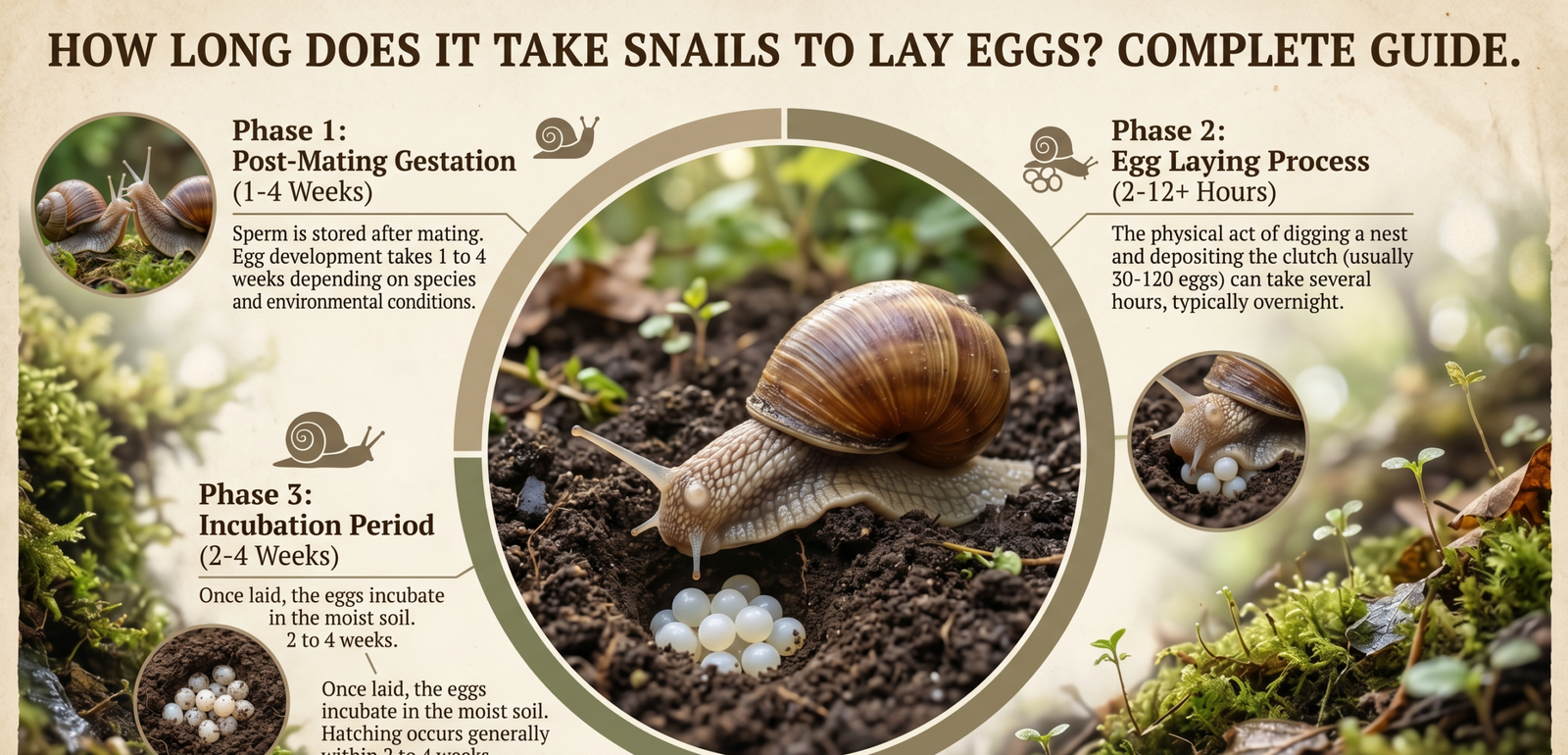
Snails typically take 1 to 4 weeks after mating to lay eggs. For common land snails, the gestation period spans 10 to 21 days.
Aquatic species, such as Apple or Mystery snails, operate on a slightly accelerated schedule, frequently depositing their egg clutches within 7 to 14 days following a successful mating event.
The physical process of depositing the eggs also varies by habitat. A land snail will spend anywhere from 12 to 36 hours digging a subterranean nest and depositing its clutch.
Conversely, freshwater species can complete their entire egg-laying session above or below the waterline in just a few hours.
Complete Snail Reproduction Timeline
The journey from initial courtship to the physical appearance of an egg clutch involves several distinct reproductive phases.
1. Courtship and Mating (1 to 12 Hours)
Gastropod mating is a slow, highly deliberate ritual. Hermaphroditic species must align their reproductive pores to exchange sperm packets. This tactile process requires a substantial investment of physical energy.
2. Internal Fertilisation and Gestation (1 to 4 Weeks)
Once sperm exchange finishes, internal fertilisation occurs. The snail stores the genetic material while developing protective calcified or gelatinous shells around the developing embryos. Environmental stability during this gestation window determines the speed of development.
3. Nest Selection and Preparation (2 to 24 Hours)
Before releasing the eggs, the parent seeks a secure location. Land gastropods look for moist, loose topsoil rich in organic matter. Freshwater species scout clean aquarium glass, smooth rocks, or damp areas just above the waterline.
4. Egg Deposition (2 to 36 Hours)
The final stage is the actual deposition of the clutch. The parent expels the eggs individually or in a unified gelatinous mass. Once finished, land species meticulously conceal their underground nest using surrounding dirt to shield it from predators.
Land vs Aquatic Snail Egg Laying Timelines
Environmental conditions dictate distinct reproductive behaviours and structures between terrestrial and aquatic gastropods.
| Snail Group | Gestation Period | Time to Complete Laying | Typical Clutch Size | Egg Characteristics |
| Terrestrial (Land) | 10 – 21 Days | 12 – 36 Hours | 30 – 120 Eggs | Hard, white, calcium-rich shells buried in soil |
| Freshwater (Aquatic) | 7 – 14 Days | 1 – 5 Hours | 50 – 500 Eggs | Soft, gelatinous, or hard pink clutches attached to surfaces |
Species-Specific Egg Laying Details
Reproductive strategies vary considerably depending on the specific gastropod family.
Garden Snails (Cornu aspersum)
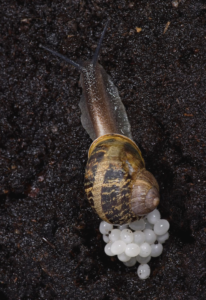
The common garden resident requires approximately 2 weeks post-mating to prepare its nest. It targets damp soil, digging a couple of inches down with its muscular foot. The snail lays between 80 and 120 spherical white eggs, completing the process over a full day.
Mystery Snails (Pomacea bridgesii)
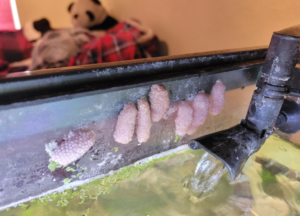
A favourite among aquarium hobbyists, the female Mystery snail waits roughly 7 to 10 days to lay eggs after mating. She climbs above the water level during the night to deposit a distinctive, bright pink or coral-colored cocoon containing up to 300 eggs.
Nerite Snails (Neritina natalensis)
Nerite snails are unique because they lay individual, sesame-seed-like white capsules rather than a large, grouped cluster.
They deposit these highly durable pods across hard surfaces like driftwood, rocks, and aquarium equipment within a week of mating.
Environmental Triggers for Snail Egg Deposition
A mature gastropod will delay egg deposition if its immediate surroundings threaten the survival of the offspring. Specific environmental cues prompt the final laying process:
- Consistent Moisture Levels: Terrestrial species require high humidity and damp soil to prevent egg dehydration.
- Ambient Temperatures: Warm conditions accelerate metabolic rates, prompting faster egg development and deposition.
- Abundant Food Supply: Access to nutrient-dense vegetation or algae signals that the habitat can sustain a new generation.
- Calcium Availability: Snails need significant calcium to synthesise eggshells. A lack of calcium can stall the entire reproductive cycle.
Sign of a Pregnant Snail
Because snails possess rigid shells, identifying an impending egg-laying event requires observing behavioural changes rather than physical swelling:
Deep Digging Behaviour
Land snails getting ready to lay eggs will repeatedly test the soil. If you notice a snail burrowing its head and body deep into the dirt and remaining stationary for hours, it has likely begun creating its nesting chamber.
Frequent Waterline Climbing
For aquatic varieties, a female climbing out of the water during evening hours signals an imminent laying session. She is searching for a humid spot away from aquatic predators to anchor her heavy egg mass.
Lethargy and Isolation
The internal creation of dozens of eggs demands immense bodily resources. Snails preparing to lay often slow down significantly, reducing their movement and retreating into sheltered areas of their habitat.
How Often Do Snails Lay Eggs?
Most mature snail species can lay eggs every 4 to 6 weeks during the peak breeding season. In natural outdoor environments, this behaviour concentrates heavily during the warm, wet months of spring and summer.
In managed indoor environments like climate-controlled terrariums or heated aquariums, the seasonal trigger disappears. If food is plentiful and temperatures remain stable, indoor snails will continuously breed and deposit egg clutches throughout the year.
Managing Snail Eggs in Homes and Aquariums
When managing a captive habitat, unexpected egg clutches require deliberate choices based on your space and goals.
If You Want to Hatch the Eggs
Keep the environment stable. Terrestrial nests must stay damp but never soggy, as excess water will suffocate the embryos. Aquatic clutches, especially those from Mystery snails, must remain in a humid environment directly above the water line without slipping into the water, which drowns the unhatched young.
If You Wish to Prevent Overpopulation
Snail populations can quickly overwhelm an environment. To safely remove a clutch, wait a few hours until the structure hardens.
Gently scrape the mass away from the glass or wall using a blunt plastic tool. To ensure the embryos do not hatch elsewhere, freeze the collected clutch for 24 hours before disposal.
Biological Context and Research
Malacologists—scientists who study molluscs—have documented that gastropod egg production ties directly to calcium absorption. According to research published by institutions like the University of Florida Extension, environmental calcium levels directly influence shell thickness and overall embryo survival rates during the gestation window.
Without optimal calcium levels in the water column or diet, the internal development of the egg clutch slows dramatically.
This biological requirement explains why snails spend significant time searching for mineral-rich substrates before choosing a final location to deposit their eggs.
Frequently Asked Questions
Can a snail lay eggs without a mate?
Yes, certain species can reproduce without a partner. Many gastropods are simultaneous hermaphrodites, and specific varieties can utilise self-fertilisation when mates are absent. Additionally, some females store viable sperm for months after a single mating encounter.
How long do snail eggs take to hatch?
Once successfully deposited, snail eggs take 2 to 4 weeks to hatch. The precise incubation period depends heavily on ambient temperatures and moisture levels. Warmth generally accelerates the process.
What happens if snail eggs dry out?
If the outer protective membrane dries out, the developing embryos inside will perish. Terrestrial species minimise this risk by burying their clutches deep in soil, while aquatic species rely on ambient humidity just above the water line.
