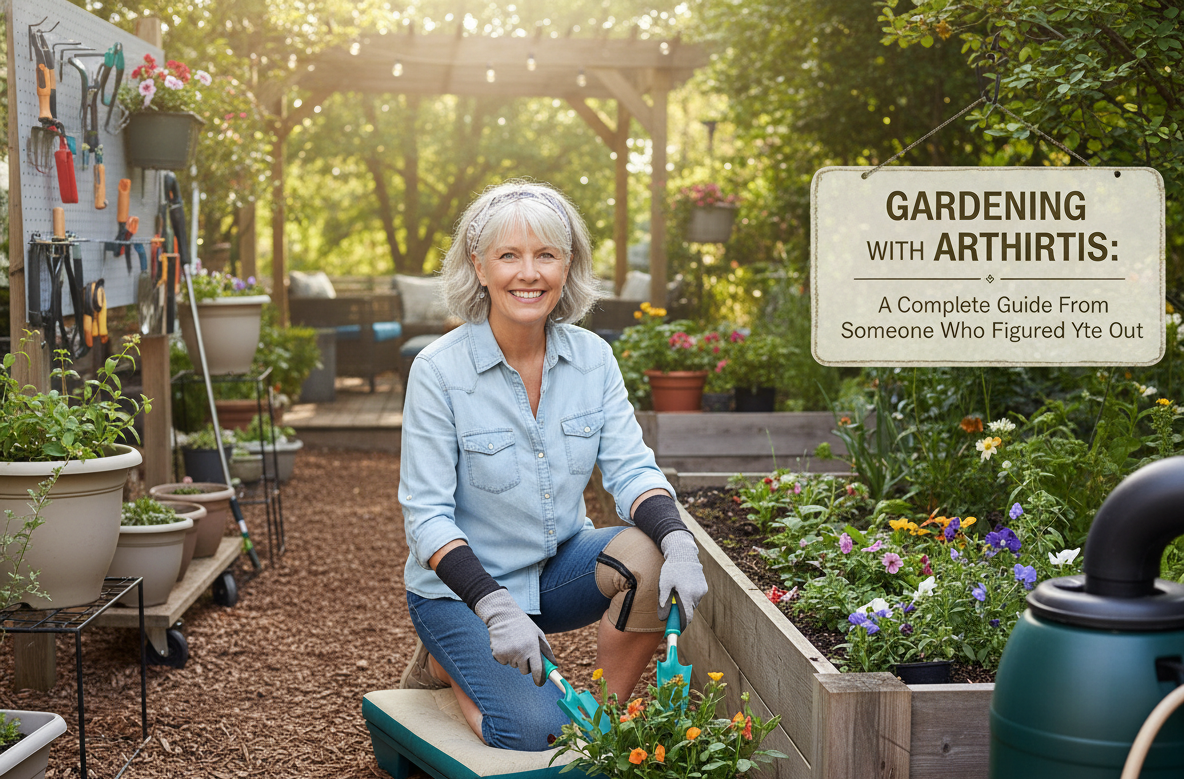
You just spent 45 minutes searching your phone for ways to garden without pain because your hands ache so much you can barely hold the device. You are picturing your backyard turning into a weed-choked mess, terrified you will have to give up your tomatoes this year.
Let me give you the answer right now. No, you do not have to stop gardening. The trick is changing how you do it. You must stop bending over to reach the dirt by elevating your soil to at least 24 inches off the ground using raised beds.
You must swap heavy ceramic pots for lightweight 5-gallon fabric bags. And you have to throw away your skinny wooden tools and replace them with thick-handled, ergonomic ones. You manage the environment so your joints never do the heavy lifting.
Gardening is supposed to be peaceful. It is not supposed to be a punishment for your wrists, knees, and back. When your joints flare up, doctors tell you to take it easy.
But taking it easy does not pull the weeds. Taking it easy does not water the cucumbers. You need a mechanical advantage, and you build that by changing your setup.
Bring the soil up to you
If you are still planting directly in the ground, you are actively hurting yourself. Bending over for hours puts immense pressure on your lower back and forces your knees to bear your entire body weight. You need to bring the soil up to your waist.
Raised beds the right way
Do not buy those cheap 6-inch wooden borders from the hardware store. They do nothing for your back. Build or buy raised beds that are exactly 24 to 30 inches tall. At 24 inches, you can sit on a standard garden stool or a folding chair and reach the soil without bending your spine.
If you build them yourself, keep the width strictly to 3 feet. You can stretch it to 4 feet maximum. If the bed is 4 feet wide, you only have to reach 2 feet in from either side to get to the center. Reaching any further strains your shoulders and defeats the purpose of the bed.
The magic of fabric grow bags
Maybe you do not have the space or money for large wooden raised beds. That is fine. Container gardening is your best friend now. But you need to ditch heavy clay and ceramic pots immediately. A damp 12-inch terracotta pot can weigh 15 pounds. Lifting that with a stiff wrist is a guaranteed ticket to a pain flare-up.
Switch to fabric grow bags. A 5-gallon fabric grow bag weighs just 3 ounces when empty. They have heavy-duty handles built right into the sides. You can slide them across a patio without picking them up.
Fill them with a lightweight potting mix. My personal favorite is the 70/30 rule. You mix 70 percent good-quality potting soil and 30 percent perlite. The perlite makes the bag incredibly light and keeps the soil aggressively loose. Loose soil means you do not have to stab a trowel hard to dig a hole. Your fingers can just push the dirt aside.
Rethink your tools entirely
Go out to your shed right now and look at your hand trowel. The handle is probably a thin piece of wood or hard plastic about 1 inch thick. When you grip a thin handle, you have to squeeze your fingers tightly to keep the tool from twisting in the dirt. That tight grip is what leaves your hands throbbing by dinner time.
Thicker handles change everything
You need handles that are at least 1.5 to 2 inches thick. A thicker handle forces your hand to stay in a wider, relaxed position. You do not have to grip it as hard to maintain control.
If you cannot afford to replace all your tools today, I have a cheap trick that works instantly. Buy a foam pool noodle. Cut it into 5-inch sections. Slice those sections down the middle, wrap them around your current tool handles, and wrap them tightly with duct tape. It looks incredibly ugly, but it saves your knuckles.
Let the tools do the cutting
Normal bypass pruners require pure hand strength to cut through a branch. If you have a bad day with your grip, trimming a simple rose bush feels impossible. You need to buy ratcheting pruners immediately.
A ratcheting pruner cuts through the wood in stages. You squeeze lightly, an internal pin clicks, and the blade locks in place. You open your hand, squeeze lightly again, and it clicks deeper. It multiplies your hand strength by three times. A branch that used to take 20 pounds of pressure to snap now takes 5 pounds.
Stop carrying water across the yard
Watering is the heaviest job in the garden. Water weighs 8.3 pounds per gallon. Carrying a standard 2-gallon watering can across the yard means you are hauling over 16 pounds by a tiny plastic handle. Do not do it.
The lightweight hose upgrade
Throw away that thick, heavy green rubber hose. It kinks, it fights you, and dragging it takes far too much effort. Buy a lightweight, expandable fabric hose. A 50-foot expandable hose weighs about 2 pounds and shrinks up to nothing when the water is off.
Attach a watering wand to the end. The wand should be at least 30 inches long. This length means you can stand perfectly straight and water the roots of your plants without bending over at all.
Automate the heavy lifting
If you want to eliminate watering labor, set up a simple drip irrigation system. You do not need to hire a professional or dig any trenches. You can buy a basic starter kit for under 40 dollars.
You simply punch tiny holes in a 1/2-inch black tube, lay it across the soil of your raised beds, and hook it directly to your outdoor faucet. Buy a digital hose timer for 25 dollars. Set it to run every 2 days in the summer for 15 minutes, and once a week in the winter. You never have to lift a hose again, and your plants get perfectly consistent moisture.
My most painful lesson
I need to tell you a story about my biggest failure. Three years ago, I felt great one Saturday morning in early April. The sun was out, the soil was warming up, and I had a burst of energy. I decided to prepare a massive 15-foot in-ground bed for root vegetables.
I spent four hours double-digging the soil with a heavy steel spade, hacking through clay, and pulling out rocks. I ignored the sharp twinge in my right thumb and the stiffness creeping into my lower back. I just wanted to get it done.
The next morning, I could not physically get out of bed. My back was locked solid. My right thumb was swollen to twice its normal size. I could not hold a fork at breakfast, let alone a steering wheel. I spent three days flat on the couch taking anti-inflammatories. I ruined the entire week because my ego told me I could garden like an 18-year-old.
That was the day I stopped fighting the dirt. I accepted my limits. I realized that ignoring the pain does not make it go away; it just steals your garden from you entirely.
Redesign your plant choices
You have to be smart about what you put in the soil. Some plants demand intense labor. Some practically grow themselves.
Avoid the high-maintenance crops
Stop growing things that require constant bending, heavy digging, or daily manicuring. Potatoes are delicious, but digging them out of heavy ground at the end of the season is backbreaking work that will wreck your wrists.
If you must grow potatoes, grow them in one of those 5-gallon fabric bags. When it is time to harvest, you just dump the bag over onto a tarp. The potatoes tumble out. Zero digging required.
Embrace vertical growing
Let your plants climb up, so you do not have to bend down. Grow pole beans instead of bush beans. Give them a 6-foot trellis. You will harvest them standing straight up.
Grow vining cucumbers on a wire cattle panel arch. The fruit hangs down right at eye level. It is incredibly easy to pick, and you avoid crouching in the dirt hunting for hidden cucumbers under massive leaves.
The 20-minute pacing rule
Arthritis demands respect. You cannot work for three hours straight anymore. You must pace yourself to survive the season. I use the 20-minute rule.
Set an alarm on your phone for exactly 20 minutes. Go out and weed or plant. The exact second that alarm goes off, you stop. You do not finish the row. You do not pull “just one more weed.” You drop the tool, walk to a chair, and sit down for 10 minutes. Drink a glass of water. Stretch your hands out flat on your knees.
After 10 minutes, you can do another 20-minute block. This stops the joint inflammation before it starts. It sounds frustrating at first, but two 20-minute sessions a day will keep your garden looking perfect without leaving you in agony.
Warm up your hands first
Never walk out into the cold morning air and grab a cold steel tool. Cold joints are stiff joints, and stiff joints tear easily.
Before you step outside, run your hands under warm water in the kitchen sink for two full minutes. Pat them dry and put on a pair of compression gloves. Compression gloves are tight, fingerless gloves made of a stretchy cotton blend.
They cost about 15 dollars. They trap your body heat against your joints and provide mild pressure that reduces swelling. Wear them under your regular leather gardening gloves. This one tiny habit cuts morning hand pain in half.
Let go of the perfect garden myth
I need you to hear this loud and clear. Your garden does not have to look like a magazine cover. If a few weeds pop up between the stepping stones, let them live for a week. The world will not end.
We put so much pressure on ourselves to maintain flawless rows of vegetables and weed-free flower beds. That pressure forces us to overwork. A garden is supposed to feed your soul, not drain your energy. If a task hurts too much, skip it. If a specific plant requires too much pruning, rip it out and plant a perennial shrub that takes care of itself.
What to do about weeds?
Weeding is the absolute enemy of arthritic hands. Pinching tiny stems over and over destroys your grip strength in a matter of minutes.
The solution is thick mulch. The moment you plant a seedling, surround it with 3 inches of straw or wood chips. Do not skimp on this depth. Three inches of mulch completely blocks the sunlight from hitting the dormant weed seeds in the soil. If weeds cannot get light, they do not sprout.
For the few weeds that do make it through, never pull them by hand. Use a long-handled stirrup hoe. A stirrup hoe has a steel blade shaped like a loop attached to a 5-foot handle. You stand completely upright and simply push and pull the blade just under the surface of the soil. It slices the weeds off at the root with almost zero effort.
Track your pain triggers
You track your tomato harvests and your frost dates, right? You need to start tracking your pain. Keep a small notebook on your kitchen counter. When you come inside with aching joints, write down exactly what you were doing.
Did you spend 30 minutes pruning dead branches? Did you try to lug a bag of topsoil from the trunk of your car? Over a month, you will see clear patterns. You might realize that pulling dandelions causes instant thumb pain, but planting small seeds does not. Once you know your specific triggers, you can plan around them.
Sit down whenever possible
Standing still in one spot while thinning carrots puts massive strain on your hips and knees. You need a dedicated place to sit while you work.
Do not kneel. Even with thick foam knee pads, kneeling traps your legs and makes it incredibly hard to stand back up. You want a rolling garden seat. These look like small carts with four thick plastic wheels and a tractor-style seat. They cost about 50 dollars.
You sit on the cart, straddle the side of your raised bed, and just roll yourself down the line as you work. Your knees never touch the ground. Your lower back stays perfectly straight.
Sharp tools do half the work
A dull tool is dangerous and exhausting. If your pruning shears are dull, you have to squeeze twice as hard to crush through a branch. If your hoe is dull, you have to slam it into the dirt to break the surface.
Buy a small carbide sharpening tool. They cost roughly 10 dollars and fit in your pocket. Once a month, take 5 minutes to drag the sharpener across the blades of your pruners, your loppers, and your hoes. A sharp blade glides through wood and soil like butter. Let the sharp steel do the work, not your muscles.
Protecting your shoulders
We talk a lot about hands and knees, but shoulders take a terrible beating in the garden, too. Reaching too far forward or lifting heavy items above your chest tears away at your rotator cuffs.
Keep your work inside your power zone. Your power zone is the area between your hips and your chest, right in front of your body. When you are lifting a watering wand or holding a tool, keep your elbows tucked into your sides. If you have to reach your arms fully out to get to a weed, you are doing it wrong. Move your stool closer. Walk around to the other side of the raised bed. Never overreach.
You can keep growing your own food. You can keep watching the flowers bloom. You just have to garden smarter, not harder. Protect your joints, change your setup, and accept your physical limits.