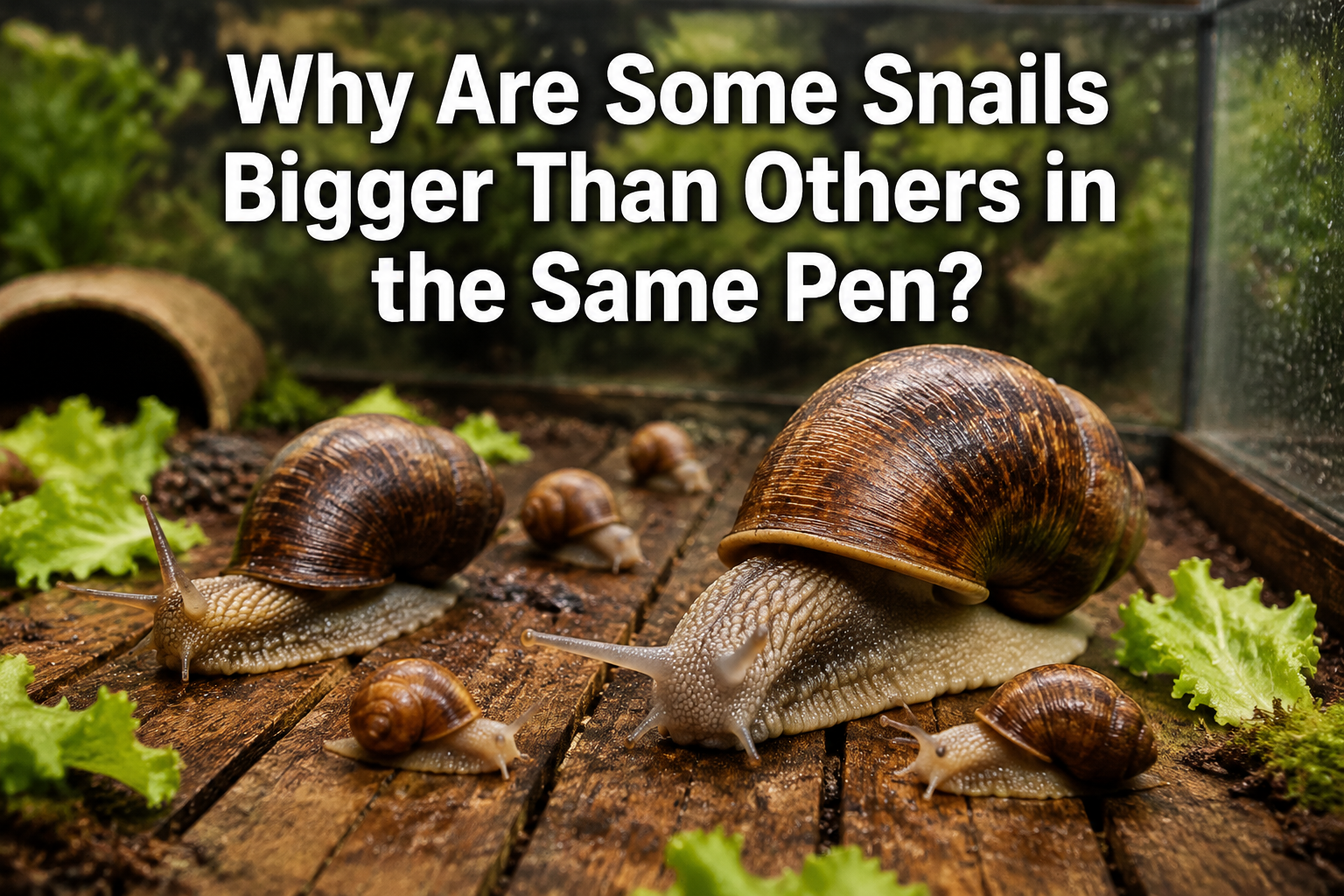
A single snail pen can house gastropods ranging from tiny 2-inch juveniles to massive 8-inch giants, all living under identical conditions. This puzzling size variation among snails bigger than others in the same pen stems from a complex mix of genetic factors, age differences, feeding competition, and individual health status that many snail farmers overlook.
Understanding why some snails outgrow their pen-mates is crucial for anyone raising these fascinating creatures, whether for food production, educational purposes, or as pets. The answer involves multiple biological and environmental factors working together in ways that might surprise you.
The Main Reasons Why Snails Bigger Than Others in the Same Pen Exist
Genetic Differences Are the Primary Factor
Just like humans, snails inherit different genetic codes that determine their maximum size potential. Some snail species have huge genetic variation within the same population.
Common genetic size variations:
- Giant genes: Some snails carry DNA for extra-large shells and bodies.
- Dwarf genes: Others are genetically programmed to stay smaller.
- Growth rate genes: Fast-growing vs. slow-growing genetic types.
- Metabolism genes: Efficient vs. inefficient food processing.
Even snails from the same parent can show dramatic size differences due to genetic recombination. This explains why you might see one snail reaching 6 inches while its sibling stays at 3 inches.
Age Differences Create Size Gaps
Many snail keepers don’t realize they have mixed-age populations in their pens. This happens because:
- Breeding occurs continuously in good conditions.
- Eggs hatch at different times throughout the season.
- Growth rates vary even among the same-age snails.
- Older snails live alongside new hatchlings.
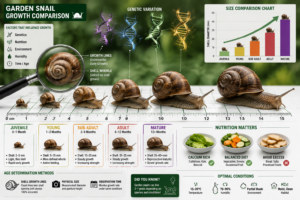
A 2-year-old snail will always dwarf a 6-month-old snail, even if they’re the same species. Age identification tips:
| Age Range | Typical Size | Shell Characteristics |
|---|---|---|
| 0-3 months | 0.5-1 inch | Thin, translucent shell |
| 3-6 months | 1-2 inches | Developing shell rings |
| 6-12 months | 2-4 inches | Thick shell, clear rings |
| 1+ years | 4-8 inches | Mature shell, worn edges |
Food Competition and Feeding Hierarchy
Snails establish feeding hierarchies that directly impact growth rates. Dominant snails get first access to the best food sources, while submissive ones eat leftovers.
Signs of food competition:
- Larger snails cluster around fresh vegetables first.
- Smaller snails wait at the edges of feeding areas.
- Some snails show signs of malnutrition despite an adequate food supply.
- Aggressive snails push others away from prime feeding spots.
Competition factors that affect size:
- Speed: Faster snails reach food first.
- Size advantage: Bigger snails can push smaller ones aside.
- Activity timing: Some snails are more active during feeding times.
- Location preference: Snails closer to food sources grow faster.
Environmental and Health Factors Behind Snails Bigger Than Others in the Same Pen
Microenvironment Variations
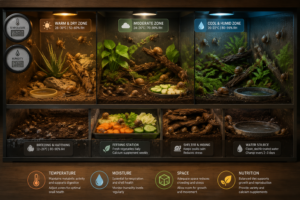
Even within the same pen, snails experience different environmental conditions based on their location and behavior patterns.
Temperature variations:
- Snails near heat sources grow faster.
- Cool spots slow down metabolism and growth.
- Temperature fluctuations stress some snails more than others.
- Optimal growth occurs at 70-80°F (21-27°C).
Humidity differences:
- High-humidity areas promote better growth.
- Dry spots can stunt development.
- Some snails are better at finding optimal moisture levels.
- Dehydration severely impacts shell development.
Health Status and Parasites
Individual health problems create significant size differences among pen-mates. Common health issues that stunt growth include:
Internal parasites:
- Nematode worms reduce nutrient absorption.
- Protozoan infections slow metabolism.
- Bacterial infections drain energy from growth.
- Viral diseases (less common but possible).
External problems:
- Shell damage from accidents or fights.
- Respiratory infections affect oxygen intake.
- Digestive issues are preventing proper nutrition.
- Stress from overcrowding or poor conditions.
Space and Territory Issues
Snails need adequate space for optimal growth. Overcrowding effects include:
- Reduced movement limits muscle development.
- Increased stress hormones slow growth.
- Competition for hiding spots affects rest quality.
- Waste buildup creates unhealthy conditions.
Recommended space requirements:
- Small snails (under 2 inches): 1 square foot per snail.
- Medium snails (2-4 inches): 2 square feet per snail.
- Large snails (4+ inches): 3-4 square feet per snail.
Nutritional Factors That Create Size Differences
Diet Quality and Variety
Not all snails have equal access to high-quality nutrition, even when food appears abundant. Nutritional factors affecting size include:
Protein levels:
- Growing snails need 15-20% protein in their diet.
- Inadequate protein severely stunts growth.
- Some snails are better at finding protein sources.
- Calcium deficiency prevents proper shell development.
Vitamin availability:
- Vitamin A promotes healthy growth.
- B-complex vitamins support metabolism.
- Vitamin D helps calcium absorption.
- Deficiencies create weak, small snails.
Food Preferences and Efficiency
Individual snails show different feeding behaviors that impact their growth:
- Picky eaters may miss essential nutrients.
- Efficient digesters extract more nutrition from the same food.
- Active foragers find better food sources.
- Opportunistic feeders take advantage of all available nutrition.
Species-Specific Factors
Natural Size Variation Within Species
Most snail species show significant natural size variation. Common examples include:
Garden snails (Helix aspersa):
- Size range: 1-2 inches.
- Maximum variation: 100% difference.
- Factors: Genetics, age, nutrition.
Giant African snails (Achatina species):
- Size range: 4-12 inches.
- Maximum variation: 200% difference.
- Factors: Subspecies, environment, and care quality.
Roman snails (Helix pomatia):
- Size range: 1.5-3 inches.
- Maximum variation: 100% difference.
- Factors: Seasonal breeding, food availability.
How to Manage Size Differences in Your Snail Pen?
Size Sorting Strategies
Separate by size groups:
- Small snails (under 2 inches) in one section.
- Medium snails (2-4 inches) are in another area.
- Large snails (4+ inches) in spacious quarters.
- This prevents bullying and ensures fair food access.
Feeding Management
Multiple feeding stations:
- Place food in several locations.
- Ensures all snails can access nutrition.
- Reduces competition and aggression.
- Monitor to ensure equal distribution.
Specialized diets:
- High-protein foods for growing juveniles.
- Calcium supplements for shell development.
- Varied vegetables for complete nutrition.
- Remove uneaten food to prevent spoilage.
Health Monitoring
Regular size checks:
- Measure snails monthly to track growth.
- Identify slow-growing individuals early.
- Separate sick or stunted snails for treatment.
- Keep growth records for breeding decisions.
Conclusion
The mystery of why some snails are bigger than others in the same pen comes down to a combination of genetics, age, competition, health, and environmental factors. While you can’t change a snail’s genetic potential, you can optimize their environment to help each reach their maximum size.