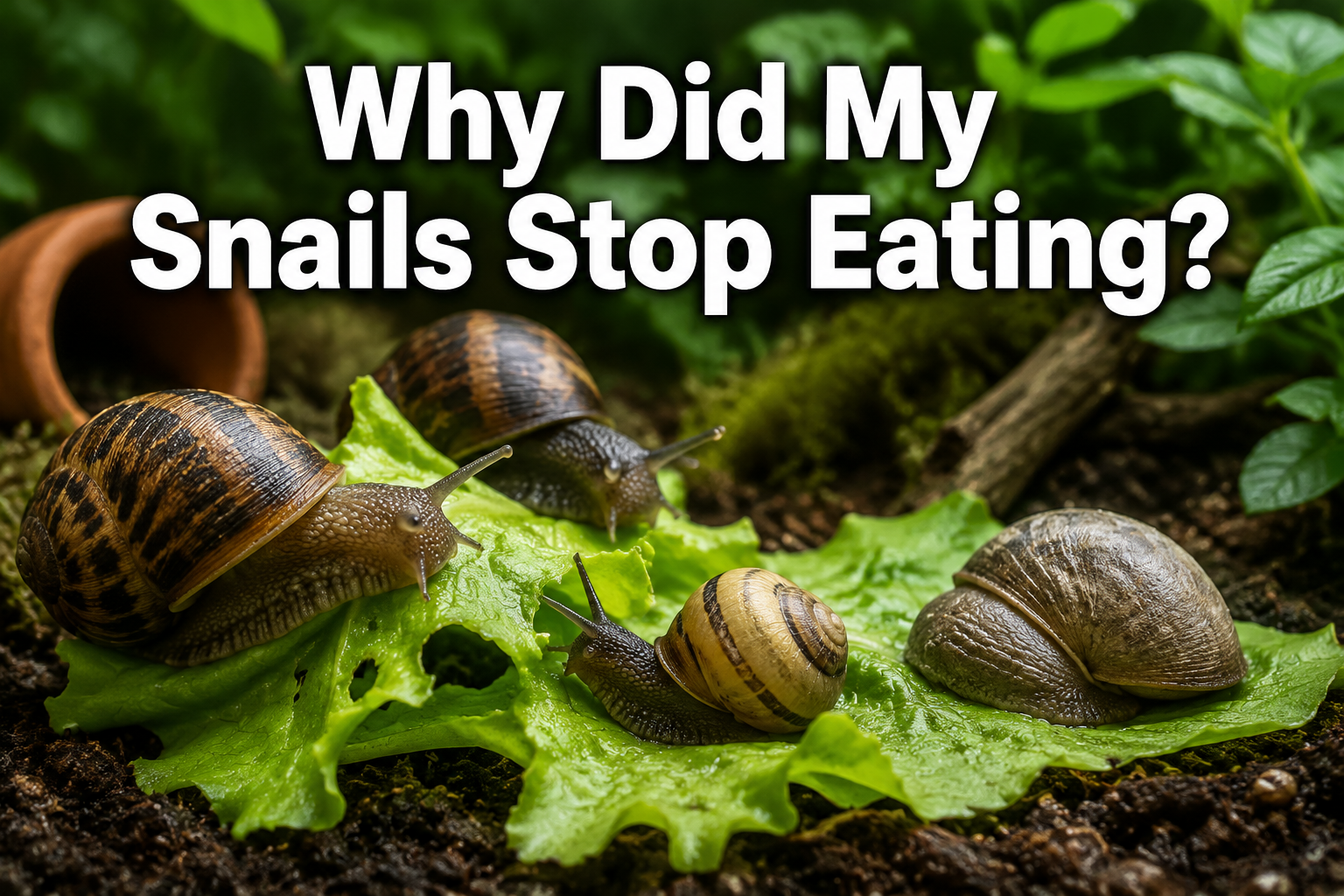
When pet snails suddenly refuse their favorite foods, it signals that something important is wrong in their environment. Snails stop eating for several clear reasons, and understanding these causes can help bring back their healthy appetite quickly.
Snails are simple creatures with basic needs. When these needs aren’t met, they shut down and stop eating as a survival response.
Common Reasons Why Snails Stop Eating?
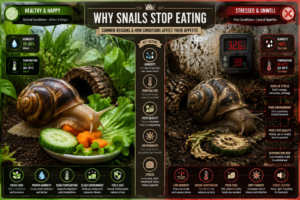
Temperature Problems
Snails are very sensitive to temperature changes. When it’s too hot or too cold, they go into a protective mode and stop eating.
Ideal temperature ranges:
- Garden snails: 65-75°F (18-24°C).
- Apple snails: 68-82°F (20-28°C).
- Mystery snails: 68-84°F (20-29°C).
If the temperature drops below 60°F or rises above 85°F, most snails will stop eating completely. They might even seal themselves in their shells until conditions improve.
Humidity Issues
Snails need moist environments to stay healthy. Low humidity makes them dry out, while too much humidity can cause other problems.
Signs of humidity problems:
- Snail stays sealed in its shell.
- Skin looks dry or wrinkled.
- The mucus trail is very thick or absent.
- Snail moves very slowly.
The right humidity level is usually 80-95% for most pet snails. You can measure this with a simple humidity gauge from any pet store.
Poor Food Quality
Old, moldy, or wrong types of food will make snails stop eating immediately. They have a good sense of smell and won’t touch bad food.
Foods that cause problems:
- Wilted vegetables.
- Moldy fruits.
- Salty or processed foods.
- Citrus fruits (too acidic).
- Foods treated with pesticides.
Fresh, organic vegetables are always the best choice. Remove any uneaten food after 24 hours to prevent mold growth.
Dirty Living Conditions
Snails are cleaner than most people think. A dirty tank or enclosure will stress them out and kill their appetite.
Cleanliness checklist:
- Remove old food daily.
- Change substrate weekly.
- Clean water dishes every 2-3 days.
- Wipe down tank walls weekly.
- Check for mold or bacteria growth.
Illness or Parasites
Sick snails often stop eating as their first symptom. Look for other warning signs like:
- White or unusual discharge.
- Shell damage or soft spots.
- Unusual behavior or lethargy.
- Strange smell from the enclosure.
If you suspect illness, separate the snail and consult a veterinarian who works with exotic pets.
How to Get Your Snails’ Stop Eating Problem Fixed?
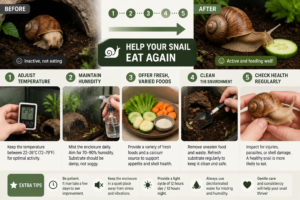
Step 1: Check the Environment First
Start with the basics. Use a thermometer and humidity gauge to check if conditions are right.
Quick environment fixes:
- Adjust the heating if the temperature is wrong.
- Mist the enclosure to raise humidity.
- Move the tank away from direct sunlight.
- Add ventilation if it’s too stuffy.
Step 2: Offer Fresh, Appealing Foods
Remove all old food and offer something fresh and tempting.
Snail’s favorite foods:
- Fresh lettuce (romaine or butter lettuce).
- Cucumber slices.
- Sweet potato (cooked).
- Mushrooms.
- Calcium powder or cuttlebone.
Try offering small amounts of different foods to see what interests them most.
Step 3: Clean the Habitat
A thorough cleaning often solves eating problems quickly.
Deep cleaning steps:
- Remove the snail temporarily.
- Throw away the old substrate.
- Wash all decorations with warm water.
- Wipe down all surfaces.
- Add fresh, clean substrate.
- Return snails to a clean environment.
Step 4: Reduce Stress Factors
Stressed snails won’t eat normally. Common stress causes include:
- Too much handling.
- Loud noises or vibrations.
- Bright lights.
- Other pets are bothering them.
- Overcrowding.
Give your snails a quiet, peaceful environment for a few days while they recover their appetite.
Step 5: Be Patient but Watchful
Most snails start eating again within 2-3 days once problems are fixed. However, keep watching for these warning signs:
When to worry:
- No eating after 5-7 days.
- Snail won’t come out of its shell.
- The shell looks damaged.
- Bad smell from the enclosure.
- Snail appears to be getting smaller.
Prevention Tips to Avoid Future Problems
Regular Maintenance Schedule
Daily tasks:
- Check temperature and humidity.
- Remove uneaten food.
- Observe snail behavior.
Weekly tasks:
- Deep clean water dishes.
- Replace substrate.
- Offer variety in diet.
Monthly tasks:
- Full habitat cleaning.
- Check equipment (thermometer, etc.).
- Health assessment.
Diet Variety Keeps Snails Interested
Snails can get bored with the same food every day. Rotate between different safe vegetables and fruits to keep them interested in eating.
Weekly rotation ideas:
- Monday: Lettuce and cucumber.
- Wednesday: Sweet potato and mushrooms.
- Friday: Squash and calcium supplement.
- Sunday: Apple slices (remove seeds).
Quality Equipment Matters
Invest in good thermometers and humidity gauges. Cheap equipment often gives wrong readings, leading to environmental problems that make snails stop eating.
Essential equipment:
- Digital thermometer/humidity combo gauge.
- Spray bottle for misting.
- Shallow water dish.
- Calcium source (cuttlebone or powder).
When to Seek Professional Help?
Sometimes home remedies aren’t enough. Contact an exotic pet veterinarian if:
- Snail hasn’t eaten for more than a week.
- Shell shows cracks, holes, or soft spots.
- Snail smells bad or has unusual discharge.
- Multiple snails in the same tank stop eating.
- Environmental fixes don’t help after 5 days.
Many cities have veterinarians who specialize in exotic pets, including snails. Don’t wait too long to seek help, as snails can decline quickly when seriously ill.
Summary
When snails stop eating, it’s usually a sign that something in their environment needs attention. Most cases resolve quickly with simple fixes like adjusting temperature, increasing humidity, offering fresh food, or cleaning their habitat.
The key is acting fast and checking the most common causes first. Start with environmental factors, then move on to food quality and cleanliness issues. With proper care and attention, most snails return to their normal eating habits within a few days.
Remember that prevention is always easier than treatment. Maintain consistent temperatures, keep humidity levels stable, offer fresh foods regularly, and keep their living space clean. These simple steps will help ensure your snails stay healthy and keep eating normally.