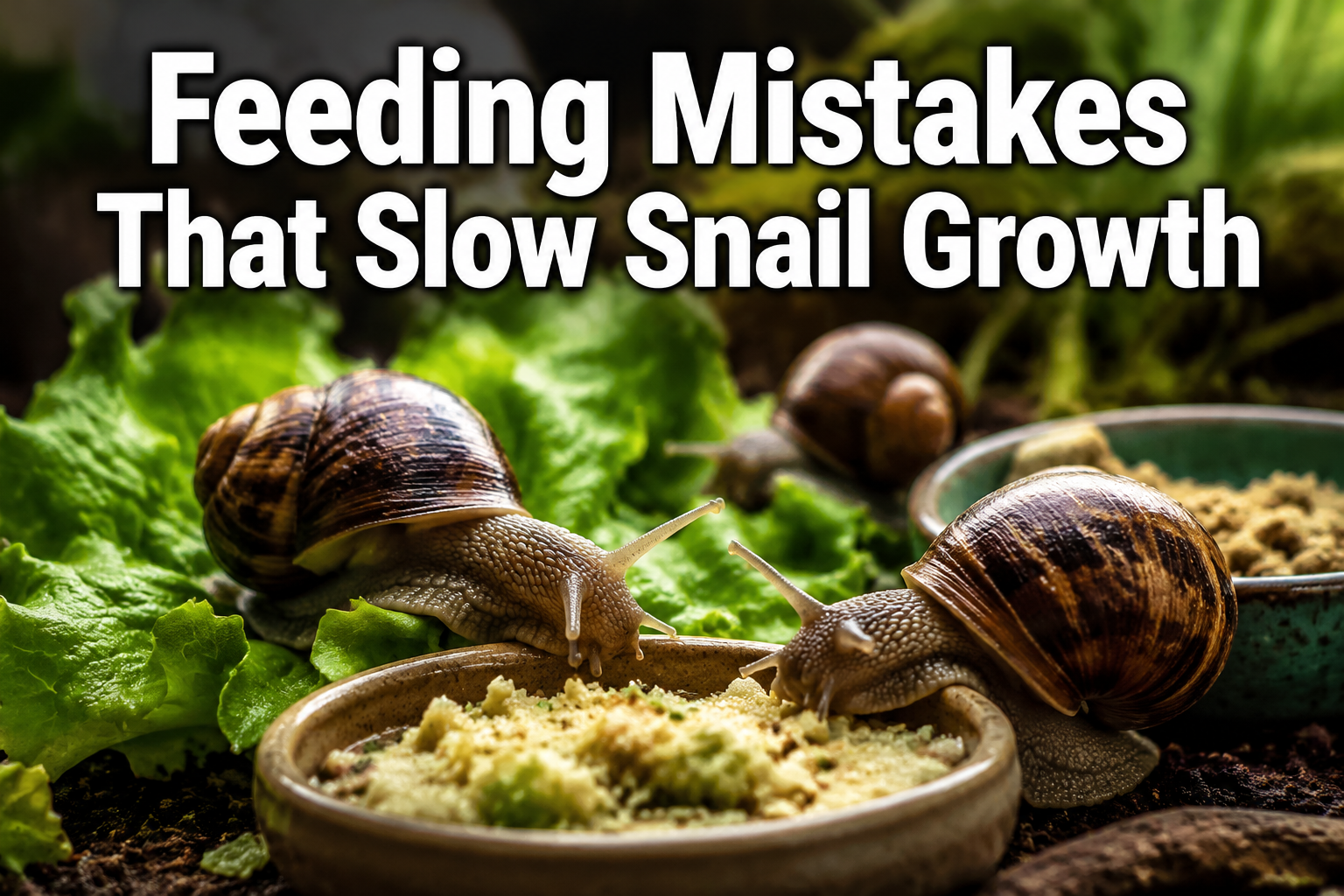
The most common feeding mistakes that slow snail growth include providing unbalanced protein levels (either too little or too much), feeding on irregular schedules, giving excessive calcium that causes over-calcification, and offering poor food combinations that prevent proper nutrient absorption.
Baby snails are especially vulnerable to overfeeding, wrong portion sizes, and stale food that can halt growth entirely.
What Are the Most Common Feeding Mistakes That Slow Snail Growth?
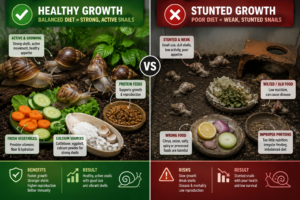
The biggest feeding mistakes that slow snail growth center around protein imbalance, inconsistent schedules, and poor food quality. Snails fed diets with incorrect protein levels show significantly slower weight gain compared to those receiving balanced nutrition.
Top growth-slowing mistakes include:
- Wrong protein levels: Less than 24% or more than 30% crude protein both reduce growth rates.
- Irregular feeding times: Sometimes daily, sometimes every three days, creates stress and poor development.
- Excessive calcium intake: Causes shell over-calcification that prevents body expansion.
- Poor food combinations: Acidic fruits mixed with calcium sources block nutrient absorption.
- Stale or spoiled food: Especially deadly for baby snails, who need fresh food every 6 hours.
- Single-food diets: Kitchen waste alone lacks essential growth nutrients.
- Wrong feeding times: Hot afternoon feeding reduces consumption by 30%.
Choose balanced commercial feeds if you’re new to snail farming, or create mixed diets with vegetables, protein sources, and calcium supplements if you have experience with proper ratios.
How Does Improper Protein Content Affect Snail Development?
Protein content directly controls snail growth rates, with 24% crude protein being the sweet spot for maximum daily weight gain. Too little protein starves growing tissue, while excessive protein wastes resources and creates poor feed conversion.
Protein level impacts:
- Under 20% protein: Stunted growth, weak shell development, poor reproduction.
- 24% protein: Optimal daily weight gain and healthy development.
- Over 30% protein: Wasted feed, poor conversion rates, potential digestive issues.
Common low-protein mistakes:
- Feeding only fruits and vegetables (typically 2-8% protein).
- Using kitchen scraps without protein supplementation.
- Relying on leafy greens as a primary food source.
High-protein error signs:
- Snails leave protein-rich foods uneaten.
- Rapid food spoilage from overfeeding.
- Poor shell quality despite adequate calcium.
Add bloodworms, fish meal, or commercial snail pellets to boost protein in vegetable-heavy diets. Reduce protein sources if snails consistently ignore high-protein foods.
Why Do Inconsistent Feeding Schedules Harm Growth?
Irregular feeding creates stress and disrupts the snail’s natural metabolism, leading to erratic growth patterns and reduced overall development. Snails fed sometimes daily, sometimes after three days, show unpredictable growth compared to those on consistent schedules.
Schedule-related problems:
• Metabolic disruption – Irregular food availability confuses digestive systems.
• Stress response – Uncertainty about the next meal triggers survival mode, not growth mode.
• Uneven nutrition – Some days provide excess, others create deficiencies.
• Food waste – Irregular schedules lead to overcompensation and spoilage.
Optimal feeding frequencies:
- Adult snails: Every 2-3 days with consistent timing.
- Growing juveniles: Daily feeding at the same time.
- Baby snails: Multiple small meals throughout the day.
Best practice schedule:
- Feed during cool periods (early morning or evening).
- Remove uneaten food after 24 hours for adults, 6 hours for babies.
- Maintain the same feeding times even on weekends.
Set phone reminders for feeding times during the first month until the routine becomes automatic.
How Does Excessive Calcium Create Growth Problems?
Too much calcium causes shell over-calcification, creating excessively hard shells with thickened lips that physically prevent the snail’s body from expanding and growing. This paradoxical effect surprises many snail farmers who assume more calcium always helps
Over-calcification symptoms:
- Extremely thick, heavy shells.
- Pronounced shell lip that restricts opening.
- Normal body size but inability to extend fully.
- Reduced feeding activity due to restricted movement.
Calcium balance guidelines:
- Baby snails: Finely ground calcium powder, small daily amounts.
- Growing snails: Cuttlebone pieces available constantly.
- Adult snails: Whole eggshells or shell fragments as needed.
Calcium source mistakes:
- Giving whole eggshells to baby snails (too large to process).
- Mixing calcium directly into acidic foods (reduces absorption).
- Providing only one calcium type instead of variety.
Signs of proper calcium levels:
- Smooth, appropriately thick shells.
- Easy shell opening and closing.
- Active feeding and movement.
- Steady growth without shell deformities.
Remove excess calcium sources if shells become abnormally thick or snails show reduced activity.
What Food Combinations Prevent Proper Nutrient Absorption?
Certain food combinations actively block nutrient absorption or create digestive problems, especially in young snails. The most problematic combinations involve acidic fruits with calcium sources and high-fiber vegetables with protein-rich foods
Harmful combinations:
• Acidic fruits + calcium – Citrus, tomatoes, or berries mixed with eggshells reduce calcium absorption.
• High-fiber vegetables + protein – Tough greens with bloodworms can cause digestive blockages.
• Spinach + any calcium source – Calcium oxalate in spinach actively prevents calcium uptake.
Better food pairing strategies:
- Separate acidic and calcium-rich foods by several hours.
- Offer protein sources before high-fiber vegetables.
- Replace spinach with zucchini, carrots, or cucumber.
- Mix soft vegetables with calcium sources instead of acidic ones.
Safe combination examples:
- Lettuce + cuttlebone pieces.
- Carrot slices + ground eggshell.
- Cucumber + fish meal pellets.
- Sweet potato + calcium powder.
Timing separation method:
- Morning: Protein and soft vegetables.
- Evening: Calcium sources and leafy greens.
- Never together: Acidic fruits and calcium supplements.
Choose simple, single-ingredient foods if you’re unsure about combinations, then gradually test mixed meals as you gain experience.
How Do Baby Snail Feeding Mistakes Differ from Adult Errors?
Baby snails face unique feeding challenges that don’t affect adults, making them extremely vulnerable to mistakes that would barely impact mature snails. Overfeeding hatchlings in their first week creates bacterial infections that can eliminate entire batches
Critical baby snail mistakes:
- Overfeeding in first week – Causes rapid food spoilage and deadly bacterial growth.
- Wrong calcium particle size – Whole eggshells are impossible for hatchlings to process.
- Stale food tolerance – Foods safe for adults become lethal to babies within hours.
- Adult-sized portions – Baby consumption capacity is minimal compared to adults.
Baby-specific feeding requirements:
- Portion size: Tiny amounts that disappear within 2-3 hours.
- Food freshness: Replace every 6 hours during first month.
- Calcium form: Finely ground powder that dissolves easily.
- Feeding frequency: Multiple small meals rather than large portions.
Age-appropriate progression:
- Week 1: Microscopic portions, premium fresh foods only.
- Weeks 2-4: Small portions, 6-hour freshness rule.
- Months 2-3: Gradual increase to juvenile portions.
- Month 4+: Adult feeding schedule and portion sizes.
Emergency signs in babies:
- Food remaining after 3 hours (overfeeding).
- Shell deformities (calcium processing problems).
- Reduced movement (food quality issues).
- Group mortality (bacterial contamination from spoiled food).
Start with portions smaller than you think necessary – baby snails need surprisingly little food compared to their adult size.
What Role Does Feeding Timing Play in Growth Rates?
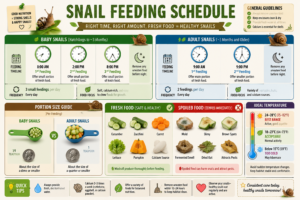
Feeding time significantly impacts how much snails eat and how well they process nutrients. Hot afternoon feeding reduces food consumption by up to 30% compared to cool period feeding, while also increasing spoilage rates that waste resources
Temperature-based feeding effects:
- Hot periods (midday): Reduced appetite, faster food spoilage, increased bacterial growth.
- Cool periods (morning/evening): Maximum consumption, slower spoilage, better digestion.
- Night feeding: High activity but harder to monitor food freshness.
Optimal timing schedule:
- Best times: Early morning (6-8 AM) or evening (6-8 PM).
- Avoid: Midday heat (11 AM – 3 PM).
- Monitor: Food condition after 6 hours in hot weather.
Seasonal timing adjustments:
- Summer: Earlier morning feeding, later evening meals.
- Winter: Midday feeding acceptable due to cooler temperatures.
- Rainy season: Extra attention to food spoilage regardless of timing.
Signs of poor timing:
- Large amounts of uneaten food.
- Rapid food deterioration.
- Reduced snail activity during feeding.
- Increased mortality in baby snails.
Climate-specific strategies:
- Hot climates: Feed exclusively during coolest hours.
- Temperate zones: Morning feeding preferred.
- Indoor farming: Consistent timing more important than temperature.
Set feeding times based on your local temperature patterns rather than convenience – snail appetite follows temperature cycles more than human schedules.
How Do Single-Food Diets Limit Development?
Feeding snails only kitchen waste, fruits, or vegetables creates nutritional deficiencies that severely limit growth potential. Single-food diets lack the balanced crude protein and essential nutrients needed for proper development
Common single-food diet problems:
- Kitchen scraps only – Usually high in carbs, low in protein (under 10%).
- Fruit-only diets – Excessive sugar, minimal protein, poor calcium absorption.
- Vegetable-exclusive feeding – Missing essential amino acids and adequate protein.
- Commercial pellets alone – Often contain inappropriate ingredients like oats and grains.
Nutritional gaps in single-food approaches:
- Protein deficiency: Most single foods provide under 15% protein vs. needed 24%.
- Amino acid imbalances: No single food contains complete amino acid profiles.
- Mineral deficiencies: Calcium, phosphorus, and trace minerals often missing.
- Vitamin shortages: Fat-soluble vitamins especially lacking in vegetable-only diets.
Balanced diet components:
- Protein sources: Bloodworms, fish meal, commercial snail pellets (25% of diet).
- Vegetables: Carrots, zucchini, cucumber, lettuce (40% of diet).
- Calcium sources: Cuttlebone, ground eggshells, shell fragments (15% of diet).
- Fruits: Occasional treats, never more than 10% of total diet.
- Leaves and herbs: Natural variety, 10% of diet.
Weekly diet example:
- Monday: Protein pellets + carrots + calcium powder.
- Tuesday: Bloodworms + lettuce + cuttlebone pieces.
- Wednesday: Vegetables only with eggshell fragments.
- Thursday: Protein + zucchini + herbs.
- Friday: Mixed vegetables + calcium sources.
Create a feeding rotation that includes at least three different food categories each week rather than relying on whatever single food is convenient.
Summary
Avoiding feeding mistakes that slow snail growth requires attention to protein balance, consistent schedules, and proper food combinations. The most critical factors are maintaining 24% protein content, feeding during cool periods, and providing appropriate portions based on snail age and size.