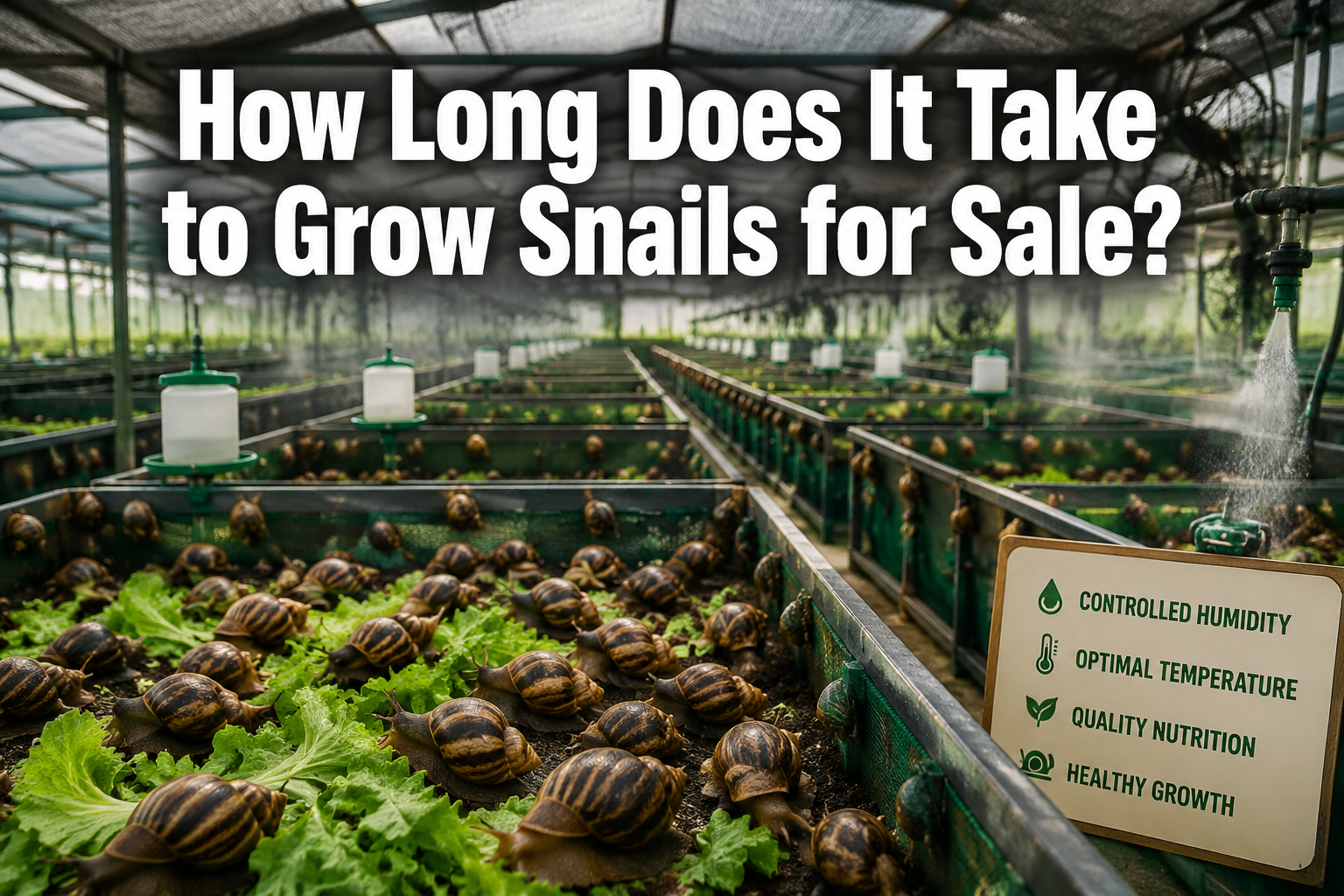
Most commercial snail species take 8 to 18 months to reach market size, depending on the species and growing conditions. Giant African snails (Achatina achatina) require 12-18 months, while faster-growing varieties like Archachatina marginata can be ready in 8-12 months.
Key Takeaways
- Timeline varies by species: Market-ready snails take 8-18 months, depending on which type you choose.
- Eggs hatch quickly: Snail eggs typically hatch in 2-4 weeks under proper conditions.
- Growth acceleration possible: Optimal feeding and environment can reduce maturation time by 30%.
- Temperature matters: Snails grow best between 20°C and 30°C with 75-90% humidity.
- Spacing affects growth: Use about 50 snails per square meter to prevent overcrowding.
- Nutrition speeds growth: High-protein diets (15% crude protein) accelerate early development.
- Market prices reflect growth time: Slower-growing species command higher prices (₦2,000-3,500).
How Long Does It Take to Grow Different Snail Species for Sale?
The time needed to grow snails for sale depends heavily on which species you choose. Commercial snail farmers typically work with three main varieties, each with different maturation timelines.
Achatina achatina (Giant African Snail) takes the longest at 12-18 months to reach market size. These snails grow large and command premium prices of ₦2,000-3,500 per snail, making the wait worthwhile for many farmers.
Achatina marginata (West African Snail) matures faster at 10-14 months. This species offers a good balance between growth time and market value, selling for ₦800-1,500 per snail.
Archachatina marginata (Giant West African Snail) grows fastest at 8-12 months. While these bring lower prices (₦500-1,200 per snail), the quicker turnaround appeals to farmers wanting faster returns.
Choose slower-growing species if you want higher profits per snail. Pick faster varieties if you prefer quicker cash flow and multiple harvests per year.
What Happens During the Snail Growth Timeline?
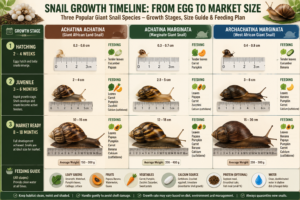
Snail development follows predictable stages that help farmers plan their operations. Understanding these phases helps you know when to expect income from your investment.
Weeks 1-4: Egg Hatching Phase
- Eggs hatch in 2-4 weeks, depending on temperature and humidity.
- Baby snails stay in the soil for 5 days after hatching.
- Survival rates are highest with consistent moisture levels.
Months 1-3: Rapid Growth Phase
- Shell and body develop quickly with proper nutrition.
- Snails need a high-protein diet (15% crude protein).
- This phase determines final adult size.
Months 3-6: Juvenile Phase
- Snails reach juvenile size and become more active.
- Feeding requirements increase significantly.
- Calcium supplementation becomes critical.
Months 6-18: Maturation Phase
- Snails reach reproductive maturity.
- Growth slows, but weight gain continues.
- Market size achieved during this period.
The key mistake many new farmers make is underfeeding during the rapid growth phase, which permanently stunts adult size.
How Can You Speed Up Snail Growth for Faster Sales?
Optimal growing conditions can reduce maturation time by up to 30%, potentially cutting 2-3 months off your timeline. This acceleration requires attention to several key factors.
Temperature and Humidity Control
- Maintain temperatures between 20°C and 30°C consistently.
- Keep humidity levels at 75-90% for maximum growth.
- Use shade cloth and water misters in hot climates.
Specialized Nutrition Program
- Weeks 1-12: High-protein diet with 15% crude protein content.
- Weeks 13-24: Balanced diet with calcium supplementation.
- Week 25+: Maintenance diet focused on weight gain.
Proper Housing and Spacing
- Limit density to 50 snails per square meter.
- Provide adequate ventilation to prevent disease.
- Use separate pens for different age groups.
Growth Acceleration Supplements
- Calcium carbonate for strong shell development.
- Protein-rich feeds like fishmeal or soybean cake.
- Fresh vegetables and fruits for vitamins.
Farmers using these methods report achieving sellable snail size in 11 months instead of the typical 14-16 months.
When Do Snails Start Laying Eggs for Breeding?
Most commercial snail species become sexually mature and start laying eggs between 6 and 12 months of age, depending on growing conditions and species type. This timing affects your breeding program planning.
Achatina species typically start laying eggs at 8-10 months when they reach about 10cm in length. Each snail can lay 100-400 eggs per clutch, with 2-3 clutches per year.
Archachatina species mature slightly faster at 6-8 months but produce fewer eggs per clutch (50-200 eggs). However, their eggs are larger and have better hatching rates.
Environmental factors that speed up reproductive maturity include:
- Consistent temperatures above 25°C.
- High calcium availability in the diet.
- Adequate protein during the juvenile phase.
- Low stress from overcrowding.
Plan your breeding program around these timelines. Keep your fastest-growing snails as breeding stock while selling slower developers for immediate income.
What Factors Slow Down Snail Growth?
Several common problems can extend your growing timeline by months, directly impacting your profitability. Avoiding these issues keeps your snails on track for timely sales.
Temperature Problems
- Temperatures below 20°C significantly slow growth.
- Extreme heat above 35°C can cause dormancy.
- Temperature fluctuations stress snails and reduce feeding.
Nutrition Deficiencies
- Low-protein diets during the rapid growth phase stunt development.
- Calcium deficiency leads to thin shells and slow growth.
- Inconsistent feeding schedules disrupt growth patterns.
Overcrowding Issues
- Too many snails per pen creates competition for food.
- Poor air circulation increases disease risk.
- Stress from crowding reduces appetite and growth.
Disease and Parasites
- Fungal infections thrive in poorly ventilated areas.
- Parasites spread quickly in overcrowded conditions.
- Sick snails stop growing and may die.
Environmental Stress
- Inconsistent humidity causes snails to become dormant.
- Loud noises and vibrations disrupt feeding behavior.
- Poor substrate quality affects shell development.
Address these problems immediately when spotted. A two-week delay in fixing issues can add months to your harvest timeline.
How Much Money Can You Make Based on Growth Timeline?

Your income from snail farming directly relates to how long you’re willing to wait for harvest and which species you choose. Understanding the profit timeline helps you plan your business cash flow.
| Species | Growth Time | Price Range | Profit per Snail |
|---|---|---|---|
| Achatina achatina | 12-18 months | ₦2,000-3,500 | ₦1,500-3,000 |
| Achatina marginata | 10-14 months | ₦800-1,500 | ₦600-1,200 |
| Archachatina marginata | 8-12 months | ₦500-1,200 | ₦300-900 |
Fast-Growth Strategy (8-12 months)
- Choose Archachatina marginata for the quickest returns.
- Expect 2-3 harvest cycles in 24 months.
- Lower profit per snail but higher annual income.
Premium Strategy (12-18 months)
- Focus on Achatina achatina for maximum profit per snail.
- Longer wait but much higher selling prices.
- Better for farmers with patient capital.
Balanced Approach (10-14 months)
- Use Achatina marginata for a moderate timeline.
- Good compromise between wait time and profits.
- Suitable for most beginning farmers.
Factor in feed costs of about ₦200-500 per snail over the growing period when calculating your actual profits.
Common Mistakes That Extend Growing Time
Many new snail farmers make preventable errors that add months to their harvest timeline. Learning from these mistakes saves time and money in your operation.
Feeding Errors
- Starting with adult snail feed instead of a high-protein juvenile diet.
- Irregular feeding schedules that disrupt growth patterns.
- Using only vegetables without protein supplementation.
Housing Problems
- Building pens too small for proper spacing requirements.
- Poor drainage leads to waterlogged, unhealthy conditions.
- Inadequate ventilation causes respiratory problems.
Species Selection Issues
- Choosing slow-growing species when needing quick income.
- Mixing different species with conflicting care requirements.
- Buying poor-quality breeding stock with genetic growth problems.
Environmental Control Failures
- Ignoring temperature monitoring during seasonal changes.
- Inconsistent humidity leads to dormancy periods.
- Exposing snails to pesticides or chemical contamination.
Management Mistakes
- Harvesting too early when snails haven’t reached full market size.
- Keeping sick snails with healthy ones spreads problems.
- Not keeping growth records to identify slow-performing individuals.
The most expensive mistake is underfeeding during months 1-6, which permanently reduces adult size and market value.
FAQ
How long do snail eggs take to hatch?
Snail eggs typically hatch in 2-4 weeks, depending on temperature and humidity conditions. Warmer temperatures (25-30°C) speed up hatching, while cooler conditions extend the timeline.
Can you sell snails before they’re fully grown?
Yes, you can sell juvenile snails at 6-8 months for lower prices, but waiting for full maturity maximizes profit per snail. Some markets prefer smaller snails for specific dishes.
What’s the minimum size for selling snails?
Most markets accept snails at 7-10cm shell length, which typically occurs at 8-12 months depending on species. Larger snails always command higher prices.
Do male and female snails grow at different rates?
Snails are hermaphrodites (both male and female), so there’s no gender-based growth difference. Growth rate depends on genetics, nutrition, and environmental conditions.
How many snails should a beginner start with?
Start with 50-100 breeding snails to learn the process. This size allows you to gain experience while keeping the initial investment manageable.
What happens if snails don’t reach market size in the expected time?
Extended growing periods increase feed costs and reduce profitability. Identify the cause (nutrition, environment, disease) and correct it to prevent future delays.
Can you speed up growth with artificial heating?
Yes, maintaining optimal temperatures (25-28°C) with heating systems can accelerate growth by 20-30%, especially in cooler climates or during cold seasons.
How do you know when snails are ready to sell?
Snails are market-ready when they reach 7-10cm shell length, have thick shells, and weigh 80-150 grams, depending on species. They should be active and healthy-looking.
What’s the best species for the fastest profit?
Archachatina marginata offers the quickest returns at 8-12 months, though with lower profit per snail. Choose based on your cash flow needs and patience level.
Do snails grow faster in groups or alone?
Snails grow better in properly spaced groups (50 per square meter) rather than isolation, but overcrowding significantly slows growth and increases disease risk.
Final Thoughts
Growing snails for sale requires patience, with most commercial species taking 8-18 months to reach market size. Your choice of species determines both your timeline and profit potential – faster-growing varieties like Archachatina marginata reach market in 8-12 months, while premium species like Achatina achatina need 12-18 months but command much higher prices.
Success depends on maintaining optimal conditions: temperatures between 20-30°C, humidity at 75-90%, proper spacing of 50 snails per square meter, and a specialized nutrition program with high protein during early growth phases. These factors can reduce maturation time by up to 30%.