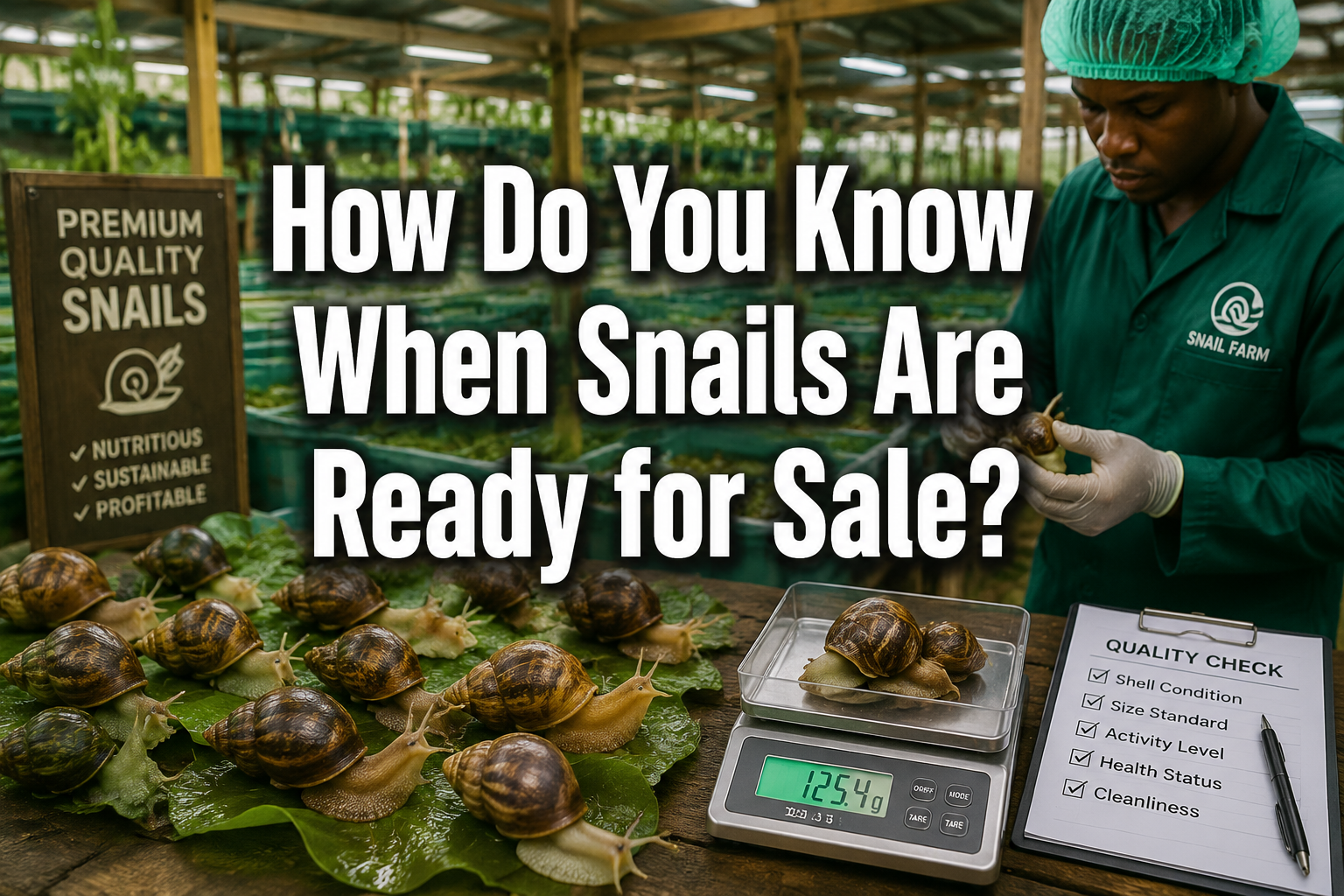
Snails are ready for sale when they reach adult size (typically 1-2 inches for most species), have fully developed shells, show active movement, and maintain healthy eating habits. Most commercial snails need 3-6 months to reach market readiness, depending on the species and growing conditions.
What Size Should Snails Be Before They’re Ready for Sale?

Snails must reach adult size before they’re ready for sale, which varies by species but typically ranges from 1-2 inches in length. Garden snails and most pet species should measure at least 1 inch from head to tail when fully extended.
Size guidelines by popular species:
- Garden snails (Helix aspersa) – 1.5 to 2 inches.
- Giant African snails – 3 to 6 inches.
- Roman snails – 1.5 to 2.5 inches.
- Milk snails – 1 to 1.5 inches.
How to measure correctly:
- Wait for the snail to fully extend from its shell.
- Measure from the head to the tail tip.
- Take measurements when the snail is active and moving.
- Record the largest measurement for accuracy.
Choose larger specimens if selling to beginners, as they’re hardier and easier to care for. Smaller snails under 1 inch are too fragile for most buyers and have higher mortality rates during shipping.
How Can You Tell if Snails Are Healthy Enough for Sale?
Healthy snails show consistent activity, maintain good shell quality, and demonstrate normal feeding behaviors. Check for these key health indicators before determining if snails are ready for sale.
Essential health markers:
- Active movement – Snails should move regularly and explore their environment.
- Strong shell – No cracks, chips, or soft spots on the shell surface.
- Good appetite – Regular eating of fresh vegetables and calcium sources.
- Proper slime production – Adequate mucus trail when moving.
- Clear body color – No unusual discoloration or swelling.
Red flags to avoid:
- Snails that stay in their shells for days.
- Cracked or damaged shell areas.
- Unusual discharge or bad smells.
- Lack of appetite for 3+ days.
- Sluggish or no movement when touched gently.
Quick health test:
Place the snail on a damp surface and gently touch its body. Healthy snails will retract quickly and emerge within 10-15 minutes to start moving again.
Document any health issues and separate questionable snails from your sale inventory until they recover completely.
What Age Do Snails Need to Reach Before They’re Ready for Sale?
Most snail species need 3-6 months to reach sale-ready maturity, though this varies significantly based on species, temperature, and feeding conditions. Baby snails under 2 months old are too young and fragile for most buyers.
Age requirements by species:
- Garden snails – 4 to 6 months minimum.
- Giant African snails – 3 to 4 months.
- Roman snails – 6 to 8 months.
- Milk snails – 3 to 5 months.
Factors that affect development time:
- Temperature – Warmer conditions (70-80°F) speed growth.
- Food quality – High-calcium diets promote faster shell development.
- Humidity levels – 80-90% humidity supports healthy growth.
- Space availability – Overcrowded conditions slow development.
Age verification methods:
- Count growth rings on the shell (each ring represents roughly one month).
- Track from known hatching dates in breeding records.
- Monitor size progression over time with weekly measurements.
Never sell snails under 2 months old, as they have extremely high mortality rates and poor survival chances with new owners. Wait until snails show consistent adult behaviors and size stability.
When Is the Best Time of Year for Snails to Be Ready for Sale?
Spring and fall represent peak seasons when snails are ready for sale, as these periods offer ideal shipping conditions and align with natural breeding cycles. Most commercial snail sellers time their breeding to have mature stock ready during these optimal windows.
Seasonal timing advantages:
- Spring (March-May) – Mild temperatures, high buyer interest, natural activity increase.
- Fall (September-November) – Stable weather, pre-winter preparation, good shipping conditions.
- Summer – Avoid due to extreme heat and shipping stress.
- Winter – Limited demand, cold weather shipping risks.
Market demand patterns:
Pet stores and individual buyers typically seek new snails in spring as outdoor temperatures warm up. Fall sales work well for indoor setups and breeding programs starting before winter.
Shipping considerations:
Choose weeks with forecast temperatures between 50-80°F for safe shipping. Avoid holiday periods when packages may sit in transit longer than normal.
Plan breeding cycles 4-6 months ahead of target sale seasons to ensure snails reach maturity at the right time for market demand.
How Should You Prepare Snails That Are Ready for Sale?
Proper preparation ensures snails arrive healthy and increases customer satisfaction when your snails are ready for sale. Focus on packaging, documentation, and final health checks before shipping or transferring to buyers.
Pre-sale preparation checklist:
- Final health inspection – Check each snail for activity and shell condition.
- Fasting period – Stop feeding 24 hours before shipping to reduce waste.
- Container selection – Use ventilated containers with secure lids.
- Moisture control – Add damp paper towels or moss for humidity.
- Temperature protection – Include heat or cold packs if needed.
Required supplies:
- Clear plastic containers with air holes.
- Damp paper towels or sphagnum moss.
- Secure tape for container sealing.
- Shipping labels and tracking information.
- Care instruction sheets for buyers.
Documentation to include:
- Species identification and care requirements.
- Feeding guidelines and food recommendations.
- Habitat setup instructions.
- Contact information for follow-up questions.
Common preparation mistakes:
Never use containers without ventilation, avoid overpacking multiple snails together, and don’t ship during extreme weather conditions without proper temperature protection.
Test your packaging method with a short local delivery before attempting longer-distance shipping to ensure snails arrive in good condition.
What Legal Requirements Apply When Snails Are Ready for Sale?
Legal regulations vary significantly by location, and some snail species require permits or are completely prohibited from sale in certain areas. Research local and federal laws before determining if your snails are ready for sale legally.
Key regulatory areas:
- Species restrictions – Some snails are banned as invasive species.
- Interstate shipping – USDA permits may be required for crossing state lines.
- Local permits – City or county licenses for animal sales.
- Health certificates – Veterinary documentation for commercial sales.
Commonly restricted species:
Giant African Land Snails are illegal in many U.S. states due to agricultural and ecological risks. Always verify species legality in your area and destination locations.
Compliance steps:
- Contact local agriculture departments about snail sale regulations.
- Obtain necessary permits before advertising snails for sale.
- Keep detailed breeding and sale records.
- Provide accurate species identification to buyers.
Safe practices:
Stick to commonly accepted pet species like garden snails (where legal) and always disclose species information clearly to buyers. When in doubt, consult with local agricultural extension offices or veterinarians familiar with exotic pet regulations.
Violations can result in significant fines and legal issues, so thorough research is essential before any sales activity.
Summary
Determining when snails are ready for sale requires careful attention to size, health, age, and legal requirements. Focus on the key indicators: adult size of 1-2 inches, strong shell development, active behavior, and minimum age of 3-6 months, depending on species.
FAQ
How long does it take for baby snails to be ready for sale?
Most snail species need 3-6 months to reach sale-ready size and maturity, depending on growing conditions and species type.
What’s the minimum size for selling pet snails?
Pet snails should be at least 1 inch long when fully extended, with fully developed shells and consistent activity levels.
Can you sell snails year-round?
While possible, spring and fall offer the best conditions for shipping and align with peak buyer demand for new pet snails.
Do you need permits to sell snails?
Permit requirements vary by location and species. Check with local agriculture departments and research interstate shipping regulations before selling.
How do you know if a snail is too young to sell?
Snails under 2 months old or smaller than 1 inch are typically too fragile for sale and have poor survival rates with new owners.
What container size do you need for shipping snails?
Use containers large enough for snails to move slightly but not so large that they get tossed around during shipping. Include ventilation holes and moisture control.
Should you feed snails before shipping?
Stop feeding 24 hours before shipping to reduce waste production during transit, but ensure adequate moisture in the shipping container.
How do you price snails that are ready for sale?
Pricing depends on species rarity, size, and local market conditions. Research comparable sellers and factor in your breeding costs and time investment.
What information should you give snail buyers?
Provide species identification, care instructions, feeding guidelines, habitat requirements, and your contact information for follow-up questions.
Can you guarantee snail health after sale?
Most sellers offer short-term arrival guarantees (24-48 hours), but cannot control long-term care conditions with new owners.
What’s the best way to ship live snails?
Use ventilated containers with moisture control, avoid extreme temperatures, choose fast shipping methods, and include care instructions for immediate setup.
How do you handle snails that don’t sell?
Continue proper care, reassess health and size requirements, adjust pricing if needed, or consider donating to educational programs or zoos.