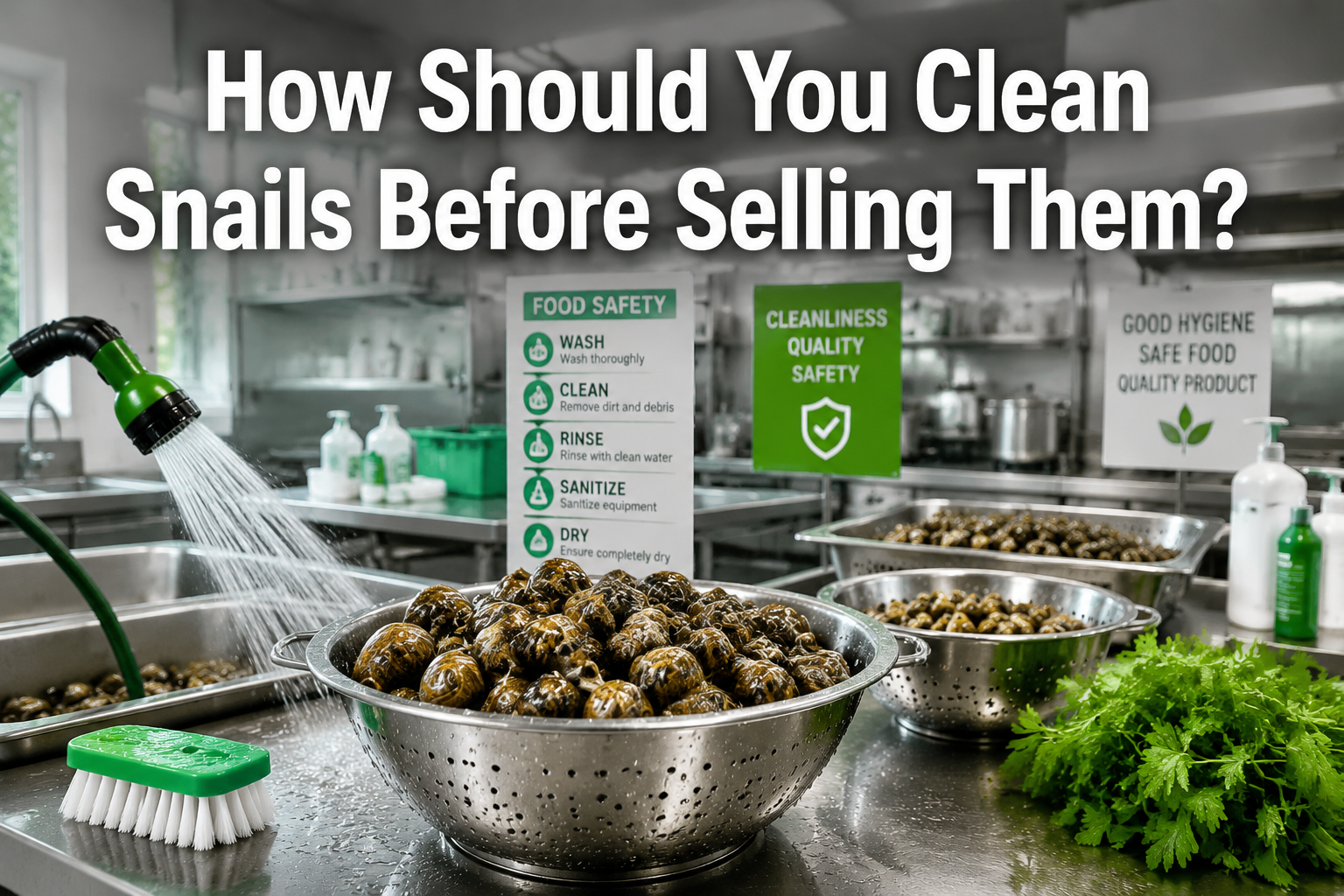
To clean snails before selling them, start with a 24-hour fasting period, then use hot water treatment at 70°C or higher for 2-3 minutes, followed by alum solution cleaning and multiple rinse cycles in clean water. Remove internal organs and waste, then refrigerate for 30 minutes before final packaging with proper labeling.
What Preparation Steps Must You Take Before You Clean Snails Before Selling?
The most critical preparation step is implementing a 24-hour fasting period before processing any snails intended for sale. This fasting period empties the snail’s digestive system of waste materials and unwanted food particles that could affect product quality and safety.
Essential Pre-Cleaning Requirements:
- Separate snails by size and species: Different varieties may require adjusted processing times.
- Ensure adequate water supply: You’ll need multiple changes of clean water throughout the process.
- Prepare cleaning solutions: Mix alum solution or have fresh lime juice ready as cleaning agents.
- Set up proper workspace: Use stainless steel surfaces that can be sanitized between batches.
- Gather necessary tools: Small forks, toothpicks, colanders, and food-grade containers.
For live snail sales, implement a 4-day purging protocol where snails are fed only clean carrots to ensure their digestive systems are completely cleared. This extended cleaning cycle produces higher-quality live products that command better market prices.
Temperature Control Setup:
Prepare water heating equipment capable of maintaining temperatures above 70°C consistently. The hot water treatment is non-negotiable for food safety compliance and proper tissue preparation.
Choose alum solution over lime juice if processing large quantities, as alum provides more consistent results across different snail species and sizes.
How Do You Properly Clean Snails Before Selling Using Hot Water Treatment?
Hot water treatment at temperatures exceeding 70°C for 2-3 minutes is the industry standard for initial snail processing. This temperature kills harmful bacteria while making shell removal significantly easier.
Step-by-Step Hot Water Process:
- Heat water to 70-75°C: Use a food thermometer to verify temperature accuracy.
- Submerge snails completely: Work in small batches to maintain water temperature.
- Time precisely for 2-3 minutes: Longer exposure can make meat tough and rubbery.
- Remove immediately: Transfer to cool water to stop the cooking process.
- Begin shell extraction: Shells should separate easily from the meat at this point.
Critical Safety Considerations:
Never exceed 3 minutes in hot water, as this can compromise meat texture and make the final product less appealing to buyers. The goal is tissue preparation, not full cooking.
Use tongs or slotted spoons to handle hot snails safely. Work systematically through batches rather than rushing the process, as consistent timing produces uniform product quality.
Quality Indicators:
Properly treated snails will have firm, white meat that separates cleanly from shells. If meat appears gray or mushy, the temperature was too high or the exposure time too long.
What Cleaning Solutions Should You Use When You Clean Snails Before Selling?
Alum solution (potassium or ammonium aluminum sulphate) dissolved in hot water is the preferred cleaning agent for commercial snail processing. Alum hardens snail tissue and prevents excessive slime production that can complicate the cleaning process.
Approved Cleaning Solutions:
- Alum water – Mix 1 tablespoon per gallon of water for standard concentration.
- Fresh lime juice – Use undiluted for small batches as an alternative to alum.
- Lemon juice – Acceptable substitute when lime juice is unavailable.
- Clean water only – Minimum acceptable method for basic cleaning.
Prohibited Cleaning Agents:
Never use soap, detergents, household cleaners, or chemical sanitizers on snails intended for human consumption. These substances can be absorbed by snail tissue and create serious food safety hazards.
Application Method:
Soak cleaned snails in alum solution for 10-15 minutes after hot water treatment. The solution should cover all snails completely. Stir gently every 5 minutes to ensure even treatment.
Concentration Guidelines:
Start with weaker alum concentrations for delicate snail species. Garden snails typically handle standard concentrations well, while smaller varieties may require diluted solutions to prevent over-hardening.
Lime juice works faster than alum but requires immediate rinsing to prevent acid damage to the meat. Choose alum for consistent commercial results across different processing days.
How Many Rinse Cycles Are Required When You Clean Snails Before Selling?
A minimum of two complete rinse cycles with clean, cool water is required to remove all waste particles, soil residue, and cleaning solution remnants. Professional operations often use three or more rinse cycles to ensure premium product quality.
Rinse Cycle Protocol:
First Rinse:
- Use cool running water to remove surface debris and alum solution.
- Gently agitate snails in a colander for 2-3 minutes.
- Check for remaining shell fragments or waste particles.
Second Rinse:
- Fresh water change with thorough circulation around each snail.
- Individual inspection for cleanliness and quality.
- Remove any damaged or substandard specimens.
Optional Third Rinse:
- Final quality assurance rinse for premium product lines.
- Ice-cold water to firm up meat texture before packaging.
- Last opportunity to remove any missed contaminants.
Water Quality Standards:
Use only potable water that meets drinking water standards for all rinse cycles. Contaminated rinse water can introduce harmful bacteria that multiply rapidly in snail meat.
Drainage Requirements:
Allow complete drainage between rinse cycles. Excess water retention can dilute natural flavors and create breeding conditions for bacteria during storage.
Inspect each snail individually during the second rinse cycle. This is your final opportunity to remove specimens that don’t meet sale quality standards before packaging.
What Internal Organs Must Be Removed When You Clean Snails Before Selling?
The albumin gland and all internal waste must be completely removed using small forks or toothpicks to extract the foot, leaving only the edible muscle portion for sale. This step is critical for food safety and product presentation.
Essential Removal Steps:
- Albumin gland extraction – Located near the shell opening, it appears as a white or yellowish mass.
- Digestive tract removal – Dark-colored tube running through the body cavity.
- Waste matter elimination – Any remaining fecal material or undigested food.
- Foot separation – Keep only the muscular foot portion for sale.
Proper Extraction Technique:
Insert a small fork or toothpick at the shell opening and gently twist to extract the entire foot. The edible portion should come out as one piece when done correctly.
Quality Control Checkpoints:
Examine each extracted foot for completeness. Any remaining dark spots or unusual coloration indicate incomplete cleaning that requires additional attention.
Tools and Equipment:
Use food-grade stainless steel picks or forks designed for seafood processing. Avoid wooden toothpicks that can splinter and contaminate the meat.
Batch Processing Tips:
Work systematically through small batches rather than attempting to process large quantities simultaneously. This ensures consistent quality and reduces the risk of cross-contamination between specimens.
Discard any snails where the foot cannot be extracted cleanly, as this typically indicates the specimen was not properly prepared during earlier processing steps.
How Should You Package and Label Cleaned Snails for Sale?
All snail products must include comprehensive labeling showing species identification, place of origin, batch number, pack date, expiration date, and proper storage conditions before commercial sale. This labeling ensures regulatory compliance and customer safety.
Required Label Information:
- Species name – Both common and scientific names when applicable.
- Origin location – Farm or collection area identification.
- Batch number – Traceability code for quality control purposes.
- Pack date – Processing completion date in MM/DD/YYYY format.
- Expiration date – Maximum safe consumption period (typically 1 day for fresh meat).
- Storage instructions – Temperature requirements and handling guidelines.
Packaging Materials:
Use only food-grade containers that maintain proper temperature and prevent contamination. Vacuum-sealed packages extend shelf life while maintaining product quality.
Final Preparation Steps:
Refrigerate cleaned snails for 30 minutes before packaging to ensure they retract into their shells and enter a dormant state. This maintains product quality and makes handling easier for customers.
Storage Duration Limits:
Processed snail meat should be stored in refrigeration for a maximum of 1 day after processing to maintain food safety standards. Live snails can be stored longer with proper care and feeding.
Temperature Requirements:
Maintain consistent refrigeration at 32-38°F (0-3°C) throughout storage and transport. Temperature fluctuations can compromise product safety and quality.
Document all processing dates and batch information for regulatory compliance and customer inquiries about product freshness and origin.
What Are the Food Safety Requirements for Selling Cleaned Snails?
Processed snail meat must be stored under refrigeration at 32-38°F and sold within 24 hours of processing to meet food safety standards. Temperature control throughout the entire process is critical for preventing bacterial growth.
Critical Control Points:
- Processing temperature – Maintain 70°C+ during hot water treatment.
- Storage temperature – Consistent refrigeration below 40°F.
- Time limits – Maximum 1-day storage for processed meat.
- Cross-contamination prevention – Separate raw and processed products.
- Traceability documentation – Complete batch records for regulatory compliance.
Regulatory Compliance:
Check local health department requirements for snail sales, as regulations vary by jurisdiction. Some areas require special permits or inspections for selling processed snail products.
Quality Assurance Testing:
Implement regular temperature monitoring and document all processing times. Keep detailed records of cleaning procedures and storage conditions for each batch.
Customer Education:
Provide clear handling and cooking instructions with each sale. Customers should understand proper storage requirements and preparation methods for safe consumption.
Contamination Prevention:
Use separate cutting boards, knives, and containers for snail processing. Clean and sanitize all equipment between batches to prevent cross-contamination.
Establish clear protocols for rejecting substandard specimens during processing. It’s better to discard questionable snails than risk customer safety or business reputation.
How Long Does the Complete Snail Cleaning Process Take?
The complete process from fasting through final packaging typically requires 26-28 hours, including the mandatory 24-hour fasting period plus 2-4 hours for actual cleaning and processing. Active processing time is much shorter than total elapsed time.
Time Breakdown:
- Fasting period – 24 hours minimum (can extend to 4 days for premium live sales).
- Hot water treatment – 2-3 minutes per batch.
- Alum solution soaking – 10-15 minutes.
- Rinse cycles – 15-20 minutes total.
- Internal organ removal – 2-3 minutes per snail.
- Final refrigeration – 30 minutes before packaging.
- Packaging and labeling – 5-10 minutes per batch.
Efficiency Factors:
Batch size significantly affects processing speed. Smaller batches allow better quality control but require more total processing time for large quantities.
Scaling Considerations:
Commercial operations can process multiple batches simultaneously once the initial fasting period is complete. This parallel processing reduces per-unit time investment.
Quality vs. Speed Balance:
Rushing any step compromises final product quality. Plan adequate time for thorough cleaning rather than cutting corners to meet tight deadlines.
Seasonal Variations:
Processing may take longer during colder months when snails are less active. Warmer temperatures can accelerate some steps but require more careful temperature control.
FAQ
How long should snails fast before cleaning?
Snails must fast for a minimum of 24 hours before processing to empty their digestive systems of waste materials and unwanted food particles.
What temperature water should be used for cleaning snails?
Use water heated to 70°C (158°F) or higher for 2-3 minutes during the hot water treatment phase of cleaning.
Can you use soap to clean snails for sale?
No, never use soap, detergents, or household cleaners on snails intended for human consumption. Use only food-safe solutions like alum or lime juice.
How long can cleaned snail meat be stored?
Processed snail meat should be refrigerated and sold within 24 hours of processing to maintain food safety standards.
What parts of the snail must be removed before sale?
Remove the albumin gland, digestive tract, and all internal waste, keeping only the edible muscle portion (foot) for sale.
Do you need special permits to sell cleaned snails?
Requirements vary by location. Check with local health departments for specific permits or inspections required for selling processed snail products.
How many rinse cycles are needed when cleaning snails?
A minimum of two complete rinse cycles with clean, cool water is required, though three cycles are recommended for premium quality.
What information must be included on snail product labels?
Labels must show species name, origin, batch number, pack date, expiration date, and storage instructions for regulatory compliance.
Conclusion
Successfully cleaning snails before selling requires strict adherence to food safety protocols and systematic processing procedures. The 24-hour fasting period, hot water treatment at 70°C+, and proper alum solution cleaning form the foundation of safe snail preparation for commercial sale.
Essential next steps for snail sellers:
• Establish consistent processing schedules that allow adequate time for each cleaning phase without rushing quality control steps
• Invest in proper equipment, including food thermometers, stainless steel containers, and refrigeration systems that maintain consistent temperatures
• Develop detailed record-keeping systems for batch tracking, processing dates, and regulatory compliance documentation
• Research local regulations and obtain necessary permits before beginning commercial snail sales in your area
The key to profitable snail sales lies in maintaining consistent quality through proper cleaning procedures. Customers will pay premium prices for properly processed snails that meet food safety standards and deliver excellent eating experiences. Focus on perfecting your cleaning technique with small batches before scaling up to commercial quantities.