
Most snail farmers struggle to find buyers because the market for snails remains extremely niche, with consumption limited to specific cultural groups and high-end restaurants. The combination of high consumer prices, seasonal demand fluctuations, and limited market awareness creates a challenging environment where supply often exceeds accessible demand.
What Makes the Snail Market So Limited?
The snail market remains fundamentally constrained by cultural and economic factors that prevent mass adoption. Unlike conventional proteins such as chicken or beef, snail consumption is concentrated among specific ethnic communities and upscale dining establishments rather than mainstream consumers.
Cultural barriers to market expansion:
- Western consumers often view snails as exotic or unappetizing.
- Limited exposure through traditional food channels and grocery stores.
- Lack of preparation and knowledge among average home cooks.
- Generational resistance to trying unfamiliar protein sources.
Market size realities:
- Restaurant demand represents the primary buyer category in most regions.
- Specialty food stores serve niche customer bases with irregular purchasing patterns.
- Export markets require compliance with international food safety regulations.
- Tourism-dependent sales create vulnerability to travel industry fluctuations.
The addressable market for snail farmers consists primarily of French restaurants, ethnic food establishments, and specialty gourmet retailers. This narrow buyer base cannot support large-scale production increases, creating a ceiling effect where additional farmers compete for the same limited pool of customers.
Why Are Snail Prices Too High for Most Consumers?

High production costs force snail farmers to price their products beyond what average consumers will pay for protein. In Ghana, large snails sell for up to GH¢20 (approximately $1.20 USD) each, making them significantly more expensive per pound than chicken, beef, or fish.
Cost drivers that inflate final prices:
- Daily feeding expenses: Up to GH¢5 ($0.30 USD) per snail daily for vegetables, leaves, and fruits.
- Extended maturation periods: 18-24 months before harvest with ongoing care costs.
- Labor-intensive management: Manual feeding, cleaning, and monitoring requirements.
- Climate control needs: Temperature and humidity regulation in many climates.
- Processing and packaging: Specialized handling for food safety compliance.
Price comparison reality:
Choose snails over conventional protein only if targeting luxury or specialty markets. A single large snail costing $1.20 provides roughly the same protein as $0.25 worth of chicken breast, creating a 5x price premium that eliminates price-sensitive buyers.
The economic math forces snail farmers into premium market positioning whether they want it or not. This pricing structure automatically excludes the mass market and concentrates demand among affluent consumers willing to pay for novelty or cultural authenticity.
How Does Seasonal Demand Create Revenue Problems?
Snail farmers face extreme seasonal concentration of sales that creates cash flow volatility throughout the year. French snail farmers generate approximately 70% of their annual revenue during November alone, coinciding with holiday dining and Christmas market seasons.
Seasonal demand patterns:
- Peak season (November-December): Holiday dining, gift purchases, tourist consumption.
- Moderate season (March-May): Spring restaurant menu additions, Easter celebrations.
- Low season (June-October): Minimal demand outside specialty orders.
- Dead season (January-February): Post-holiday market exhaustion.
Revenue volatility consequences:
- Cash flow gaps during 10+ months of weak demand.
- Inventory management challenges with live product.
- Difficulty securing consistent buyer relationships.
- Pressure to discount excess inventory during off-peak periods.
This seasonal concentration means snail farmers must generate enough profit during peak months to sustain operations year-round. When external factors disrupt holiday seasons—such as pandemic restaurant closures or reduced tourism—farmers can lose their primary revenue window and face financial distress.
Why Can’t Domestic Markets Absorb Local Production?
Most snail farming regions face the challenge that local consumers cannot or will not purchase enough product to support domestic production volumes. In Ukraine, snails are “too expensive for most Ukrainians and are still a culinary curiosity,” forcing farmers to depend entirely on European export markets.
Domestic market limitations:
- Economic constraints: Local purchasing power is insufficient for premium-priced protein.
- Cultural unfamiliarity: Snails are not integrated into traditional cuisine or cooking practices.
- Distribution gaps: Limited retail channels for specialty food products.
- Competition from imports: Cheaper imported snails from established producers.
Export dependency risks:
- Currency exchange rate fluctuations affect profitability.
- International shipping costs and logistics complexity.
- Regulatory compliance requirements for food exports.
- Vulnerability to trade restrictions or border closures.
Ukrainian farmers must “undercut prices by around 10 percent” to compete with EU-based producers like Poland, which holds structural advantages as an EU member.
This competitive pressure compresses already-thin margins while farmers remain dependent on foreign buyers who may shift to alternative suppliers.
What Role Do Supply Chain Disruptions Play?
Recent global disruptions have exposed how vulnerable snail farmers are to buyer network collapses. During COVID-19 lockdowns, French snail farmers experienced a “significant drop in consumption” when restaurants closed, and tourists disappeared, leaving unsold snails frozen in warehouses.
Disruption impact examples:
- Restaurant closures: Immediate loss of primary buyer category.
- Tourism drops: Elimination of seasonal demand spikes.
- Export restrictions: Border closures blocking international sales.
- Supply chain delays: Shipping disruptions affecting live product delivery.
Recovery challenges:
Ukrainian snail farmers lost over 55,000 euros in EU orders during lockdowns, with snails “perishing in refrigerators” as they struggled to pivot to domestic markets, unable to absorb the production volume. This demonstrates how quickly external shocks can eliminate entire buyer categories.
The concentrated nature of snail buyer networks means disruptions create cascading effects. Unlike diversified agricultural products sold through multiple channels, snail farmers typically depend on a small number of restaurants, exporters, or specialty retailers whose simultaneous closure can eliminate most revenue streams overnight.
How Do Production Costs Affect Buyer Relationships?
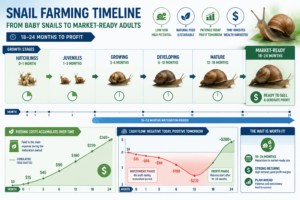
The labor-intensive nature of snail farming creates ongoing cost pressures that strain relationships with price-sensitive buyers. Australian farmers report the sector is “very, very labour intensive” with long timelines required to establish “a steady supply to consumers”.
Production cost challenges:
- Daily care requirements: Manual feeding, cleaning, and health monitoring.
- Infrastructure investments: Climate-controlled housing, breeding facilities, processing equipment.
- Regulatory compliance: Food safety certifications, health inspections, export documentation.
- Inventory carrying costs: Maintaining live product for extended maturation periods.
Buyer relationship impacts:
- Farmers cannot offer volume discounts without operating at a loss.
- Price negotiations become difficult due to fixed cost structures.
- Inconsistent supply during high-cost periods (weather, feed price spikes).
- Limited ability to absorb buyer payment delays or disputes.
One Ghanaian farmer reports “not consistent” earnings despite selling mature snails at GH¢15 ($0.90 USD) each, while another generates only GH¢600 ($36 USD) weekly during peak rainy seasons.
This profit inconsistency makes it difficult to maintain stable buyer relationships or invest in market development.
What Are the Most Effective Solutions for Finding Buyers?
Direct-to-consumer strategies:
- Farmers’ markets and local food festivals for immediate cash sales.
- Online sales platforms targeting gourmet food enthusiasts.
- Community-supported agriculture (CSA) programs with subscription models.
- Educational workshops combining cooking demonstrations with sales.
B2B relationship building:
- Partnership agreements with French and Mediterranean restaurants.
- Supplier relationships with specialty food distributors.
- Export partnerships with established international traders.
- Cooperative marketing with other specialty protein producers.
Market development approaches:
- Product diversification into processed snail products (canned, frozen).
- Value-added offerings like snail caviar or beauty products.
- Agritourism integration with farm visits and tasting experiences.
- Educational content marketing about snail nutrition and preparation.
Choose direct sales if you have fewer than 1,000 snails monthly and want higher margins. Choose distributor partnerships if you can produce 5,000+ snails monthly and prefer predictable wholesale pricing.
Conclusion
The fundamental challenge facing snail farmers is that they operate in a luxury niche market with mass production costs. Cultural barriers, high prices, seasonal volatility, and supply chain vulnerabilities combine to create a difficult business environment where finding buyers requires significant time and relationship-building investment.
Frequently Asked Questions
How long does it take to find reliable snail buyers?
Most farmers require 6-12 months to establish consistent buyer relationships, with restaurant partnerships taking longer due to seasonal menu planning cycles.
What profit margins can snail farmers expect?
Profit margins vary from 15-40% depending on production scale, with smaller farms achieving higher margins through direct sales but facing volume limitations.
Are there government programs to help snail farmers find markets?
Some agricultural extension services offer marketing assistance, and export promotion agencies may help with international buyer connections, but programs vary significantly by region.
Should new farmers focus on domestic or export markets?
Start with local restaurants and farmers’ markets to build experience and cash flow before attempting export markets, which require significant regulatory compliance.
How many snails do restaurants typically order?
Most restaurants order 50-200 snails monthly, with French establishments and those featuring escargot ordering 300-500 during peak seasons.
What’s the minimum production scale needed to attract distributors?
Food distributors typically require consistent monthly volumes of 2,000-5,000 snails minimum, with established quality and delivery reliability.
Can snail farmers sell directly to grocery stores?
Major grocery chains rarely stock fresh snails, but specialty stores and ethnic markets may purchase 100-300 snails monthly for regular customers.
How do weather conditions affect buyer demand?
Cold weather increases restaurant demand for warm dishes like escargot, while summer heat reduces overall consumption and complicates live product transport.
What happens to unsold snails during slow periods?
Farmers can slow growth through temperature control, process into frozen products, or reduce feeding to maintain smaller inventory levels during low-demand periods.
Are there online platforms specifically for selling snails?
Specialized gourmet food marketplaces and local farm-to-table platforms offer the best online sales opportunities, though volume remains limited compared to restaurant sales.