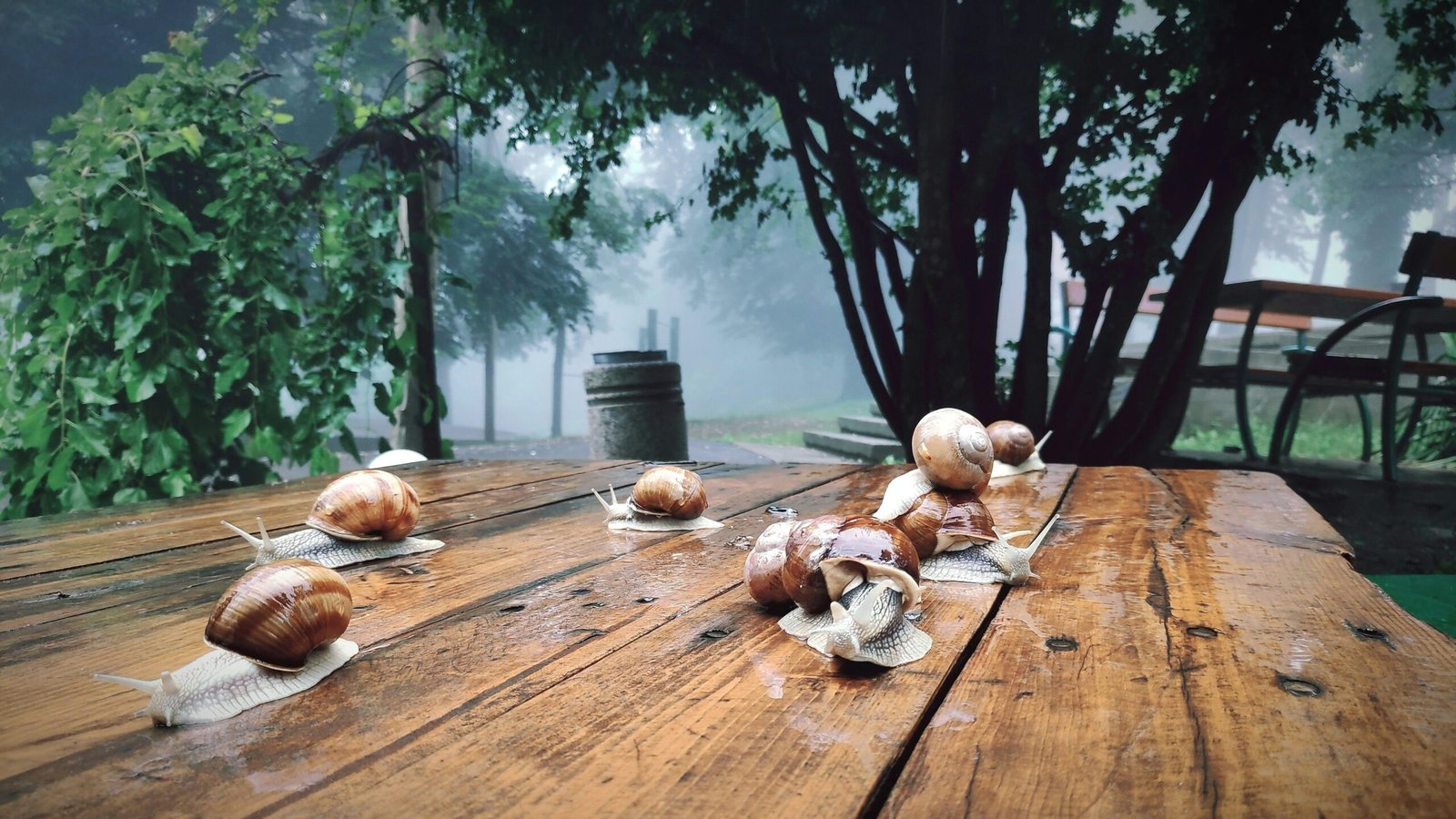
If you are planning to start a heliciculture business, you must ask: how much space do farm snails really need? The direct answer is that one square meter of surface area can safely support about 1.5 kilograms of adult snails. Exceeding this limit causes severe stress, stunts physical growth, and encourages the rapid spread of soil-borne diseases.
For a precise headcount, most successful farmers limit their adult breeding stock to 15 to 25 snails per square meter. Juvenile snails require far less room, allowing you to house up to 100 hatchlings in that same square meter. You must continuously monitor their growth and split the populations into larger enclosures as they gain mass.
What is the Ideal Stocking Density for Snail Farms?
To secure a featured snippet in search results, here is the direct answer to snail stocking densities based on life stages:
- Hatchlings (1 to 3 months): 100 snails per square meter.
- Growers (3 to 6 months): 50 snails per square meter.
- Breeding Adults: 15 to 25 snails per square meter.
- Fattening Stage: 40 snails per square meter.
You must adjust these baseline numbers based on the specific species you decide to raise. Giant African Land Snails (Achatina achatina) grow significantly larger than common garden snails (Helix aspersa).
A fully grown African Land Snail can reach 20 centimeters in length. You can only safely house 5 to 7 of these giant adults per square meter of soil.
Conversely, smaller Helix aspersa thrive in denser populations. You can push the limit to 30 adult snails per square meter if your ventilation and waste management systems are flawless.
Always check species-specific agricultural guidelines, such as those provided by the Food and Agriculture Organization (FAO) in its snail farming manuals, before building your pens.
Planning Your Snail Enclosure Dimensions
The size of your farm depends entirely on the housing system you select. Farmers generally choose between intensive indoor systems, extensive outdoor pastures, or semi-intensive mixed setups.
Each method demands a completely different approach to floor space and vertical design.
Intensive Indoor Hutch Boxes
Hutch boxes are wooden or plastic crates raised on legs, primarily used for indoor or greenhouse farming. A standard commercial hutch box measures 50 centimeters wide, 50 centimeters deep, and 25 centimeters tall.
This exact size is easy to reach into, simple to clean, and holds roughly 10 adult breeding snails.
You must drill drainage holes in the bottom and cover the top with a secure wire mesh to prevent escapes. Because these boxes stack easily, they maximize vertical space inside small farm buildings.
Leave at least a 60-centimeter walkway between rows of hutch boxes so you can easily carry feed buckets and cleaning supplies.
Semi-Intensive Trench Pens
Trench pens are shallow pits dug directly into the earth and enclosed by low walls. The standard dimensions for a trench pen are 1.5 meters wide and up to 5 meters long. The width is restricted to 1.5 meters so farmhands can reach the center of the pen from either side without stepping on the snails.
The trench should be about 0.5 meters deep. You build block walls rising another 0.5 meters above the soil line, topped with nylon mesh to keep predators out.
A single 1.5m by 5m trench pen offers 7.5 square meters of surface area, supporting roughly 150 breeding adults.
Extensive Free-Range Pastures
Free-range pastures require the most land but cost the least in construction materials. A standard free-range pen measures 10 meters by 10 meters, offering 100 square meters of grazing area. You must plant this entire space with low-lying crops like clover, cabbage, or specialized leafy greens before introducing the livestock.
These large outdoor enclosures rely on natural rainfall and heavy agricultural netting to keep birds away. To prevent mass escapes, the perimeter fence must include a downward-facing electric wire or a specialized salt trough.
While pastures require immense space, they dramatically lower your daily feed costs by allowing the snails to forage naturally.
Soil Depth: The Hidden Space Requirement
When calculating farm dimensions, beginners often forget to account for vertical soil depth. Snails do not just live on the surface; they require deep soil to lay eggs and estivate during harsh weather. If your soil is too shallow, adult snails will refuse to breed.
Your enclosures must hold a minimum of 15 to 20 centimeters of loose, loamy soil. For larger species like the Giant African Land Snail, you need a soil depth closer to 30 centimeters.
This depth requires sturdy enclosure walls capable of holding the heavy, damp weight of the dirt.
The soil must be turned and treated regularly to prevent parasitic infections. This means your enclosures need sufficient vertical clearance to use small hand tillers or shovels. If your ceiling mesh is too low, daily soil maintenance becomes physically exhausting.
Vertical Space: Maximizing Your Farm Layout
Snails naturally love to climb, meaning you can multiply your available living area by building upward. Adding vertical structures inside your pens relieves overcrowding on the soil floor. This is a crucial strategy for maximizing production in smaller agricultural setups.
You can install untreated wooden planks at an angle against the walls to create A-frame climbing structures. Many modern farmers drape heavy plastic netting from the enclosure ceiling, allowing the livestock to hang upside down while they digest their food. Every square meter of vertical netting you add effectively functions as an extra square meter of floor space.
These climbing surfaces also serve a secondary hygiene purpose. Snails prefer to sleep off the ground, which keeps them away from decaying food and fresh droppings on the soil. Providing ample vertical space drastically reduces the risk of shell-borne bacterial infections.
How Overcrowding Harms Your Snail Farm?
Pushing past the recommended stocking density results in immediate, visible problems within your livestock population. Overcrowding triggers a biological stress response that physically stunts juvenile development. Even if you provide endless food, tightly packed snails will refuse to eat and stop growing entirely.
Increased Disease Transmission
Snails produce an immense amount of slime and physical waste every single day. In an overcrowded pen, the soil quickly becomes toxic with excess ammonia from their droppings. This heavily soiled environment breeds harmful nematodes and mites that can wipe out an entire farm in days.
Shell Damage and Cannibalism
Snail shells are fragile, especially during their first few months of life. When hundreds of snails climb over one another in a confined space, their shells crack, chip, and break. Damaged shells lead to dehydration, fatal infections, and unmarketable livestock.
Furthermore, severe space restrictions can trigger cannibalistic behavior. Calcium-deficient snails will begin eating the shells of their weaker neighbors to survive. Giving them adequate room to move prevents this aggressive territorial behavior.
Space Needed for Feeding and Hydration
Your farm floor plan must include dedicated, physical space for food troughs and water dishes. You cannot simply throw feed directly onto the soil, as it will rot and attract dangerous pests. Flat concrete slabs or heavy plastic trays make excellent feeding stations.
These feeding trays take up valuable real estate inside the pen. You must subtract the trays’ square footage from your final stocking density calculation. Place the trays in the center of the enclosure so every snail has equal physical access without fighting.
Hydration systems also dictate your enclosure size. If you use automated overhead sprinklers, you must build the pens wide enough to catch the full spray radius. If the pens are too narrow, your expensive fresh water will spray out onto the dirt walkways.
Frequently Asked Questions About Snail Enclosures
Can I use glass aquariums for a snail farm?
Glass aquariums restrict natural airflow and trap excessive heat. While fine for a handful of pets, glass tanks do not provide sufficient ventilation or space for commercial agricultural farming. Use wood, concrete, or breathable mesh structures instead.
How much space do I need for a quarantine pen?
Allocate at least 10% of your total farm space specifically for isolation pens. When you bring in new breeding stock or spot sick individuals, you must separate them immediately. A standard 1-square-meter hutch box serves perfectly as a temporary medical ward.
Do snails need sunlight in their enclosures?
Snails are nocturnal and highly sensitive to direct, intense sunlight. Your enclosures must include ample shaded areas using dark netting, broadleaf plants, or wooden boards. While they need a natural day-night light cycle, they prefer cool, heavily shaded environments.
Summary
Building a profitable agricultural business requires strict adherence to proper animal husbandry guidelines. When you ask how much space farm snails really need, remember the golden rule: one square meter for every 15 to 25 breeding adults. Respecting this limit ensures your livestock matures quickly and remains free of disease.
Whether you choose free-range pastures or stackable indoor hutch boxes, always account for soil depth and vertical climbing surfaces. Overcrowding is the number one reason new heliciculture businesses fail.
Give your snails the room they need to thrive, and your farm will produce healthy, marketable results. Ensure you consistently monitor your density as your hatchlings grow to understand exactly how much space farm snails really need year-round.