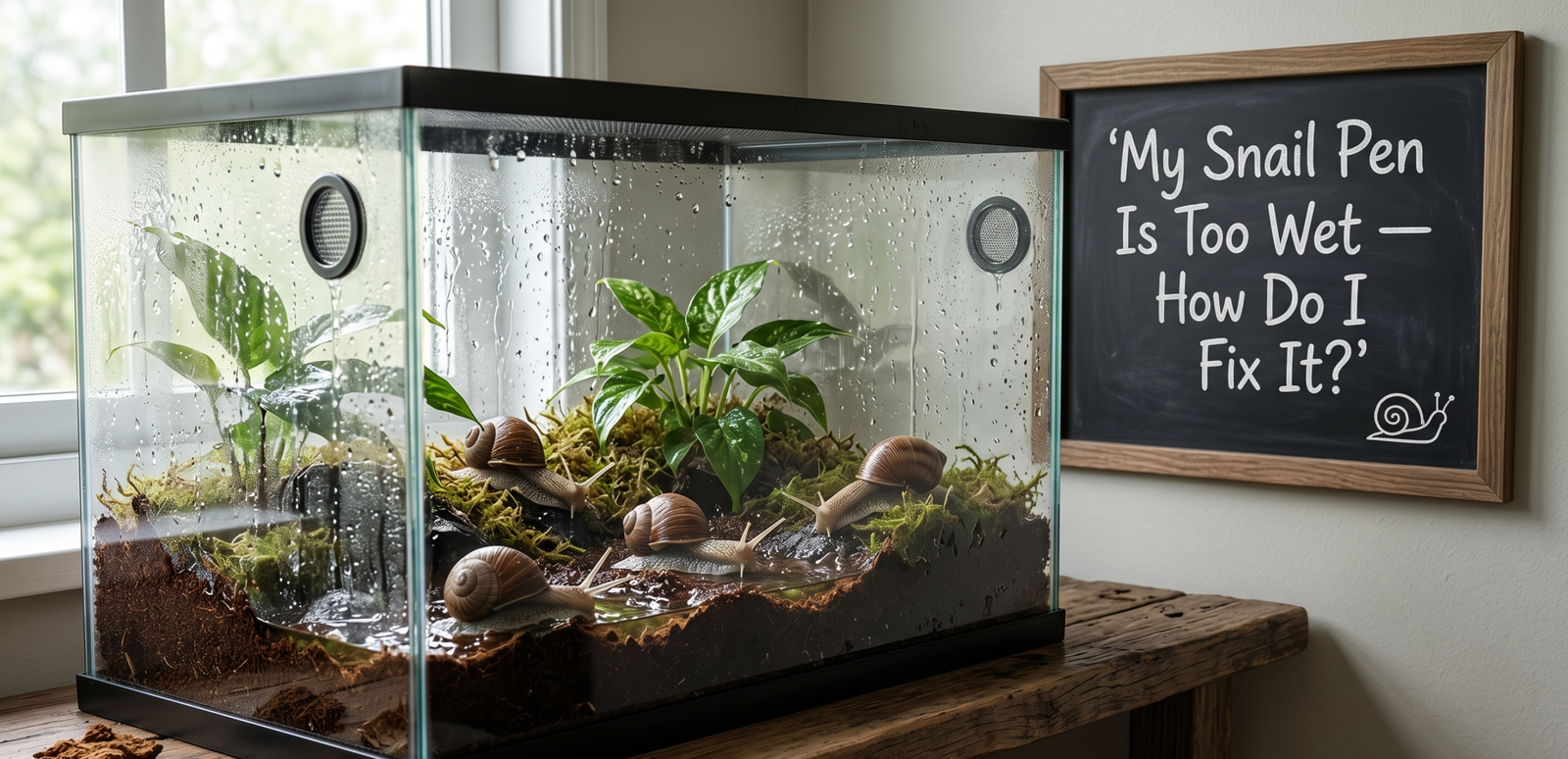
If you are asking, “My snail pen is too wet — how do I fix it?”, you need to act quickly. Excess moisture in a terrarium creates an unsafe environment for terrestrial snails. A waterlogged tank leads to dangerous mold growth, harmful bacterial blooms, and a risk of drowning.
To fix a damp enclosure right away, wipe the walls down with a dry paper towel to remove the condensation. Next, remove the substrate and physically squeeze out the excess water. Finally, open the lid slightly or install mesh covers to improve airflow and let trapped humidity escape.
Why Is Excess Moisture Dangerous for Pet Snails?
Snails need moisture to survive, but a swampy environment causes serious health issues. A wet enclosure becomes a breeding ground for pathogens.
Here are the primary risks of an overly wet snail pen:
- Bacterial Infections: Stagnant water promotes harmful bacteria that attack the snail’s soft body.
- Mold Growth: Fungal spores thrive in soggy soil and can cause respiratory failure in invertebrates.
- Pest Infestations: Fungus gnats and predatory mites lay eggs in dripping wet substrate.
- Drowning Hazards: Small snails and hatchlings can drown in shallow pools of standing water.
- Shell Deterioration: Constant exposure to acidic, rotting soil weakens the calcium structure of the shell.
Signs Your Snail Terrarium is Waterlogged
You must identify the warning signs before the environment harms your pet. A healthy snail enclosure feels like a damp forest floor, not a puddle.
Look for thick condensation covering the entire glass surface throughout the day. If you cannot see inside the tank, the humidity is far too high. Puddles forming at the bottom of the tank indicate total soil saturation.
You might also notice a foul, sour smell coming from the dirt. This odor means anaerobic bacteria are multiplying rapidly. If your snail climbs to the highest point in the tank and stays there, it is actively escaping the flooded ground.
Immediate Steps to Fix a Wet Snail Pen
When your enclosure is flooded, you must intervene immediately. Do not wait for the water to evaporate on its own. Follow these steps to restore a safe environment.
1. Wipe Down the Condensation
Grab a clean, dry paper towel or a microfiber cloth. Wipe away all the water droplets from the glass walls and the lid. This physically removes standing water from the closed system.
Repeat this process twice a day until the humidity levels stabilize.
2. Squeeze Out the Substrate
Put on clean gloves and remove your snail from the tank. Scoop out the wet soil and place it into a large bucket. Grab handfuls of the dirt and squeeze them hard to wring out the trapped water.
The soil should hold its shape when squeezed, but should not drip water. If the soil smells like rotten eggs, throw it away and replace it entirely.
3. Improve Tank Ventilation
Trapped air keeps moisture locked inside the enclosure. Remove any solid plastic covers or tape blocking the air vents. If you use a plastic storage bin, drill extra holes near the top edges to create cross-ventilation.
For glass aquariums, replace solid glass lids with a screen mesh top. You can cover part of the mesh with plastic wrap later to fine-tune the humidity.
Long-Term Solutions to Prevent a Soggy Snail Enclosure
Once you fix the immediate crisis, you need a permanent strategy. Managing the microclimate prevents the problem from returning.
Adjust Your Misting Schedule
Over-misting is the primary reason snail enclosures flood. Stop spraying the tank on a rigid schedule. Instead, check the soil moisture with your fingers before you grab the spray bottle.
Only spray the tank when the top layer of dirt feels dry to the touch. Use a fine-mist spray bottle rather than pouring water directly into the dirt.
Install a Digital Hygrometer
Analog dials attached to the glass are notoriously inaccurate. Buy a digital hygrometer with a probe to get real-time readings. Place the probe near the middle of the tank, away from direct water spray.
Monitor the numbers daily to understand how quickly your specific enclosure dries. This data stops you from guessing when to spray. For more information on precise environmental monitoring tools, check out guidance from exotic veterinary professionals on terrarium husbandry.
Add a Drainage Layer (False Bottom)
A drainage layer prevents water from sitting directly in the soil. You create this layer by pouring two inches of clay pebbles (LECA) at the bottom of the empty tank. Cover the pebbles with a piece of fiberglass window screen mesh.
Place your substrate on top of the mesh barrier. When you spray the tank, gravity pulls excess water through the dirt and into the pebble layer below. The dirt stays damp, but never soggy.
Choosing the Right Substrate for Proper Drainage
The material you put at the bottom of the tank dictates how water behaves. Standard potting soil from the hardware store often contains fertilizers and holds too much water.
Coconut Coir
Coco coir is the gold standard for pet snail enclosures. It comes in compressed bricks and expands when soaked in water. Coir absorbs moisture beautifully but drains well, preventing massive puddles.
Sphagnum Moss
Mixing handfuls of sphagnum moss into your coco coir creates air pockets. These air pockets stop the soil from compacting into a dense, wet brick. Moss also holds humidity efficiently without turning into mud.
What to Avoid
Never use sand, gravel, or pebbles as your primary substrate. Snails cannot burrow into rocks, and these materials trap stagnant water. Also, avoid garden dirt, which contains heavy clays that turn to sludge when wet.
Ideal Humidity Levels for Common Pet Snails
Different species require different amounts of moisture. Knowing your pet’s specific needs prevents accidental overwatering.
- Garden Snails (Cornu aspersum): These require moderate humidity between 65% and 75%. They need proper dry cycles between misting.
- Giant African Land Snails (GALS): Tropical species like GALS need higher humidity, usually between 75% and 85%. Even at this level, the soil must not form puddles.
- Milk Snails (Otala lactea): This species is prone to aestivation (sleeping) if conditions are wrong. Keep them around 75% to 90%, relying on damp moss rather than soaked dirt.
Managing Ventilation Without Drying Out the Tank
Balancing airflow and moisture is the hardest part of invertebrate care. Too much air dries out the habitat, while too little creates a swamp.
If your mesh lid lets out too much air, do not seal it completely. Cover half of the screen with a piece of clear acrylic or a specialized PVC terrarium cover. This traps enough moisture while still allowing fresh oxygen to circulate.
If condensation builds up again, slide the cover back an inch to let more air flow through.
Maintaining Water Dishes Safely
Many owners provide a shallow water dish for their snails. These dishes often tip over, flooding the surrounding dirt instantly.
Ensure the water bowl is heavy, like a solid resin reptile dish. Do not fill it deeper than the snail’s breathing pore to eliminate drowning risks. If the snail drags dirt into the water, clean it daily to stop foul odors.
Dealing with Substrate Pests in Wet Environments
A flooded pen inevitably attracts bugs. Fungus gnats are tiny black flies that hover around wet dirt. Springtails and isopods are helpful cleanup crews, but pest species can stress your snail.
If your tank smells bad and has flying bugs, the moisture is critically high. You must complete a total substrate change. Wash the tank with hot water, add fresh coco coir, and keep it slightly drier than before to break the insect breeding cycle.
How Temperature Affects Tank Moisture?
Temperature and humidity are directly linked. Warm air holds more moisture than cold air. If your room is very cold, the water in the air quickly turns into heavy condensation on the glass.
If you use a heat mat, place it on the side of the tank, never on the bottom. Placing a heater under the tank can cause the wet substrate to boil and create dangerous humidity spikes. Keep the tank away from drafty windows and air conditioning vents to maintain a stable climate.
Frequently Asked Questions
How often should I mist my snail tank?
You should mist the tank whenever the humidity drops below your species’ ideal range. For most setups, this means a light spray once a day or every other day. Never follow a strict schedule; let the hygrometer and soil texture guide you.
Can a snail drown in a wet pen?
Yes, terrestrial snails can easily drown in shallow water. They breathe through a pore on the side of their body called a pneumostome. If this pore is submerged in a puddle or soaked soil, the snail will suffocate.
Why is my snail sleeping all the time?
Snails seal themselves inside their shells when conditions are poor. This survival mechanism triggers when the tank is either bone dry or dangerously flooded. Fix the environment, and they will usually wake up within a few days.
Final Thoughts on Enclosure Maintenance
Maintaining the right environment requires daily observation and minor adjustments. If you are still asking, “My snail pen is too wet — how do I fix it?”, remember to prioritize physical water removal first. Squeeze out the soil, wipe down the glass, and open those vents.
Once you establish a drainage layer and invest in a digital hygrometer, managing the climate becomes incredibly easy. Keep a close eye on the condensation levels, and your pet will thrive in a safe, comfortable habitat.