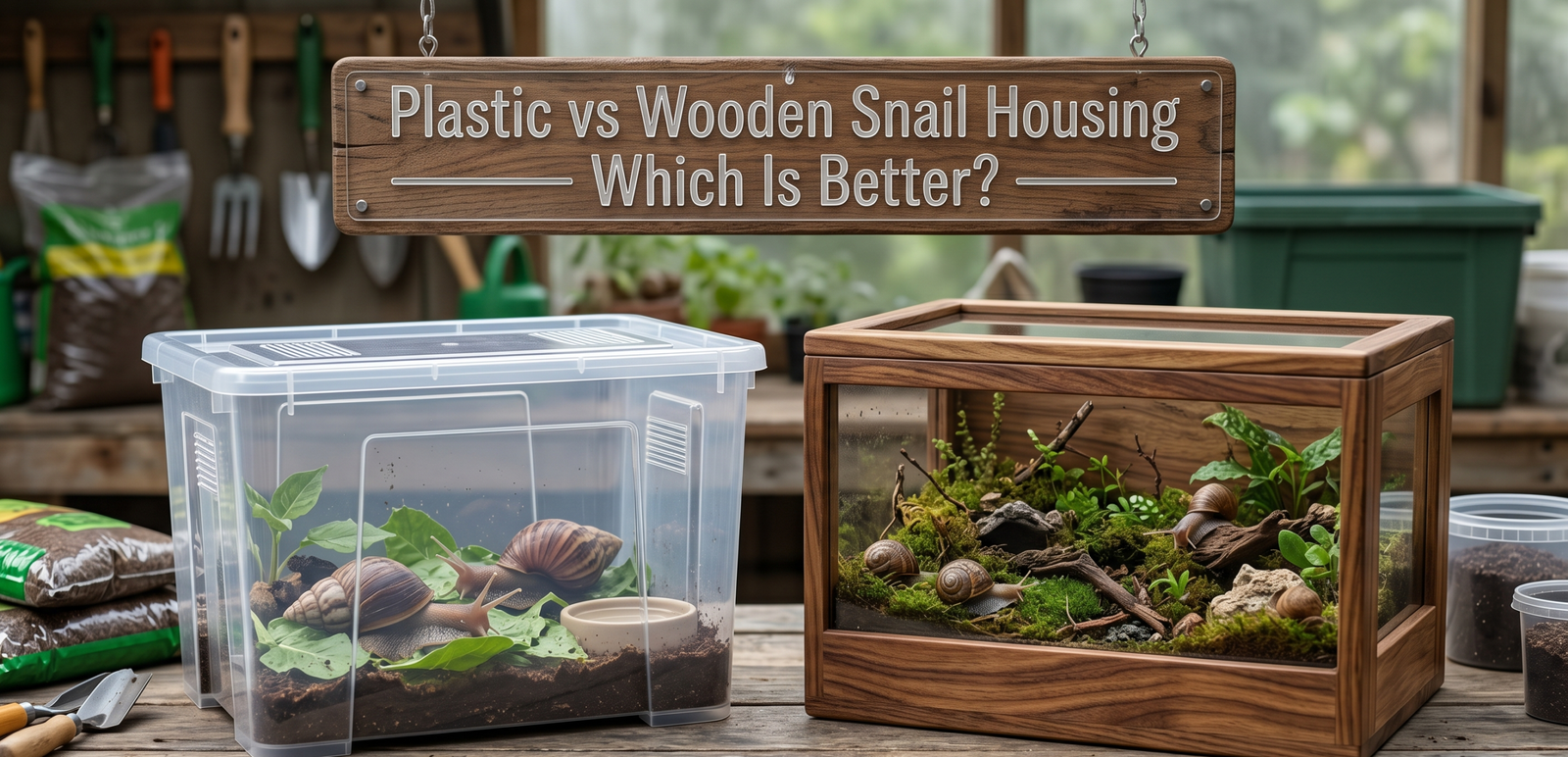
Choosing the right home for your snails is the most critical decision you will make as a keeper. The debate between plastic and wooden snail housing often comes down to balancing humidity requirements with aesthetic preferences.
While both materials have loyal followers, your snails’ biological requirements should always dictate the final choice.
Plastic is generally better for most snail species due to its superior moisture retention and ease of cleaning. However, wooden enclosures offer better insulation and a natural look for larger, more permanent setups.
Plastic vs Wooden Snail Housing — Which Is Better?
When deciding between these two materials, consider the specific environment your snails need to thrive in. Most land snails require a humidity level between 70% and 90%. Plastic excels at trapping this moisture, whereas wood is naturally porous and can dry out the air.
Plastic Enclosures: The Practical Choice
Plastic containers, ranging from high-end acrylic terrariums to simple storage bins, are the industry standard for a reason. They are lightweight, inexpensive, and entirely waterproof.
- Humidity Control: Plastic does not breathe, which is a massive advantage for tropical species. You can easily control airflow by drilling specific ventilation holes.
- Hygiene: Slime trails and waste are easily wiped away. You can sanitize plastic with mild soap or vinegar without worrying about the material absorbing chemicals.
- Visibility: Clear plastic or acrylic allows you to monitor your snails without disturbing their habitat.
Wooden Enclosures: The Aesthetic Powerhouse
Wooden housing is often chosen for large, “furniture-grade” setups. It provides a natural feel that blends into home decor, but it requires much more maintenance.
- Insulation: Wood is a natural insulator. It holds heat much better than thin plastic, which is helpful if you live in a cold climate.
- Space: It is often easier to build a massive custom wooden enclosure than it is to find a plastic bin of the same size.
- Potential Risks: Untreated wood can rot, or mold can grow in high humidity. Certain woods, like cedar or pine, contain resins that are toxic to gastropods.
Comparing Durability and Longevity
A snail enclosure is a long-term investment. The durability of these materials over years of exposure to damp soil and slime is a major factor.
| Feature | Plastic Housing | Wooden Housing |
|---|---|---|
| Water Resistance | 100% Waterproof | Requires sealing/lining |
| Weight | Very Light | Heavy and bulky |
| Mold Risk | Zero | High (if not treated) |
| Lifespan | Decades | 5-10 years (with care) |
| Cost | Budget-friendly | Mid to High range |
Plastic wins on durability because it cannot rot. Wooden enclosures, even when sealed with animal-safe epoxy, will eventually succumb to the constant moisture required for snail health. If you choose wood, you must use a waterproof liner to prevent the base from warping.
Managing Humidity and Airflow
Snails breathe through a small opening called a pneumostome. They are extremely sensitive to air quality and moisture levels.
The Plastic Microclimate
In a plastic tub, the water cycle is self-contained. Mist the enclosure once, and the walls will stay damp for days. This mimics the forest floor environment perfectly. For beginners, this “set it and forget it” humidity makes plastic the safest bet.
The Challenge of Wood
Wood naturally pulls moisture out of the air. If the wood isn’t perfectly sealed, it will drink up the water you spray for your snails. This leads to a dangerously dry environment. You may find yourself misting three or four times a day to keep your snails from estivating (entering a dormant state).
Health and Safety Considerations
Your snail’s health depends on a clean environment. Bacteria and fungi are the primary enemies in a terrarium.
Sanitation and Deep Cleaning
Plastic is non-porous. This means bacteria have nowhere to hide. During a deep clean, you can empty a plastic tank and scrub it completely in minutes.
Wood is porous. Even with a sealant, tiny cracks can harbor mites, mold spores, or harmful bacteria. If a snail gets a fungal infection in a wooden tank, you often have to discard the entire setup to prevent reinfection.
Chemical Sensitivity
Snails absorb everything through their skin. Plastic is chemically inert. Wood, however, can leach tannins or resins. Always avoid aromatic woods like cedar, which can be lethal to invertebrates.
Thermal Insulation: Keeping Your Snails Warm
If you keep Giant African Land Snails (GALS), temperature is just as important as humidity. They typically need temperatures between 22°C and 26°C.
- Plastic: Thin plastic loses heat rapidly. If you use a heat mat, you must be careful not to melt the plastic. A thermostat is mandatory to prevent accidents.
- Wood: Thick wooden walls hold heat exceptionally well. This makes wood a great choice for keepers in Northern Europe or North America. It creates a stable internal temperature that doesn’t fluctuate when the room cools down at night.
The Cost Comparison
For many, the decision between plastic vs. wooden snail housing is a financial one.
- Plastic Bins: You can buy a 50-liter storage bin for under $20. With a few air holes, it becomes a perfect habitat.
- Acrylic Tanks: These are more expensive ($50-$150) but offer the best viewing experience.
- Wooden Vivariums: These usually start at $100 and can go up to $500 for custom builds. You also have to factor in the cost of safe sealants and liners.
If you are starting, stick with plastic. It allows you to allocate your budget to high-quality substrate, calcium supplements, and a variety-rich diet.
Visual Appeal and Home Integration
Let’s be honest: a plastic storage tub doesn’t look great in a living room. If the “bioactive” look is your goal, wood provides a frame that feels like a piece of nature.
However, you can achieve a similar look with high-end acrylic or Glass. While Glass is heavy, it shares many of plastic’s moisture benefits. If you want the beauty of wood without the rot, consider a “hybrid” approach. Use a wooden exterior frame to hold a plastic or glass insert.
Step-by-Step: How to Prep Each Material
Regardless of your choice, you cannot use the housing straight from the store.
Preparing Plastic Housing
- Wash: Use warm water and a tiny bit of dish soap. Rinse until the “new plastic” smell is gone.
- Ventilate: Use a soldering iron or drill to make small holes. Place them on the sides rather than the top to keep humidity high.
- Check Edges: Ensure there are no sharp plastic burrs that could cut the snail’s foot.
Preparing Wooden Housing
- Seal: Apply three coats of G4 pond seal or a similar food-safe, waterproof resin.
- Cure: Let the sealant dry for at least 7 days until all fumes are gone.
- Line: Add a thick pond liner at the bottom to hold the wet substrate. This adds an extra layer of protection against rot.
Common Mistakes to Avoid
Avoid these pitfalls when setting up your snail’s home:
- Using Screen Tops: Whether plastic or wood, a full screen top allows all humidity to escape. Cover 70% of any mesh with plastic wrap.
- Ignoring the Type of Wood: Never use scrap wood from a construction site. It is often treated with pesticides or anti-fungal chemicals that will kill snails instantly.
- Poor Placement: Never place a plastic tank in direct sunlight. It acts like a greenhouse, cooking your snails in minutes.
Specific Species Requirements
Different snails have different needs.
- Garden Snails (Cornu aspersum): These are hardy and do well in almost anything. Plastic is easiest for them.
- Giant African Land Snails (GALS): These require high heat and high humidity. A plastic tank or a very well-sealed wooden vivarium is necessary.
- Tree Snails: These need height. Tall plastic “exo-terra” style tanks are the gold standard for arboreal species.
Which One Should You Choose?
Choose Plastic If:
- You are a beginner keeper.
- You want a low-maintenance setup.
- You are on a budget.
- You are keeping species that require 80%+ humidity.
- You want to move the tank for cleaning easily.
Choose Wood If:
- You are an experienced keeper who understands humidity management.
- You want a large, permanent display piece for your home.
- You live in a very cold climate and need the insulation.
- You are willing to spend time sealing and maintaining the structure.
Conclusion
In the battle of Plastic vs Wooden Snail Housing, plastic is the clear winner for the vast majority of keepers. Its ability to hold moisture effortlessly creates a safer environment for your pets. While wood is beautiful, the risk of mold and the difficulty of maintaining humidity make it a challenging choice for anyone but the most dedicated hobbyists.
Focus on your snails’ needs first. A happy snail in a “boring” plastic box is much better than a stressed snail in a beautiful wooden one. If you want the best of both worlds, invest in a high-quality acrylic terrarium. It offers the visibility of Glass, the moisture retention of plastic, and a sleek look that rivals any wooden setup.
Frequently Asked Questions
Can snails eat through plastic?
No, snail radulas (teeth) are not strong enough to damage hard plastic. They may rasp at the slime on the walls, but the structure is safe.
Will wood rot if I don’t seal it?
Yes, almost certainly. The constant moisture from the substrate and daily misting will cause untreated wood to warp and grow fungus within months.
Is Glass better than plastic?
Glass is excellent for visibility and humidity resistance, but it’s very heavy and can crack. Plastic is a more practical, lightweight alternative that offers similar benefits.
What is the best sealant for wooden snail tanks?
Look for products labeled as “pond safe” or “food grade” epoxy. These are designed to be non-toxic once fully cured. Always wait until the smell is completely gone before adding snails.