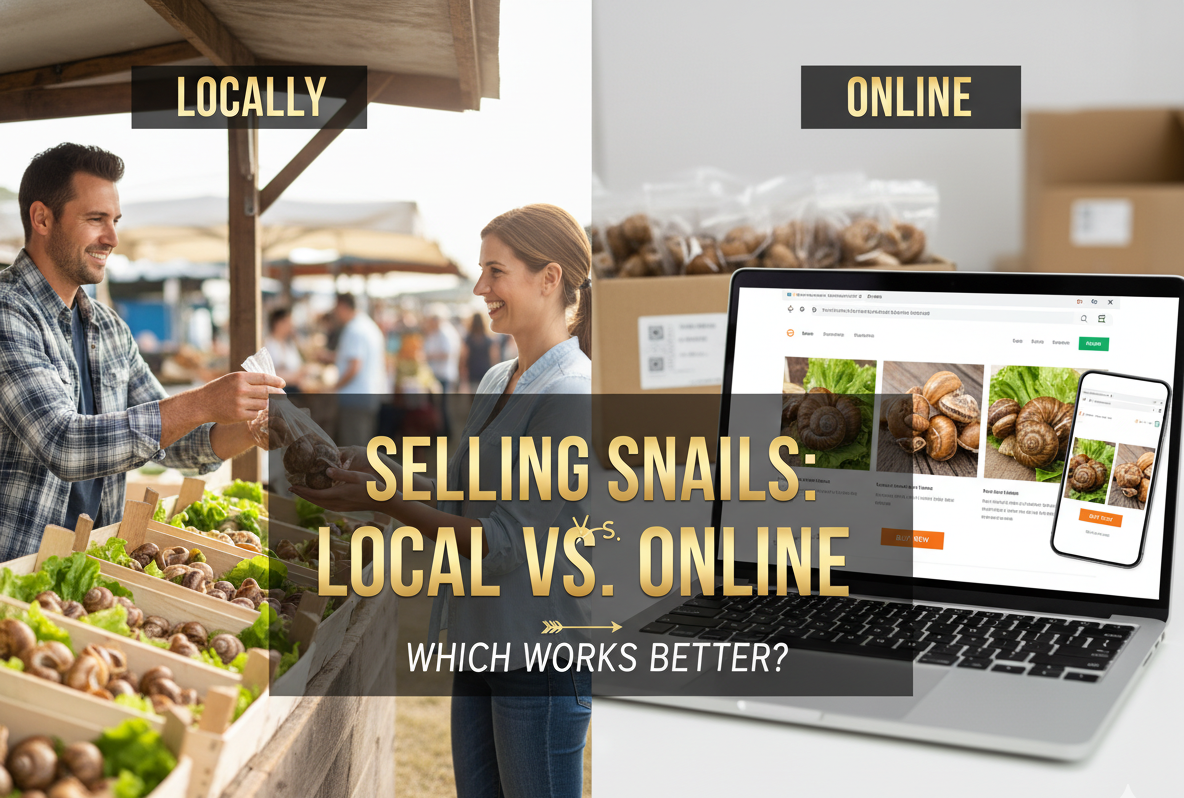
You raised the snails. Now you need buyers. Should you walk them to a nearby market or ship them across the country?
Both paths work — but they work differently depending on your scale, location, and how much time you have. This guide breaks down each option honestly so you can make a smart call fast.
Who Actually Buys Snails?
Before picking a sales channel, know your buyer types:
- Restaurants and chefs: high volume, repeat orders, quality-focused.
- Home cooks: smaller orders, price-sensitive, growing interest in exotic proteins.
- Health food consumers: drawn to snails’ high protein and low fat profile.
- Cosmetic manufacturers: buying snail mucin for skincare products.
- Exotic pet stores: purchasing live land snails for terrariums.
Knowing who buys shapes where you should sell.
Selling Snails Locally — The Full Picture
What “Local” Actually Means?
Local selling covers farmers’ markets, direct restaurant deals, community groups, grocery co-ops, and roadside stands. You’re selling within driving distance — no shipping logistics required.
Why Local Sales Work Well?
Speed to cash. You sell today, you get paid today. No waiting on payment processors or platform holds.
Zero shipping costs. Live snails are fragile. Cold packs, ventilated boxes, and express shipping add up fast. Locally, that cost disappears.
Trust builds fast. Face-to-face selling creates loyalty. Restaurants that see your operation and meet you personally become long-term buyers.
Flexible pricing. You negotiate directly—no platform fees eat 5–15% of every sale.
The Real Challenges of Local Selling
Limited reach. Your buyer pool is tied to geography. If snail demand in your town is low, you hit a ceiling quickly.
Seasonal gaps. Farmers’ markets slow in winter. Restaurant menus shift. Your income can become inconsistent.
Time investment. Setting up stalls, making deliveries, and building relationships takes hours every week.
You need local demand. In areas without a strong culinary culture around escargot or African giant snails, educating the market takes time you may not have.
Best Local Selling Channels
- Farmers’ markets: great for fresh produce audiences already open to speciality foods.
- Direct restaurant pitching: target French, Italian, and West African restaurants specifically.
- Facebook community groups: hyperlocal, zero cost, fast response.
- Local butcher shops and delis: often looking to stock unique proteins.
- Community-supported agriculture (CSA) boxes: add snails as a seasonal speciality item.
For restaurant outreach, approach the head chef directly rather than the front-of-house team. Chefs make purchasing decisions, not managers. Bring a sample it converts faster than any pitch.
Selling Snails Online — The Full Picture
What Online Selling Covers?
Online selling includes your own website, Etsy (for processed snail products), Amazon, speciality food marketplaces, and social media storefronts like Instagram and TikTok Shop.
Why Online Sales Scale Better?
Nationwide (or global) reach. One listing can reach thousands of buyers. You’re no longer limited by local demand.
24/7 availability. Your store works while you sleep. Orders come in without you being physically present.
Recurring order potential. Subscription boxes and auto-ship features on platforms like Shopify let customers reorder automatically.
Niche targeting. Online platforms let you reach buyers who are specifically searching for snails — people already sold on the idea, just looking for a supplier.
According to the USDA Agricultural Marketing Service, direct online agricultural sales have grown steadily as consumers seek speciality and locally grown products beyond their immediate area.
The Challenges Online Sales Bring
Shipping live animals is complicated. Most carriers have rules about live animal shipping. USPS allows some live invertebrates under specific conditions. FedEx and UPS have their own requirements. You must check current carrier policies before listing live snails for sale.
Packaging costs eat into the margin. Ventilated boxes, moisture-absorbing pads, ice packs, and express shipping fees significantly reduce profit on smaller orders.
Platform fees apply. Etsy takes around 6.5% plus listing fees. Amazon takes more. Your own Shopify store costs at least $29–$79/month.
Regulations vary by state. Selling live snails across state lines requires understanding USDA and state Department of Agriculture rules. African Giant Snails (Achatina fulica) are federally prohibited in the US without a permit. Always verify compliance with USDA APHIS regulations before shipping.
Customer trust takes longer to build. Buyers can’t see your operation. Professional photos, reviews, and clear policies do the heavy lifting.
Best Online Channels for Snail Sellers
- Your own website (Shopify or WooCommerce): full control, no platform dependency.
- Etsy: works well for processed snails, snail mucin products, or snail kits.
- Instagram and TikTok Shop: visual content showing your farm builds trust fast.
- Speciality food marketplaces: platforms like Goldbelly or FarmMatch connect artisan food producers with buyers nationwide.
- Email list: your most valuable long-term asset; build it from day one.
Local vs Online — Side-by-Side Comparison
| Factor | Local Selling | Online Selling |
|---|---|---|
| Startup cost | Low | Medium to high |
| Reach | Limited | National/global |
| Speed of first sale | Fast | Slower |
| Ongoing time needed | High | Medium (once set up) |
| Shipping complexity | None | High for live snails |
| Margin per sale | Higher | Lower (after fees/shipping) |
| Scale potential | Limited | High |
| Regulatory burden | Lower | Higher |
Which One Actually Makes More Money?
Neither channel wins outright — the right answer depends on three things:
1. Your volume. Small-scale farmers (under 500 snails/month) often do better locally. The overhead of online selling eats into thin margins when order volume is low.
2. Your product type. Processed snail products (canned escargot, snail oil, mucin serum) ship better than live snails and face fewer regulatory issues. If you’re selling processed goods, online wins almost every time.
3. Your location. Urban farmers near restaurant districts or speciality food stores often max out local revenue faster than rural operations. Rural farmers with lower local demand may need online channels sooner.
A study by the Food and Agriculture Organisation (FAO) highlights heliciculture (snail farming) as a growing sector globally, with demand rising in European and North American markets — markets largely accessible only through online distribution for most small farmers.
The Hybrid Approach Most Profitable Farmers Use
The most consistent income comes from running both channels in parallel — and using each for what it does best.
Local for: cash flow, relationships, bulk restaurant orders, fresh live snails
Online for: processed products, reaching niche buyers, scaling beyond local limits, building a brand
Start local to generate early revenue and refine your operation. Build your online presence simultaneously with a simple website, an Instagram account, and a growing email list. Once local sales are stable, layer in online orders without needing them to carry the whole business.
Practical Steps to Start Selling Snails Now
For local selling:
- Research your county and state regulations on selling live food animals.
- Identify 5–10 restaurants in your area that serve escargot or speciality proteins.
- Apply for a farmers market vendor spot (most applications open seasonally).
- Join local food and farming Facebook groups to post availability.
For online selling:
- Decide early whether you’re selling live snails, processed products, or byproducts.
- Read the USDA APHIS guidelines on interstate live invertebrate shipping.
- Set up a basic Shopify store or Etsy shop before you have inventory ready.
- Photograph your operation professionally — buyers need to trust what they can’t see.
For both:
- Track every sale from day one, including channel, product, volume, and margin.
- Ask every buyer how they found you — this data shapes where you invest time.
Common Mistakes Snail Sellers Make
Skipping the research on shipping regulations. Fines for illegal live animal shipping are serious. Don’t assume what’s allowed — verify it.
Underpricing to get the first buyers. Low prices attract bargain hunters, not loyal customers—price based on your costs plus a sustainable margin from the start.
Ignoring repeat buyers. A restaurant that orders monthly is worth ten one-time buyers. Build systems to nurture those relationships — even a simple monthly check-in call works.
Waiting until the stock is ready to build an audience. Start your Instagram, website, or email list before you have a product to sell. Warm audiences convert faster.
Final Take
Selling snails locally vs online is not a binary choice, it’s a sequencing question. Local selling gets you moving faster with less risk. Online selling gets you growing beyond geographic limits.
Start with local to build cash flow and refine your product. Add online channels once you understand what your buyers actually want. The farmers who build both channels early tend to generate the most stable income over time.
The market for snails as food, skincare ingredients, and pets is expanding. The question isn’t whether buyers exist. It’s whether you’re in a position to reach them.