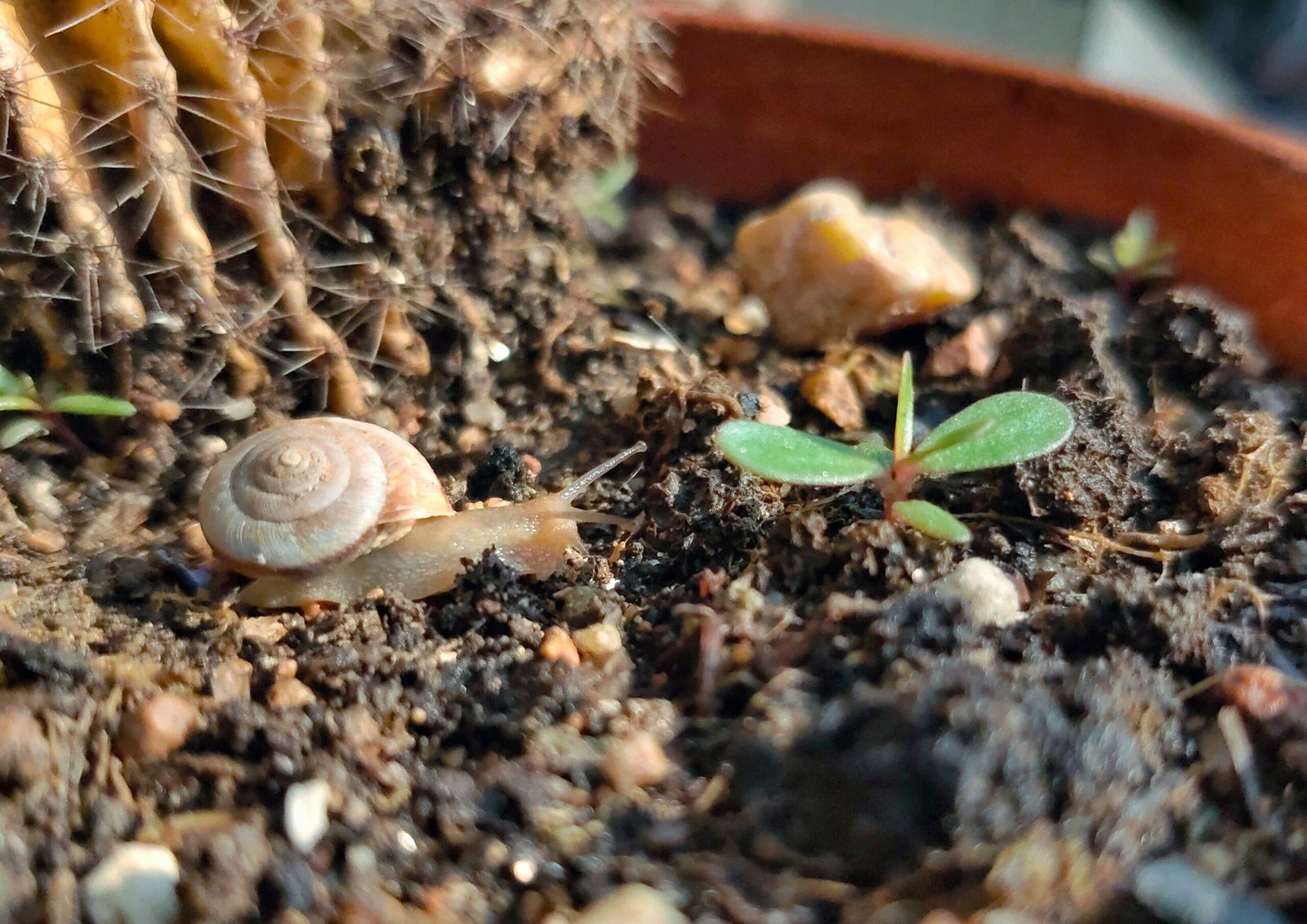
Stunted growth in snails is a common frustration for both aquarium hobbyists and land snail keepers. If you are wondering why my snails are growing so slowly, the answer usually lies in a combination of environmental stressors, nutritional gaps, or water chemistry imbalances.
Snails require specific building blocks, primarily calcium and protein, alongside a stable environment to expand their shells and body mass. When one of these factors is missing, the snail prioritises survival over growth.
1. Acute Calcium Deficiency and Shell Erosion
Calcium is the most vital nutrient for any gastropod. A snail’s shell is almost entirely composed of calcium carbonate. If they do not consume enough calcium or live in calcium-poor environments, their growth will stall.
Without a steady supply of minerals, the snail cannot extend the leading edge of its shell. In severe cases, the snail may even begin to rasp at its own shell or the shells of tank mates to compensate for the deficiency.
You can fix this by adding a cuttlebone to the enclosure. These are inexpensive and provide a slow-release source of calcium that snails can graze on whenever they need it.
Signs of Calcium Issues:
- Thin, translucent shell edges.
- White patches or pitting on the shell surface.
- Cracks that do not heal over time.
- Inactive behaviour or staying retracted for long periods.
2. Improper Water pH and Hardness (For Aquatic Snails)
Aquatic snails, such as Mystery or Nerite snails, are highly sensitive to the acidity of their water. If your water pH drops below 7.0, it becomes acidic. Acidic water literally dissolves the snail’s shell faster than the snail can build it.
Hardness, specifically General Hardness (GH) and Carbonate Hardness (KH), also plays a role. Snails thrive in “hard” water because it contains the dissolved minerals they need to stay healthy. If you use distilled or RO (Reverse Osmosis) water without remineralising it, your snails will stop growing.
Aim for a pH range between 7.5 and 8.2. You can naturally increase water hardness by adding crushed coral or Texas holey rock to your filtration system or substrate. Monitoring your water parameters with a reliable kit is the only way to ensure the environment is suitable for growth.
3. Protein Gaps in the Daily Diet
While snails are often viewed as simple scavengers that eat algae, they actually need a significant amount of protein to grow. Growth is an energy-intensive process that requires more than just fibre and minerals.
If you only feed your snails cucumber or lettuce, they are likely missing out on essential amino acids. These watery vegetables are great for hydration but offer very little in the way of “building material” for a growing body.
High-Protein Food Sources for Snails:
- Specialised Snail Pellets: Look for “Snail Jello” recipes or commercial invertebrate food.
- Bloodworms or Brine Shrimp: Offer these occasionally to aquatic snails.
- Blanched Kale and Spinach: These are denser in nutrients than iceberg lettuce.
- Fish Flakes: High-quality flakes often contain the protein boost a growing snail needs.
4. Temperature Inconsistencies and Growth Rates
Snails are cold-blooded creatures. Their metabolic rate is directly tied to the temperature of their surroundings. If the environment is too cold, their digestion slows down, and they become lethargic.
In a cold tank or terrarium, a snail will eat less and move less. Consequently, they will grow at a fraction of the rate they would in a warmer setting. Most tropical snails prefer temperatures between 72°F and 78°F (22°C – 26°C).
However, be cautious about raising the temperature too high. While warmth speeds up growth, it also shortens the snail’s total lifespan. A snail that grows rapidly in very warm water may only live half as long as one kept at a moderate, stable temperature.
5. Overcrowding and the Pheromone Effect
Many keepers are surprised to learn that snails can “sense” their population density. In overcrowded conditions, some snail species release pheromones into the water or soil that inhibit the growth of smaller individuals.
This is a biological survival mechanism. It prevents the population from outstripping the available food supply. If you have dozens of snails in a small space, the “alpha” snails may grow normally while the others remain tiny.
To combat this, ensure your tank is the appropriate size for the species. For example, one Mystery snail generally needs about 5 to 10 gallons of space to reach its full potential. Regular water changes are also essential in aquatic setups to dilute these growth-inhibiting hormones.
6. High Nitrate and Ammonia Levels
Poor water or soil quality is a silent growth killer. In aquariums, ammonia and nitrites are toxic and cause immediate stress. Nitrates, while less toxic, can still stunt growth if they accumulate to levels of 20-40 ppm.
When a snail is stressed by poor chemistry, its immune system works overtime. This diverts energy away from shell production and toward basic survival. Fresh, clean water is the best “growth supplement” you can provide.
For land snails, “sour” soil is a similar issue. If the substrate is not changed or cleaned, waste buildup can make the environment too acidic and toxic. Always use a substrate that is safe for invertebrates, such as coconut coir, and keep it moist but not swampy.
7. Genetic Limits and Species Expectations
Sometimes, your snail’s slow growth is simply due to its genetics. Just like humans, some snails are naturally “runts.” If a snail were born from a weak genetic line or suffered a period of starvation during its earliest days, it may never reach a large size.
Furthermore, you must know the specific growth expectations for your species. A Nerite snail will never grow to the size of an Apple snail. Research the maximum size and typical growth curve for your specific pet to manage your expectations.
How to Accelerate Snail Growth Naturally?
If you want to see visible progress in your snail’s size, follow this optimised checklist. These steps focus on providing the ideal biological conditions for rapid development.
Step 1: Optimise the Mineral Intake
Don’t just rely on the food they eat. Provide “bulk” calcium sources.
- Place a cuttlebone in the tank or enclosure.
- Add liquid calcium supplements to aquarium water.
- Mix calcium carbonate powder into land snail substrate.
Step 2: Diverse Nutritional Rotation
Stop feeding just one type of food. Variety ensures they get all the necessary vitamins.
- Monday: Blanched zucchini.
- Wednesday: High-protein shrimp pellets.
- Friday: Calcium-rich kale.
- Sunday: Sinking algae wafers.
Step 3: Maintain Water Stability
Fluctuations in parameters are more damaging than slightly imperfect but stable conditions. Perform 20% water changes weekly. Use a de-chlorinator that also neutralises heavy metals, as copper is deadly to snails.
Step 4: Track Your Progress
It is hard to see growth day to day. Take a photo of your snail next to a coin once every two weeks. This helps you determine whether the growth is actually stalled or just happening slowly and steadily.
Identifying Snail Growth vs Hibernation
Sometimes a snail isn’t growing slowly; it has simply stopped because it entered a state of estivation or hibernation. This happens when the environment becomes too dry, too cold, or too hot.
A hibernating snail will retreat deep into its shell and may form a dried mucous “door” (epiphragm) over the opening. During this time, growth completely stops. If you see this, check your humidity and temperature levels immediately. Most snails will “wake up” and resume growing once conditions return to their preferred range.
The Role of Lighting in Snail Development
While snails do not need “tanning” as reptiles do, lighting still affects the growth of their food sources. In an aquarium, moderate lighting encourages the growth of natural biofilm and algae.
These microscopic food sources are the primary diet for baby snails. If your tank is too sterile or has zero lighting, the smallest snails may struggle to find enough to eat in their first few weeks of life, leading to permanent stunting.
Final Thoughts on Snail Growth
Understanding why my snails are growing so slowly requires looking at your setup through a biological lens. A snail is a self-building machine. It needs the right raw materials (calcium and protein), the right fuel (a consistent temperature), and a clean workspace (a stable pH and low nitrates) to function.
Adjusting their water hardness, diversifying their diet, and ensuring they have plenty of room will likely lead to significant changes in their shell development within a few weeks. Consistency is the key to a healthy, large, and active snail.
Common Questions About Stunted Snail Growth
Can a stunted snail ever “catch up”?
If stunting was caused by poor nutrition or an unfavourable environment, a snail can often have a “growth spurt” once conditions improve. However, if the shell has already thickened and hardened significantly at a small size, they may never reach the maximum species potential.
Why is my snail’s new shell growth white or clear?
New growth is often very thin and may appear white or translucent. This is normal. Over time, as the snail consumes more minerals, the shell will thicken and take on its permanent colour. If it stays clear for weeks, you need to increase calcium immediately.
Do snails grow faster in groups?
Actually, snails often grow faster when they have more space to themselves. While they are social to an extent, the competition for resources and the presence of growth-inhibiting pheromones mean that a solitary snail (or a pair in a large tank) usually grows the fastest.